• Preservation

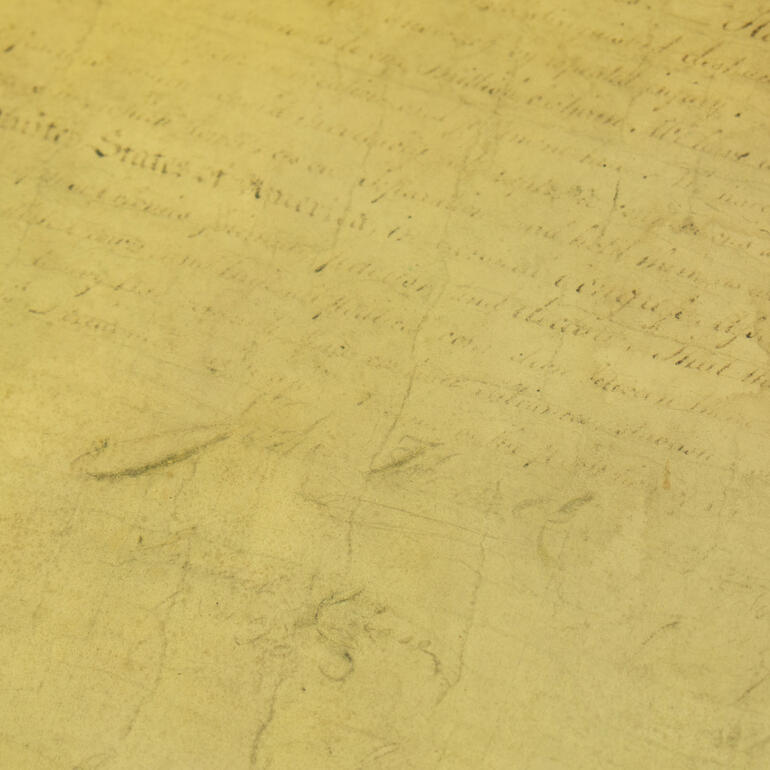
    Declaration of Independence with John Hancock's signature
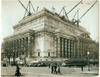
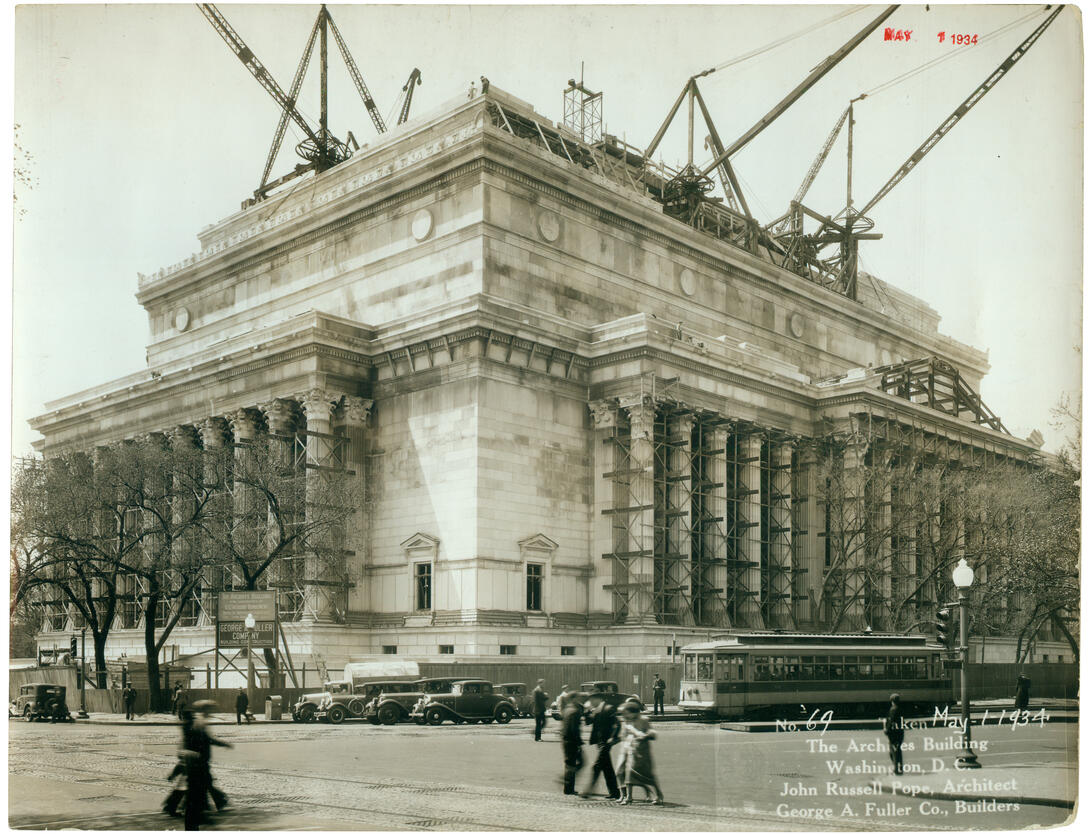
  • In September 1931, construction began on the National Archives Building. Architect John Russell Pope chose a symbolic location on Pennsylvania Avenue, halfway between the White House and the Capitol. When President Herbert Hoover set the cornerstone in 1933, he said: 

    “This temple of our history will appropriately be one of the most beautiful buildings in America, an expression of the American soul. It will be one of the most durable, an expression of the American character.”

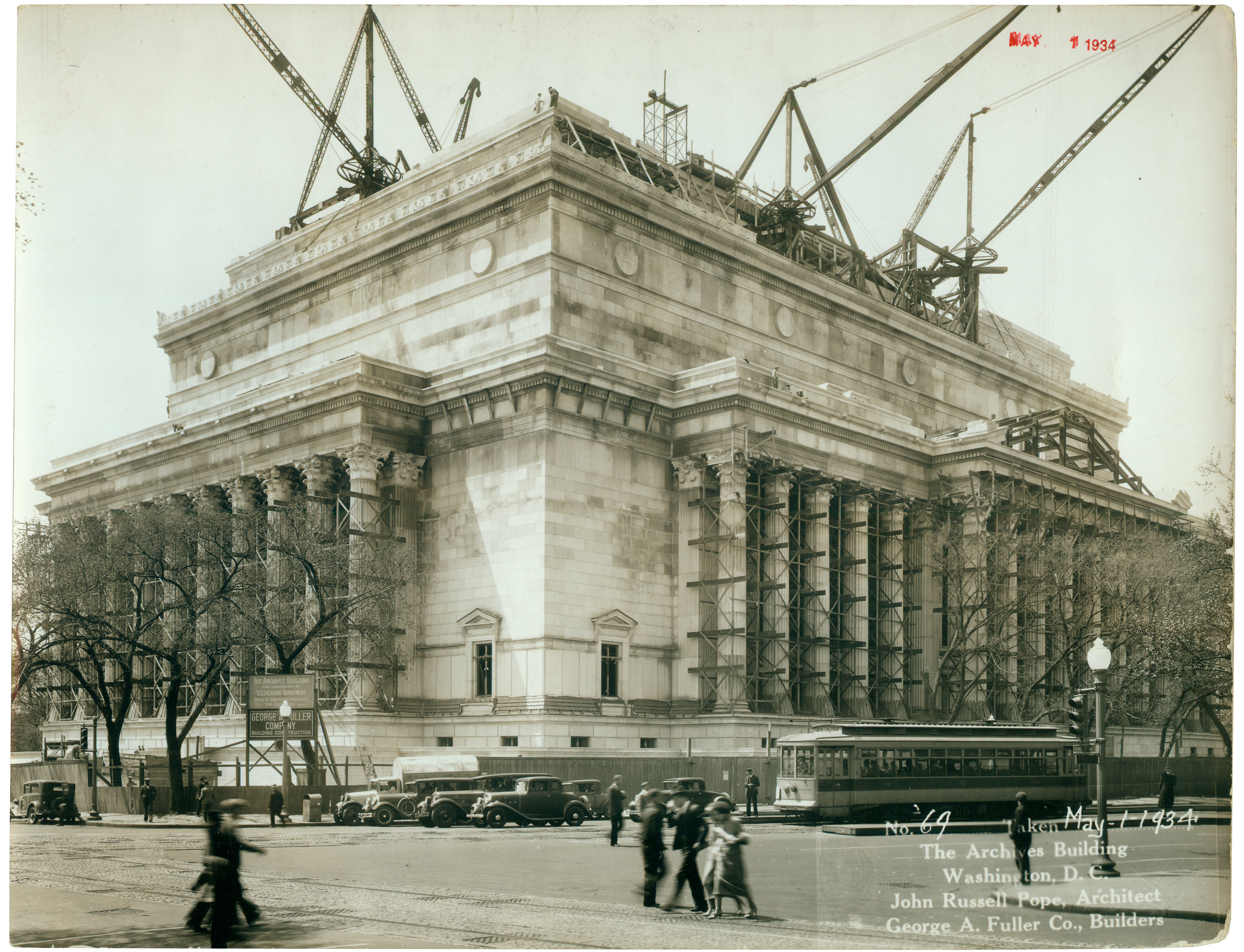
    National Archives Building under construction, May 1, 1934. Records of the Public Buildings Service

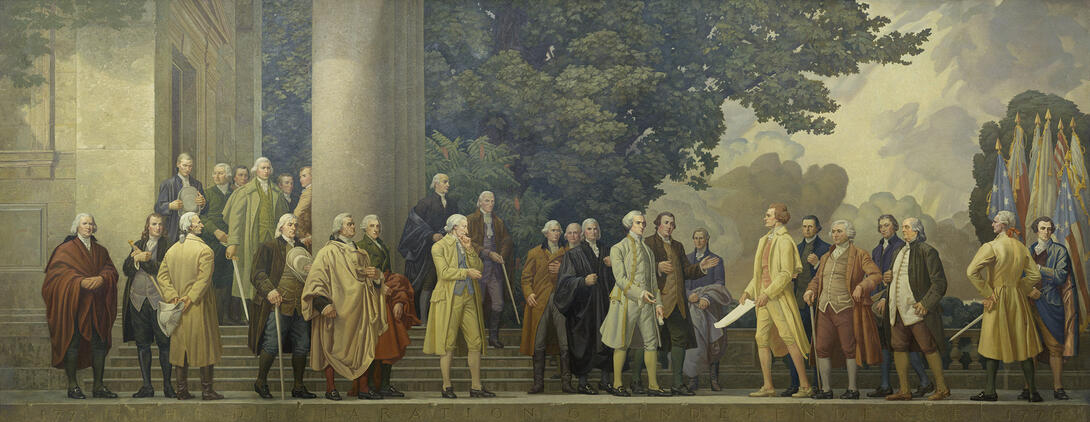
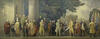
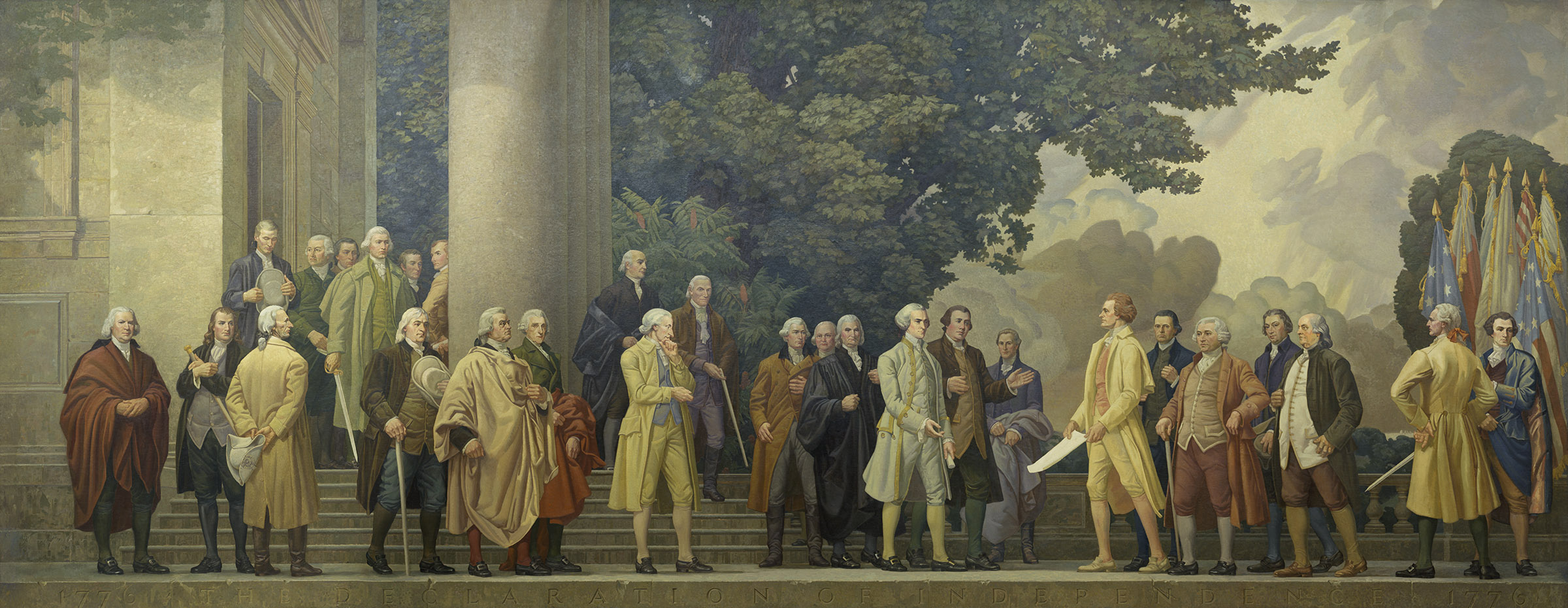
  • The Rotunda is the heart of the National Archives. The public can see the original founding documents: the Declaration of Independence, the Constitution, and the Bill of Rights. Between 1935 and 1936, artist Barry Faulkner painted two large murals for the Rotunda. Each one is about the size of a city bus. The left mural depicts Thomas Jefferson presenting a draft of the Declaration to John Hancock, President of the Continental Congress. The right mural shows James Madison presenting a draft of the Constitution to George Washington, President of the Constitutional Convention.

    The Declaration mural by Barry Faulkner, 1936. Records of the National Archives and Records Administration

  • Throughout the Revolutionary War, the Declaration of Independence moved around with the Continental Congress. It was in Philadelphia, PA; Baltimore, MD; Lancaster, PA; York, PA; Princeton, NJ; Annapolis, MD; Trenton, NJ; and New York, NY. In 1800, it was brought to Washington, DC. When the British burned the city in 1814, the Declaration was hidden in a gristmill on the Potomac River and later in a home in Leesburg, VA. The Declaration made a trip to Philadelphia for the 1876 Centennial celebration. And, during World War II, it was moved to Fort Knox, KY, for safekeeping.

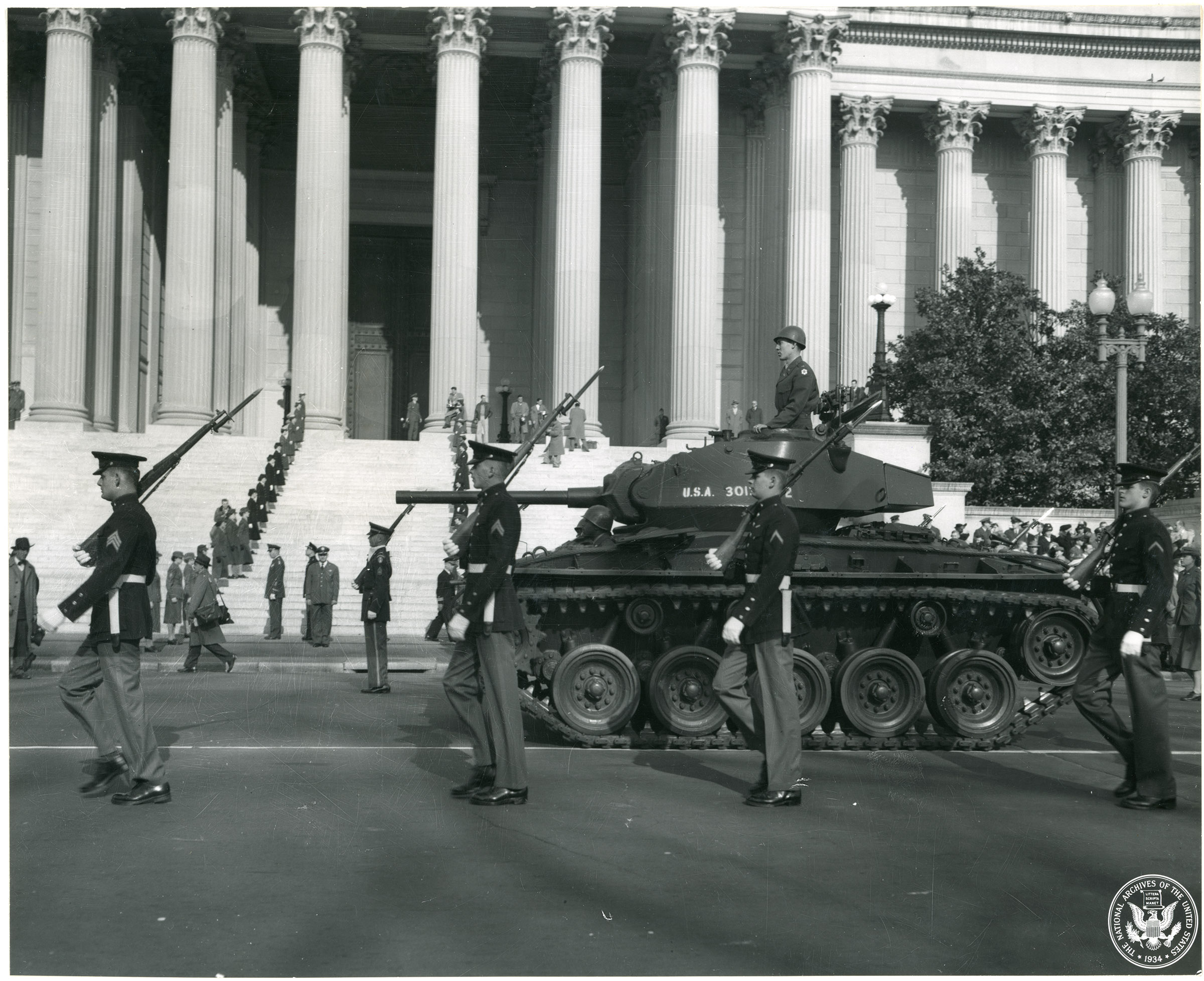
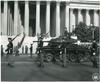
    In 1952, it came to its permanent home, the National Archives. More than a million visitors come to see the Declaration each year, alongside the Constitution and the Bill of Rights.

    The Charters of Freedom arriving at the National Archives, December 13, 1952. Records of the National Archives and Records Administrati...Read more

    The Charters of Freedom arriving at the National Archives, December 13, 1952. Records of the National Archives and Records Administration

    Read less
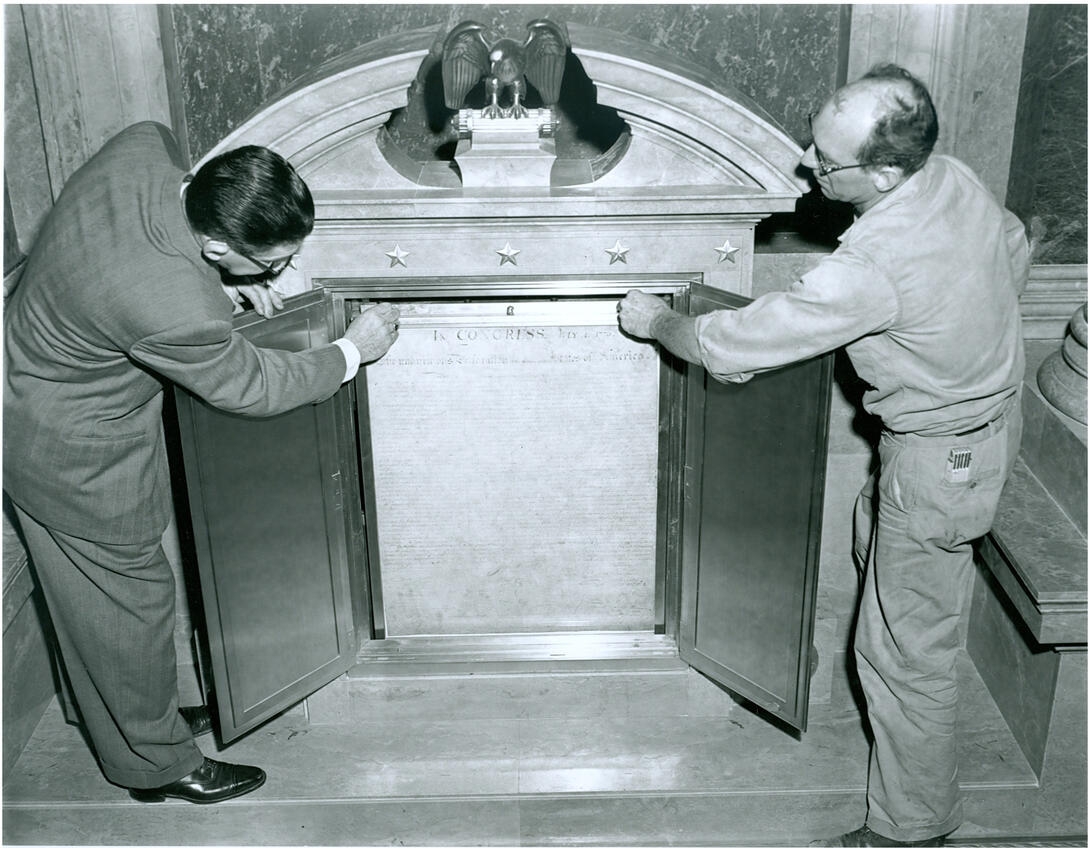
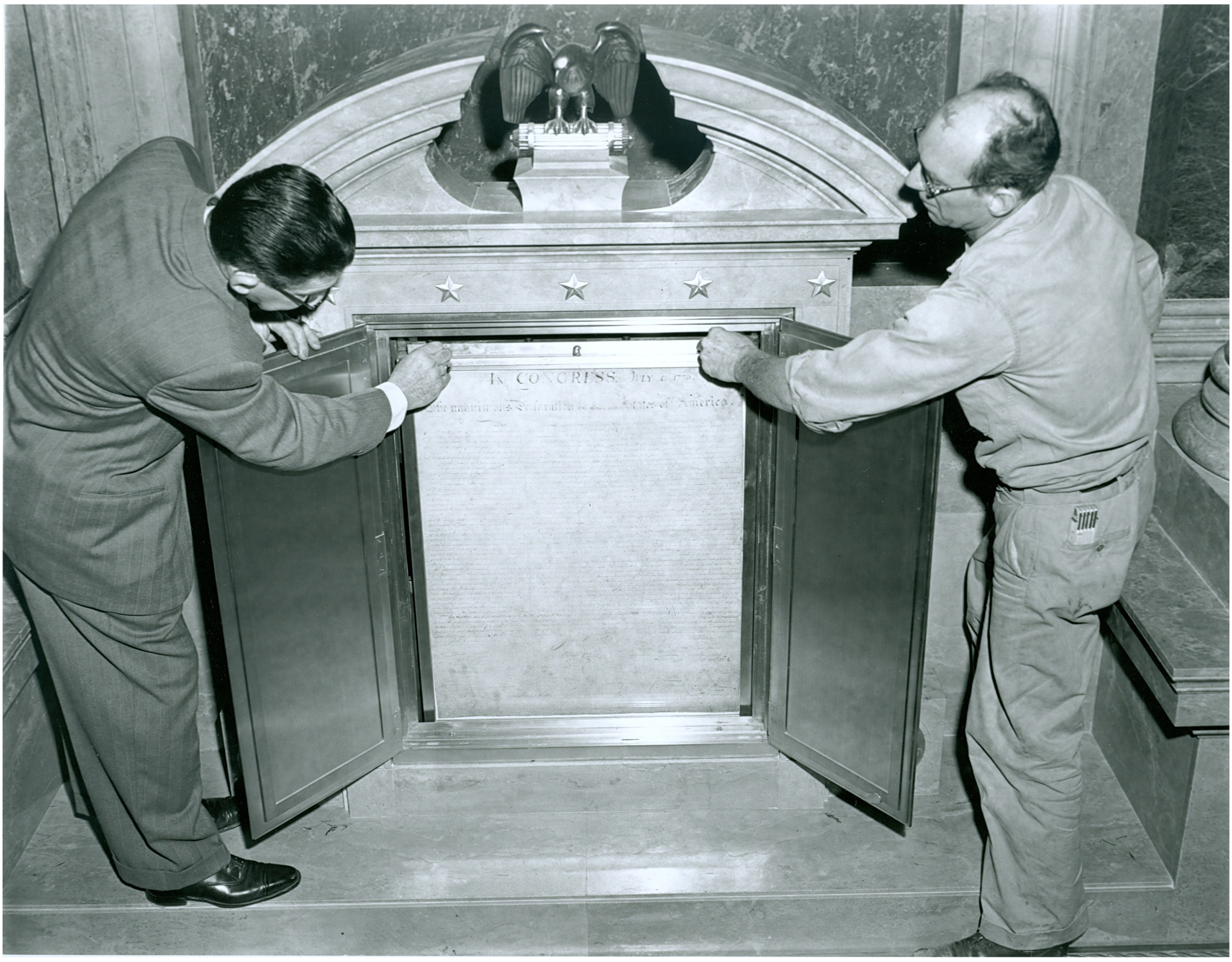
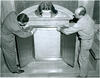
  • Declaration of Independence being placed in its exhibit case at the National Archives, December 13, 1952. Records of the National Archives a...Read more

    Declaration of Independence being placed in its exhibit case at the National Archives, December 13, 1952. Records of the National Archives and Records Administration

    Read less
  • Declaration of Independence with John Hancock's signature
  • Photograph of building under construction with people, cars, and trolley in front.
    Color mural with men standing in front of a large column, one man is handing another a copy of the declaration of independence
    Black and white photograph of soldiers marching with a tank in front of the National Archives building
    Two men placing document inside of exhibit case
DownloadShow Transcript