• Episode 5: America Goes to War

    Johnson orders air campaign and sends first ground troops to Vietnam

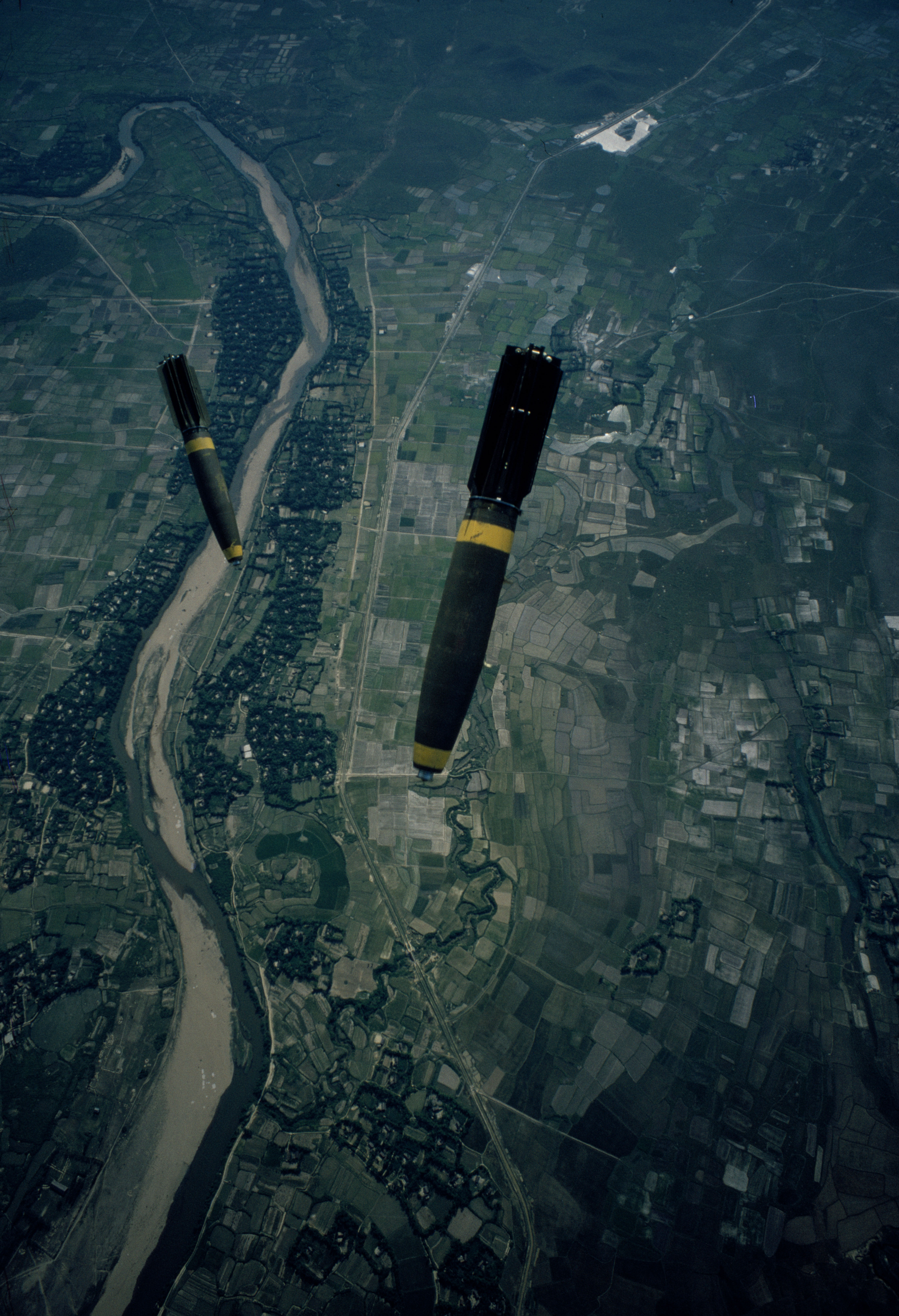
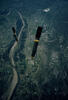
    Color photograph of bombs in air
  • We will fight whatever way the United States wants. - Le Duan, General Secretary of the Central Committee of the Communist Party of Vietnam, 1965

    After winning the Presidential election in a landslide, President Johnson was faced with a deteriorating situation in Vietnam. Pressured by advisers predicting “disastrous defeat,” intent on proving his and America’s “credibility,” fearful of drawing China and the Soviet Union into the conflict, and passionate about maintaining focus on his “Great Society” initiative, he planned a course of gradual escalation he hoped would avoid public scrutiny.   

    In January 1965, after southern Communist forces attacked a U.S. air base, the administration had a pretext to launch Operation Rolling Thunder, a sustained bombing campaign against the north. An air campaign necessitated an air base, and an air base needed protection, so the first American boots hit the ground  soon after the bombing began. Hundreds of thousands of U.S. combat troops would follow. America was at war.

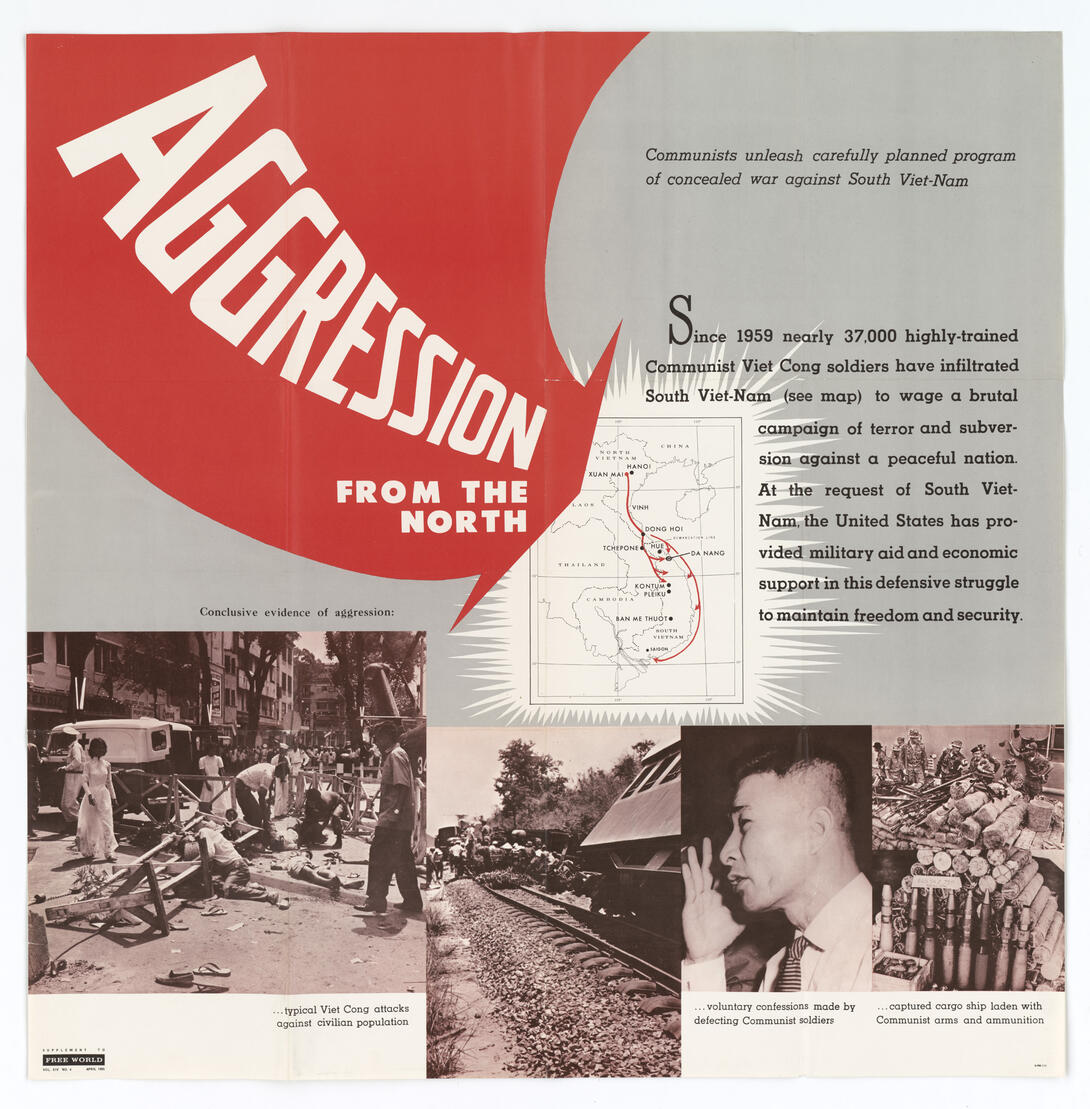
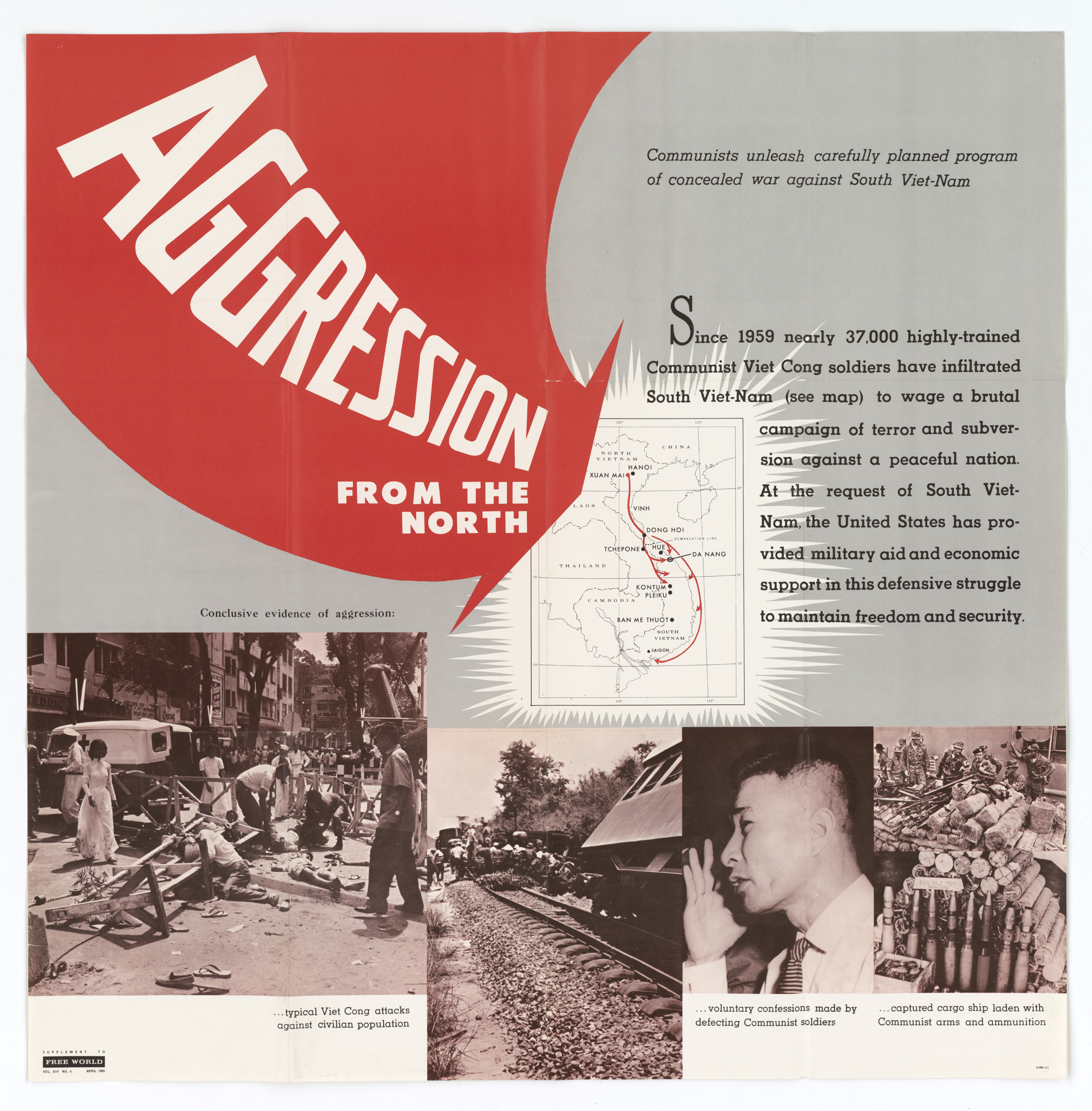
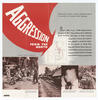
  • A 1965 policy paper titled “Aggression from the North” portrayed the war as an invasion by the North Vietnamese with Moscow pulling the strings.

    “Aggression from the North” United States Information Agency poster, 1965. Records of the U.S. Information Agency

  • Key Dates

    February 7, 1965: National Liberation Front attack on Pleiku Air Base

    March 2, 1965: Operation Rolling Thunder

    March 8, 1965: 3,500 Marines arrive at Danang Harbor

    March 21, 1965: Selma to Montgomery Civil Rights March

    May 21, 1965: Large teach-in at the University of California at Berkeley

    August 6, 1965: Johnson signs Voting Rights Act

    November 14, 1965: Battle of la Drang begins

    November 27, 1965: Tens of thousands march on Washington against the Vietnam War

    December, 1965: American forces reach 175,000 

    Falling bombs, September 16, 1966. General Records of the U.S. Navy

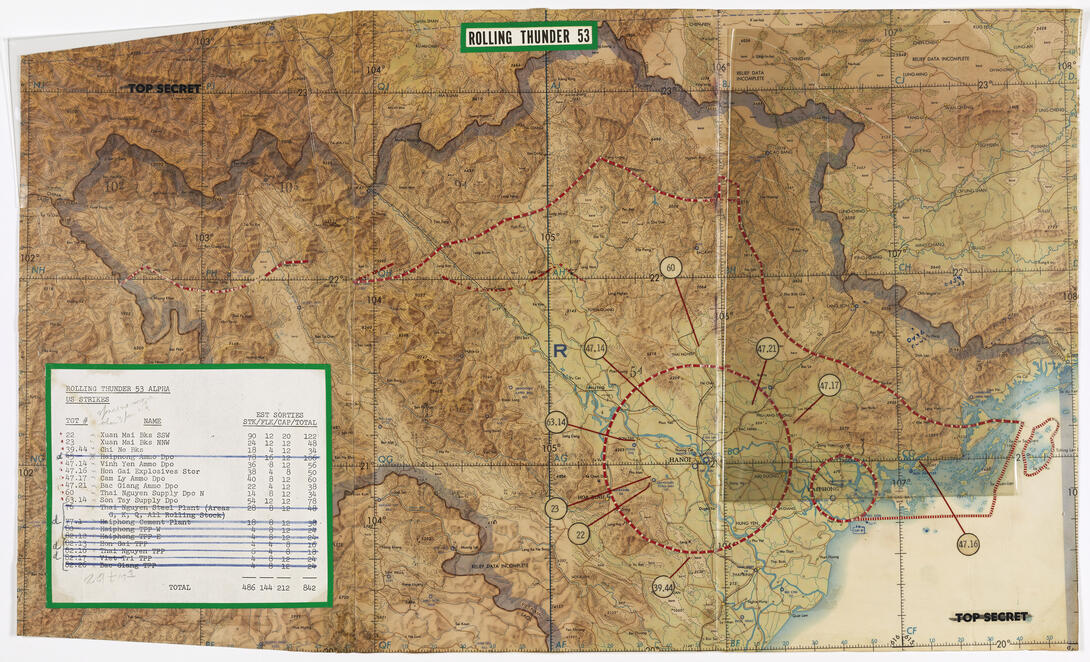
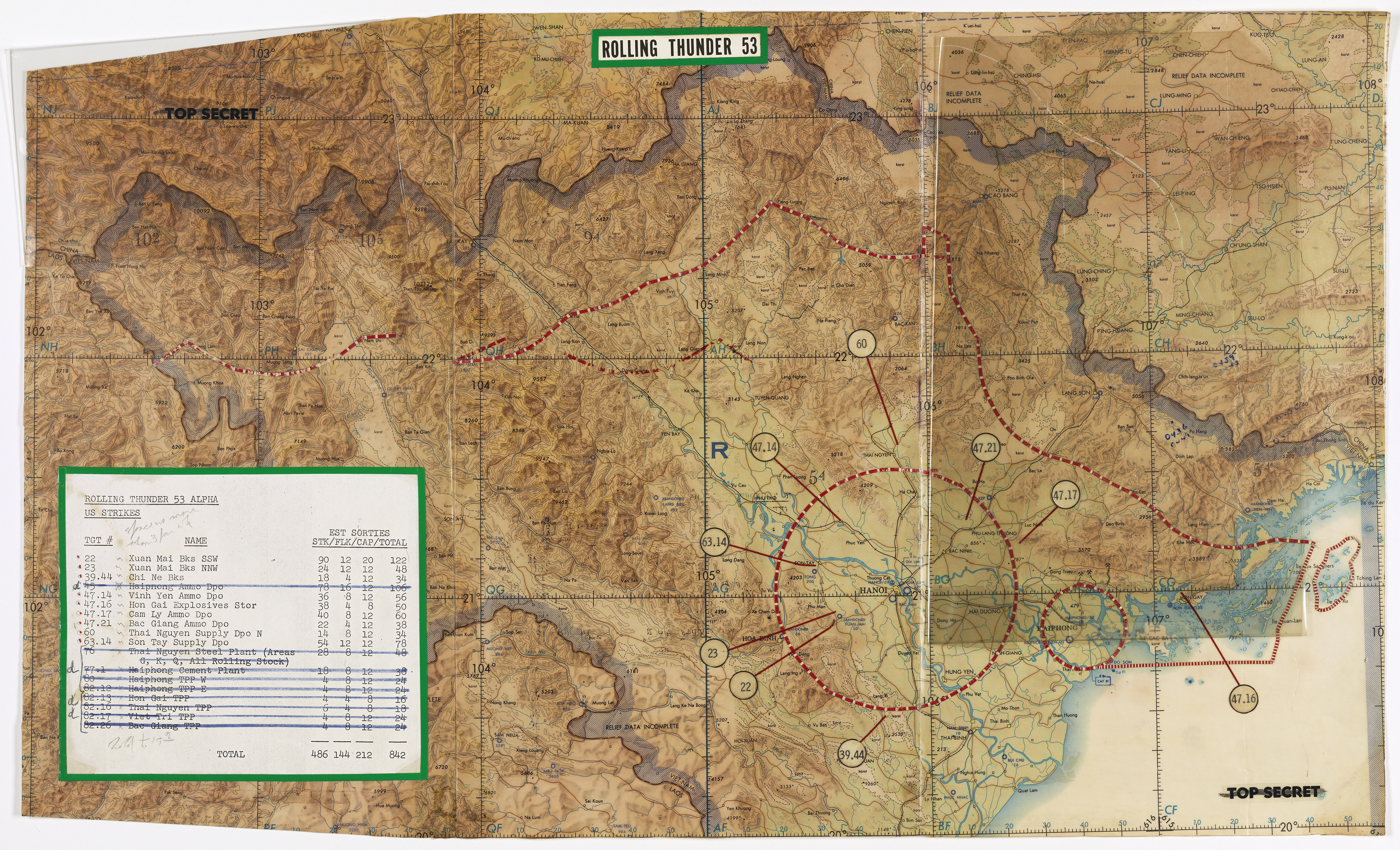
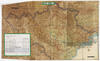
  • This map shows “red zones” where bombing was prohibited by the White House.

    Rolling Thunder 53 strike map, January 1967. Lyndon B. Johnson Library and Museum

  • Color photograph of bombs in air
  • Red and gray poster with photographs, map and red text that reads "Aggression from the North"
    Color photograph of bombs in air
    Color map of Vietnam with red marks showing red zones and typed text with coordinates
DownloadShow Transcript