• Opening the Vault: Freedom Train 1947

    In September 1947, a seven-car train set off from Philadelphia on a journey around the U.S. with precious cargo on board: more than a hundred of the country’s most valued historical documents. The museum on rails was called the Freedom Train. It was a major civic and educational project designed to energize the country with American history. 
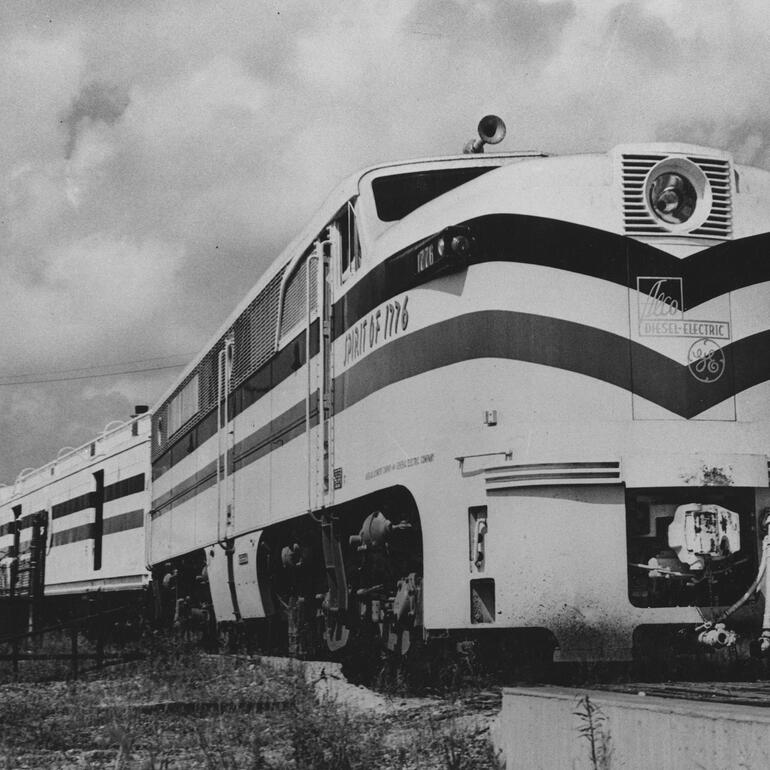
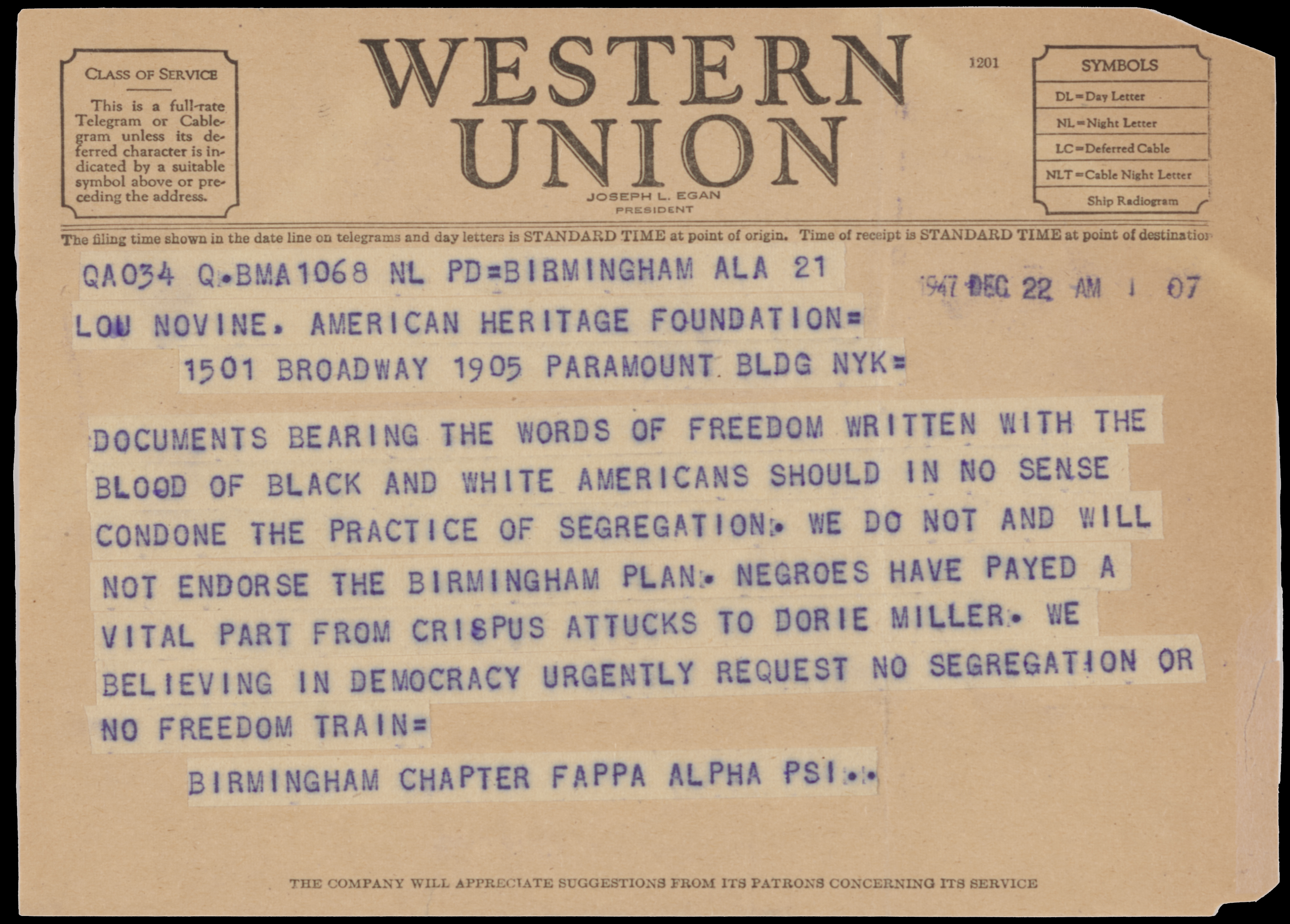
    Black and white photograph of a train engine
  • The History Express

    The Freedom Train stopped in more than 300 cities across 48 states in a period of 16 months. By the time it reached its final destination in Washington, DC, more than 3.5 million visitors had viewed the exhibits. The 1975 American Freedom Train repeated the journey on an even larger scale as part of the country’s bicentennial celebrations. 

    In celebration of America’s 250th anniversary and inspired by the bicentennial Freedom Train, the National Archives launched the Freedom Plane National Tour. The traveling exhibition will fly treasured documents related to the founding of the nation across the country.

  • Right on Time

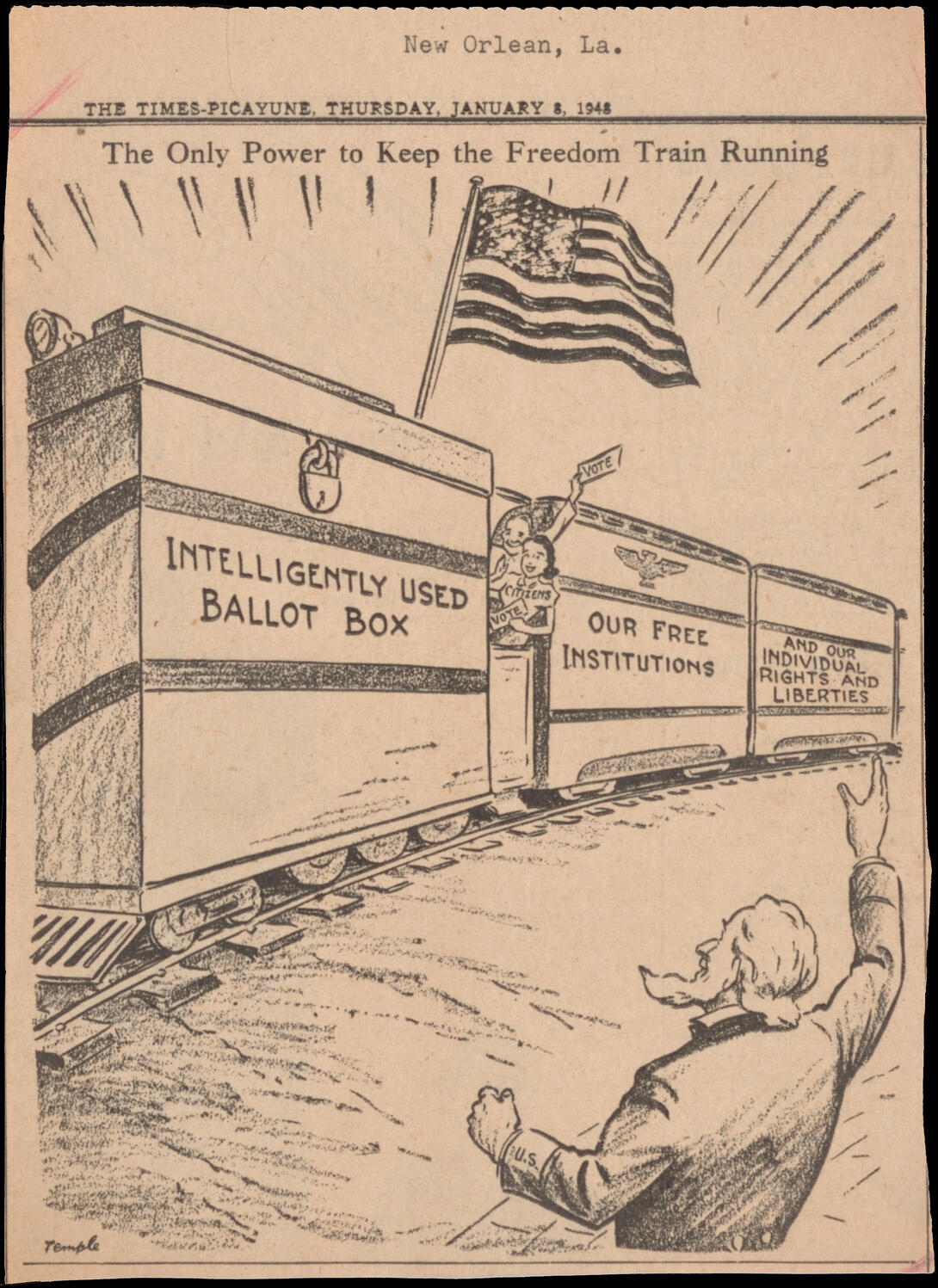
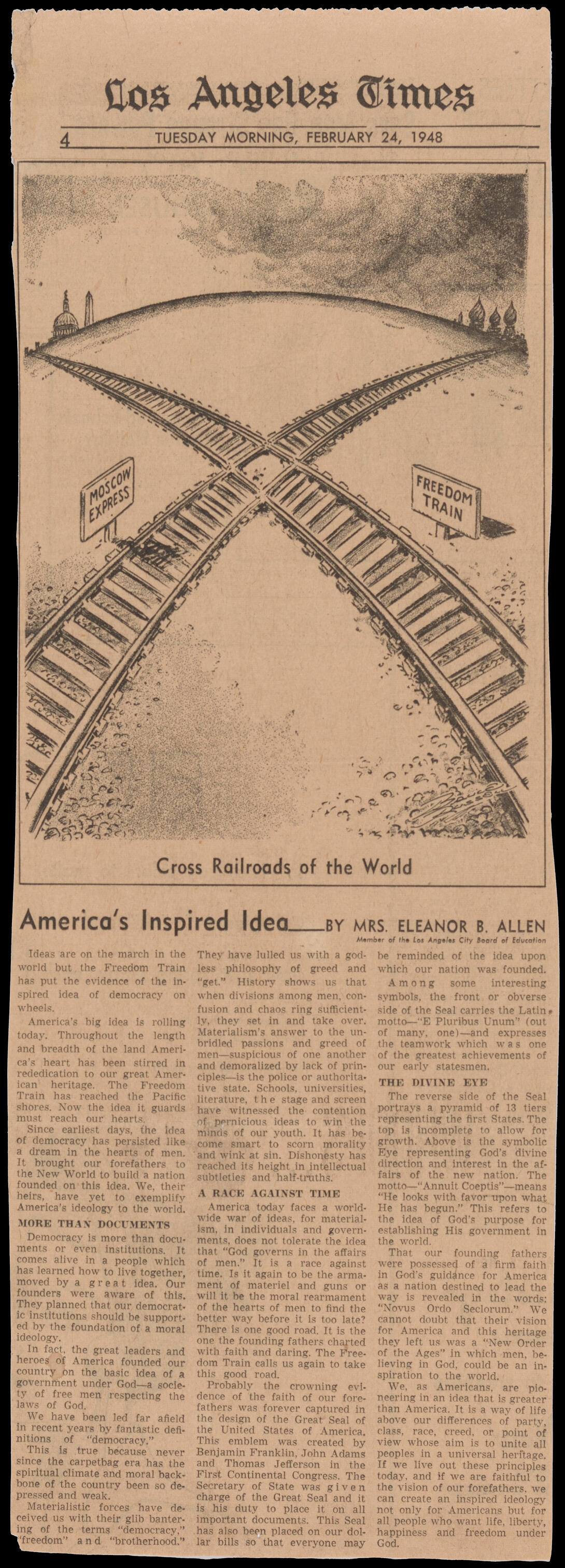
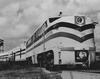
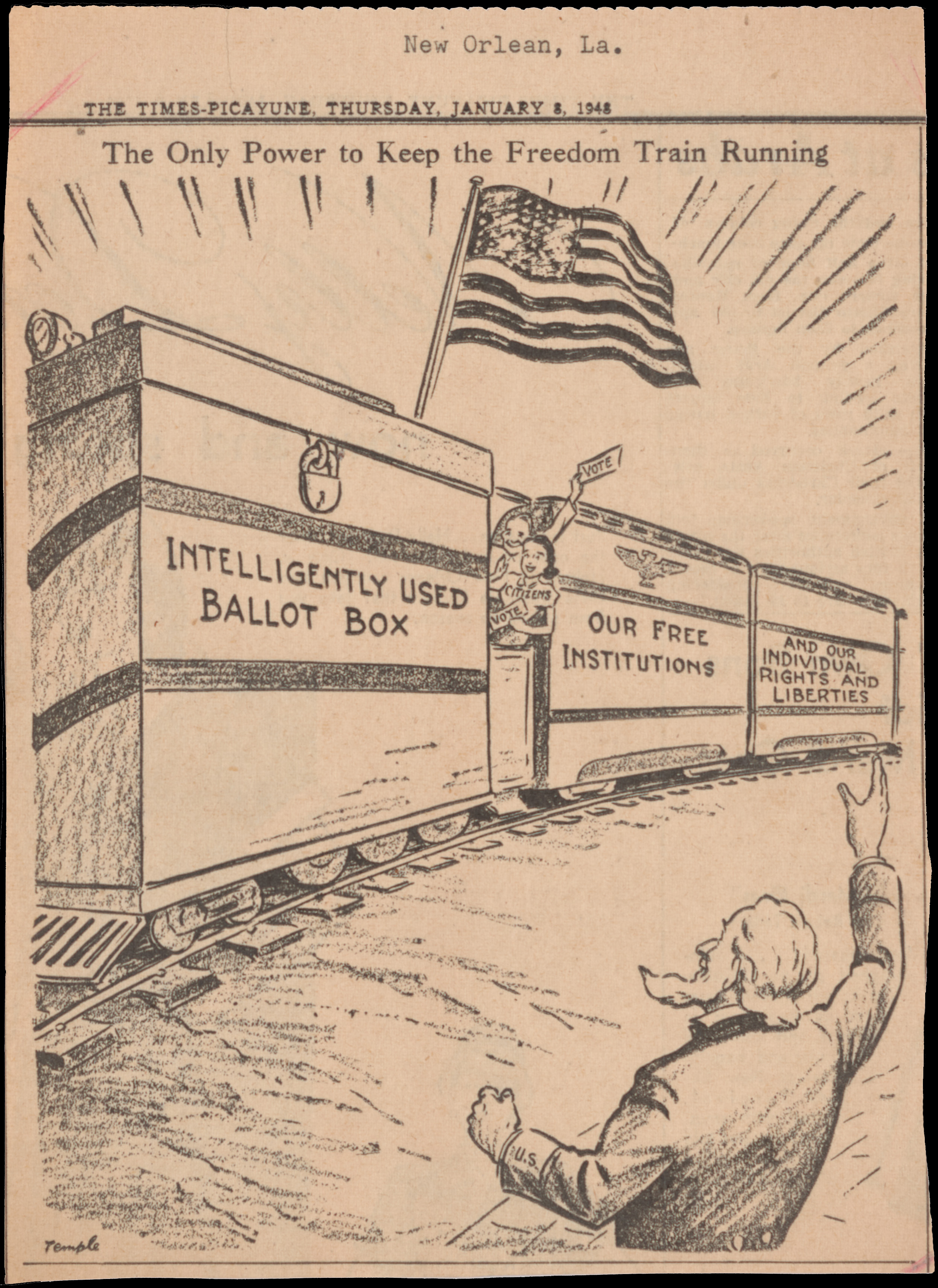
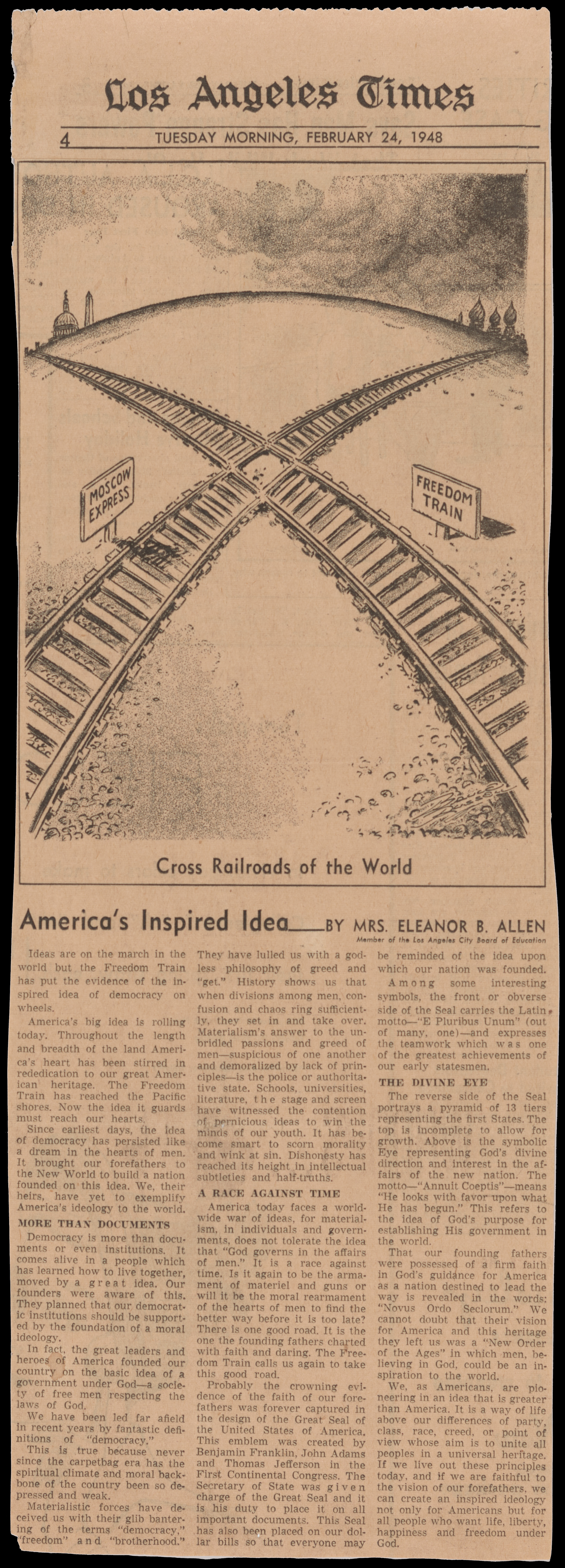
    The idea for the Freedom Train emerged after World War II as a way to show the differences between the democratic ideals of the U.S. and the fascism of Nazi Germany and communism of the Soviet Union. Comic strips in various newspapers illustrated these motivations.

    Comic, The Times-Picayune, January 8, 1948. Records of the National Archives and Records Administration

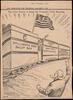
  • Comic, Los Angeles Times, February 24, 1948. Records of the National Archives and Records Administration

  • A Mobile Museum

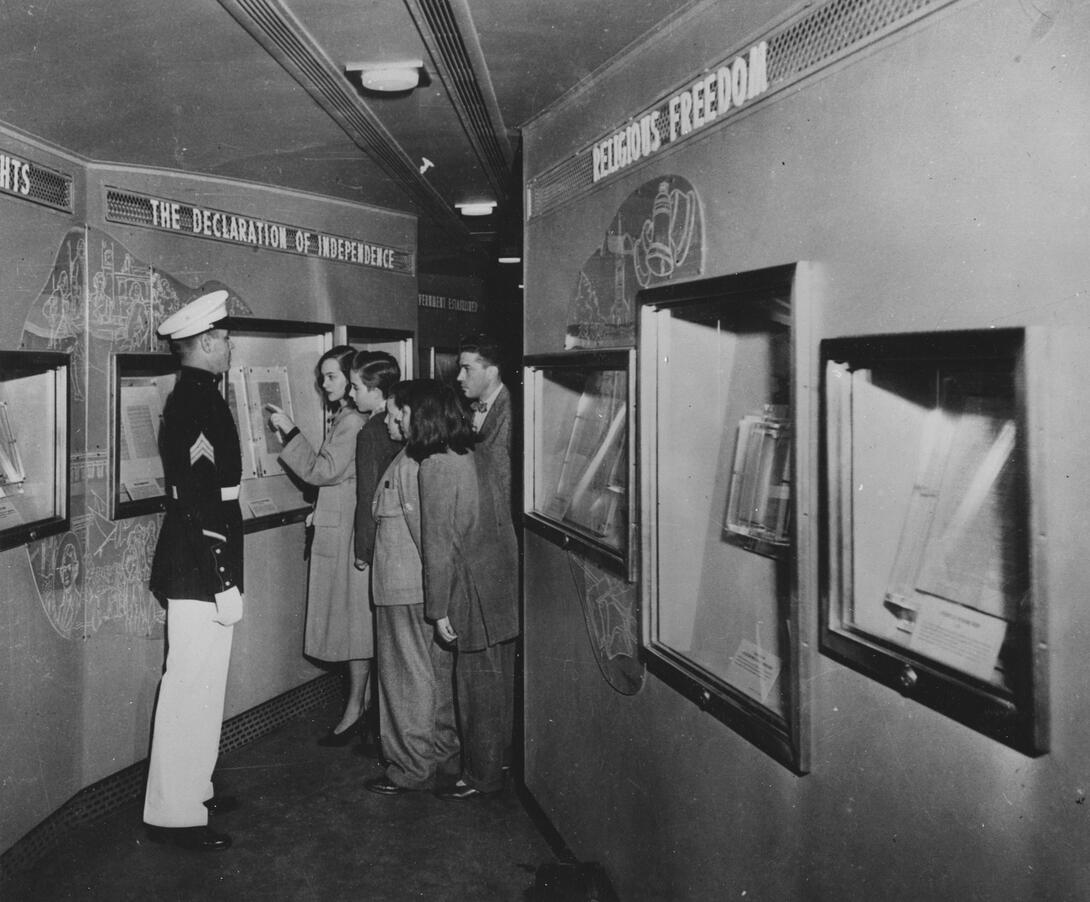
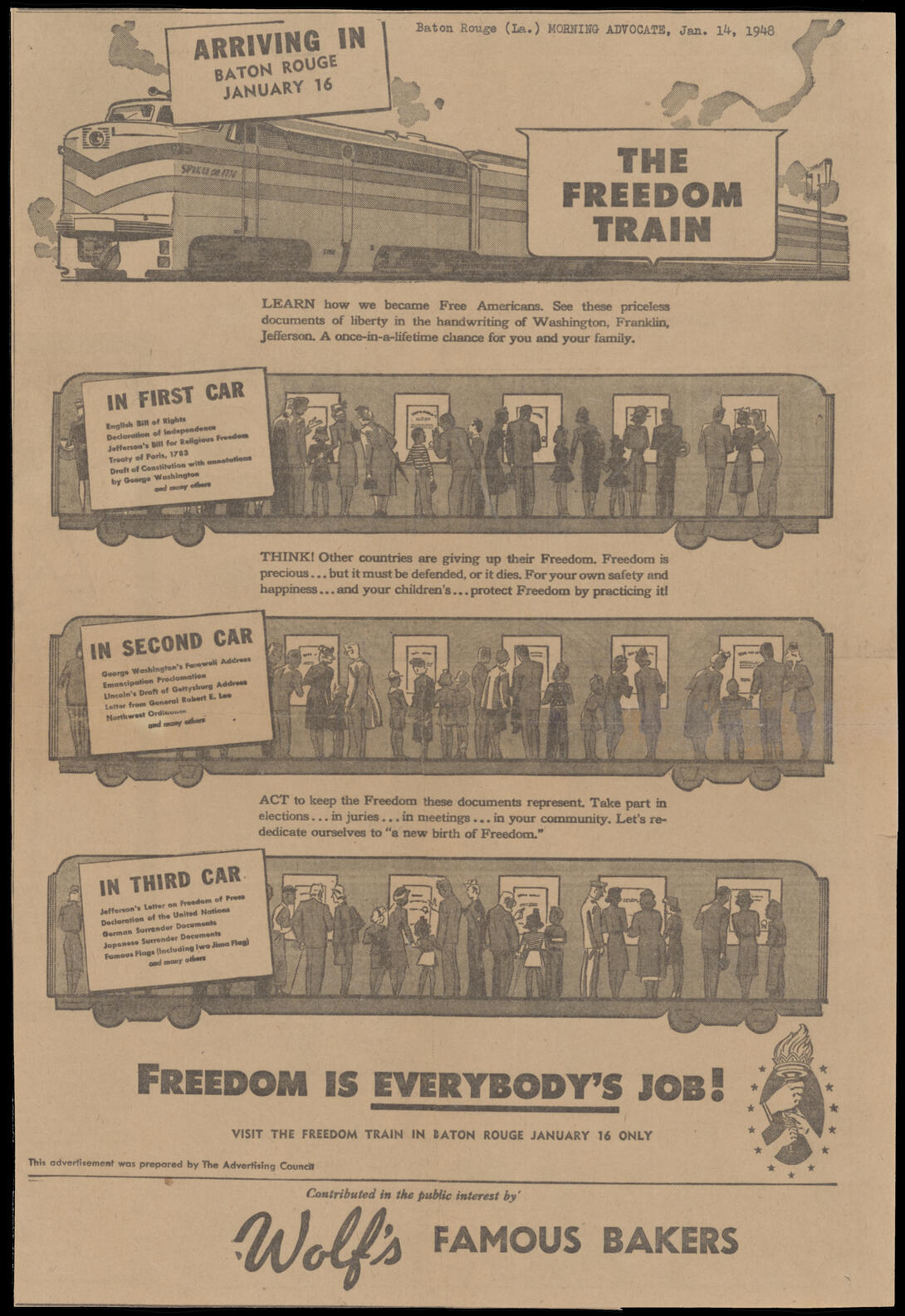
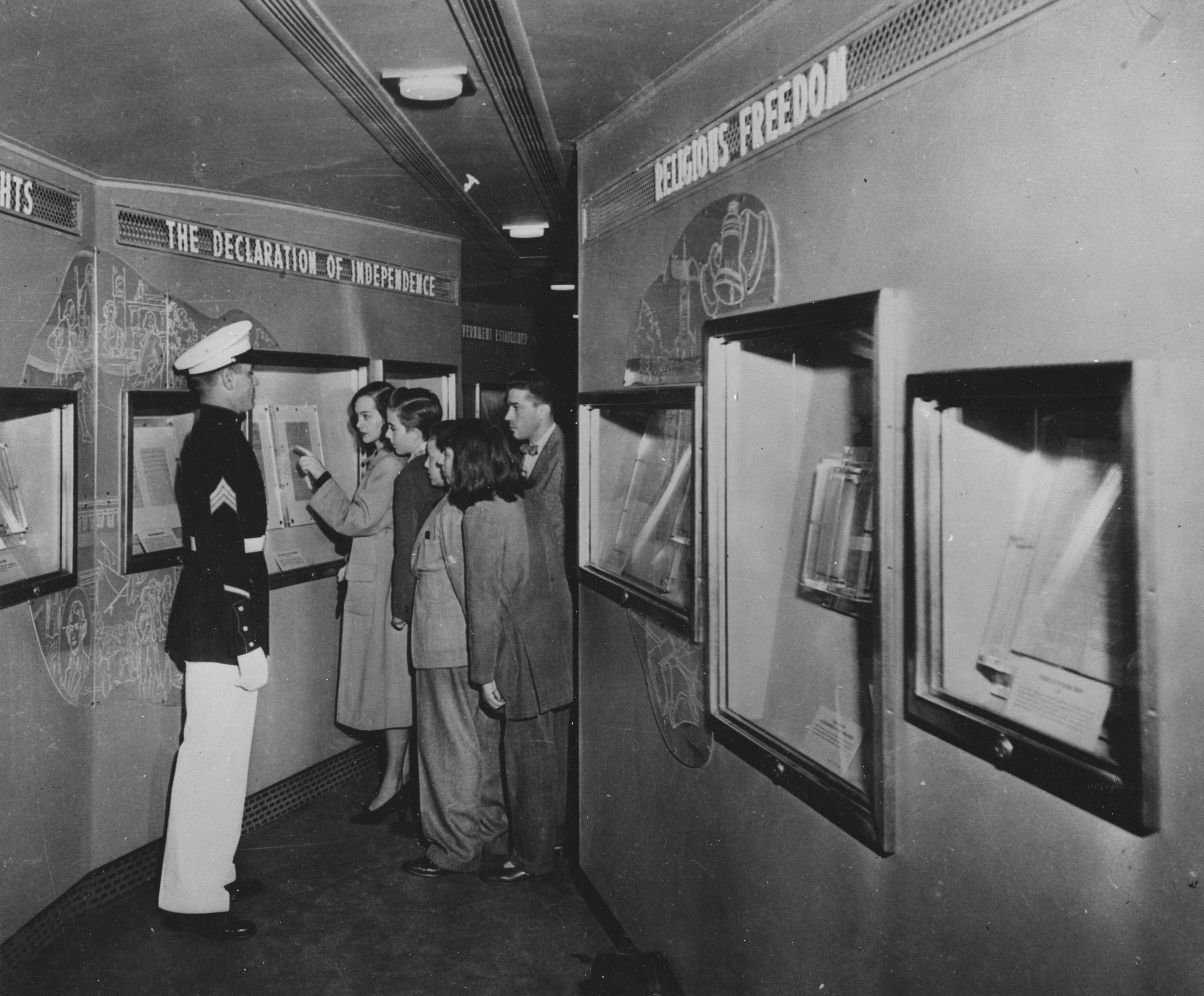
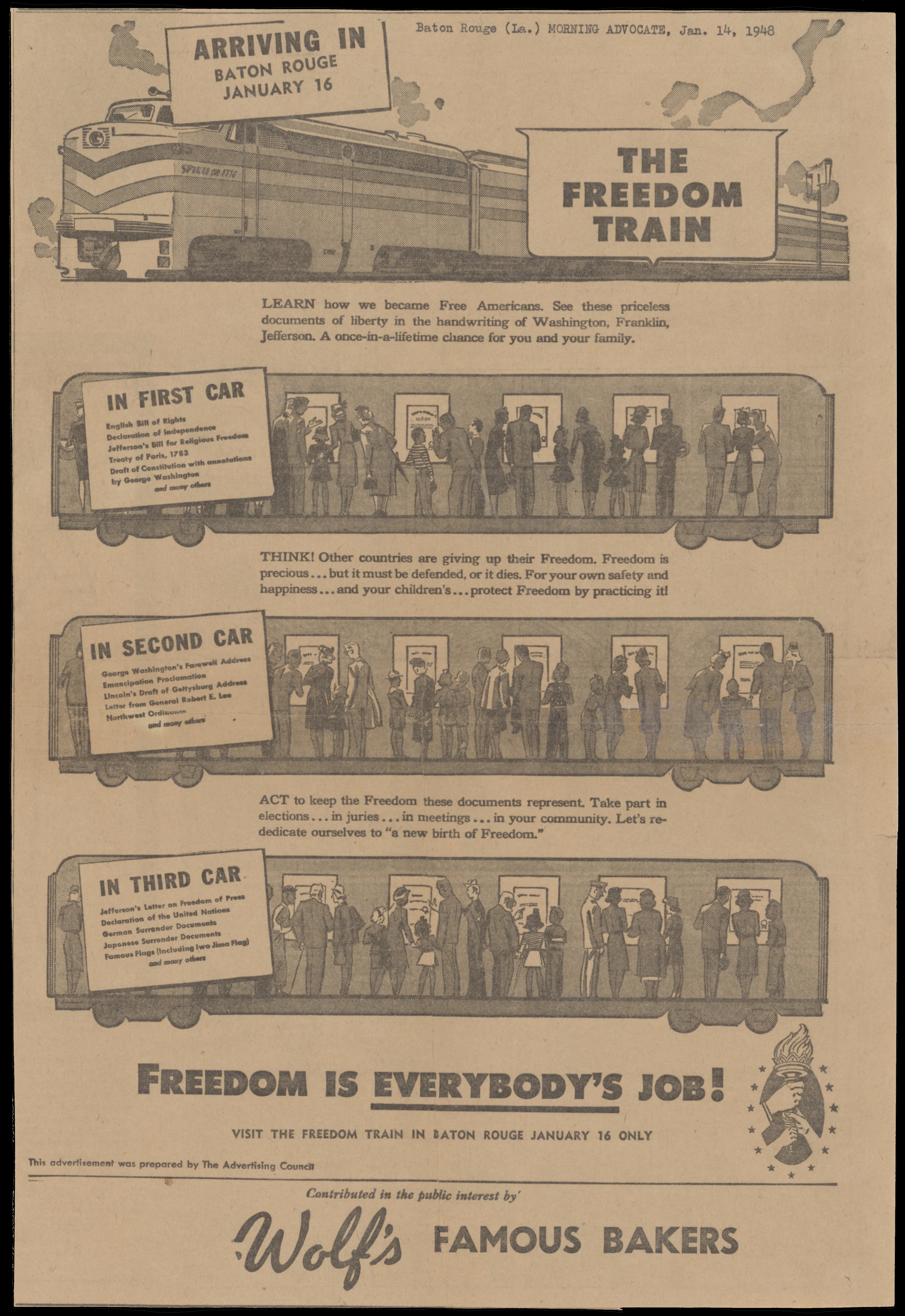
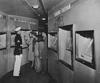
    The 127 documents displayed on the Freedom Train ranged from the Declaration of Independence to the 1945 German surrender. The National Archives loaned 30 documents to the exhibition including the Bill of Rights and Emancipation Proclamation. The renovated train cars were state-of-the-art exhibit spaces with custom-built cases for maximum security and preservation.

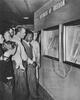
    Visitors on the Freedom Train, 1948. Records of the National Archives and Records Administration

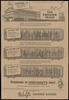
  • Baton Rouge, Morning Advocate, January 16, 1948. Records of the National Archives and Records Administration

  • The Freedom Pledge

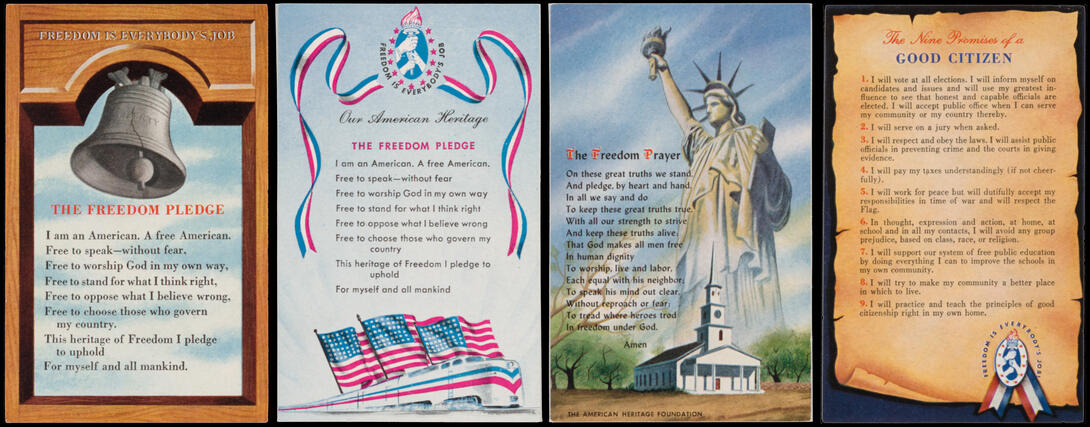
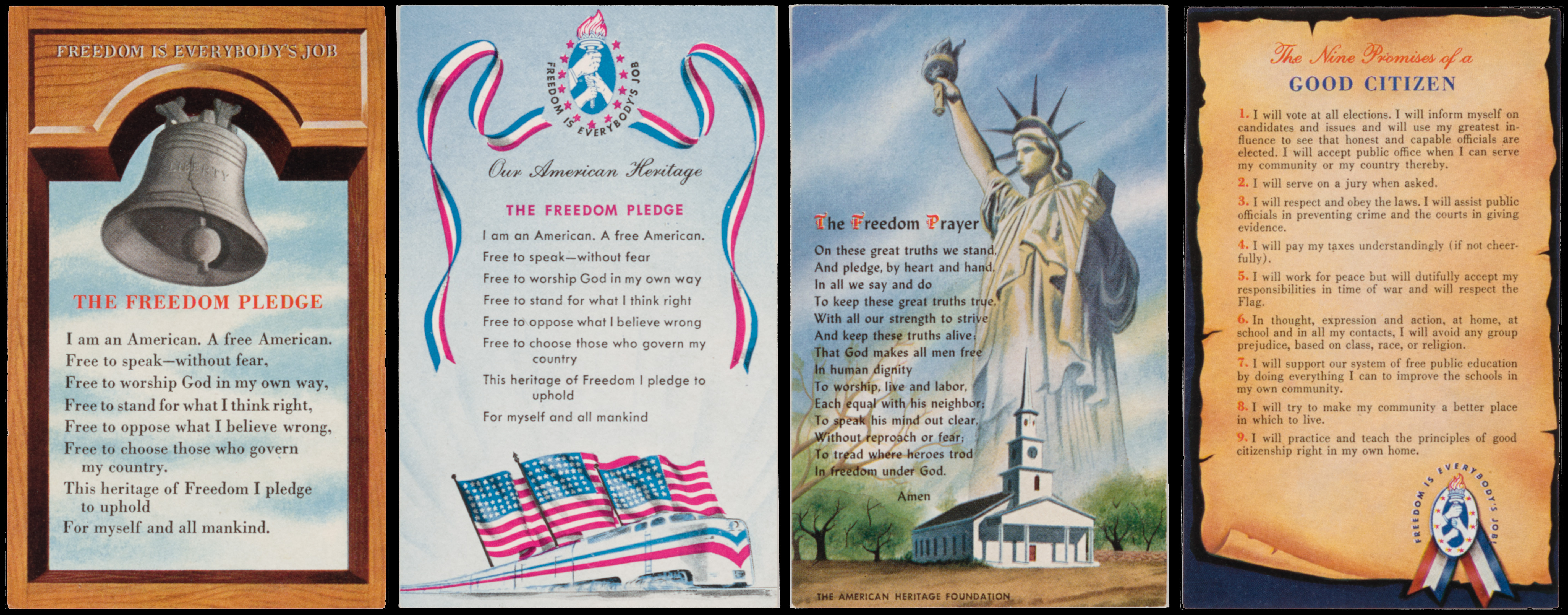
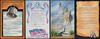
    The Freedom Train was a civic initiative as well as a traveling exhibition. Visitors were invited to read The Nine Promises of a Good Citizen and to take the Freedom Pledge. These were printed on a variety of media including official postcards. The millions of visitors who took the pledge on the train signed their names on large scrolls at the end of their visit. 

    Official Freedom Train Postcards, 1947. Records of the National Archives and Records Administration

  • “A Train Song”

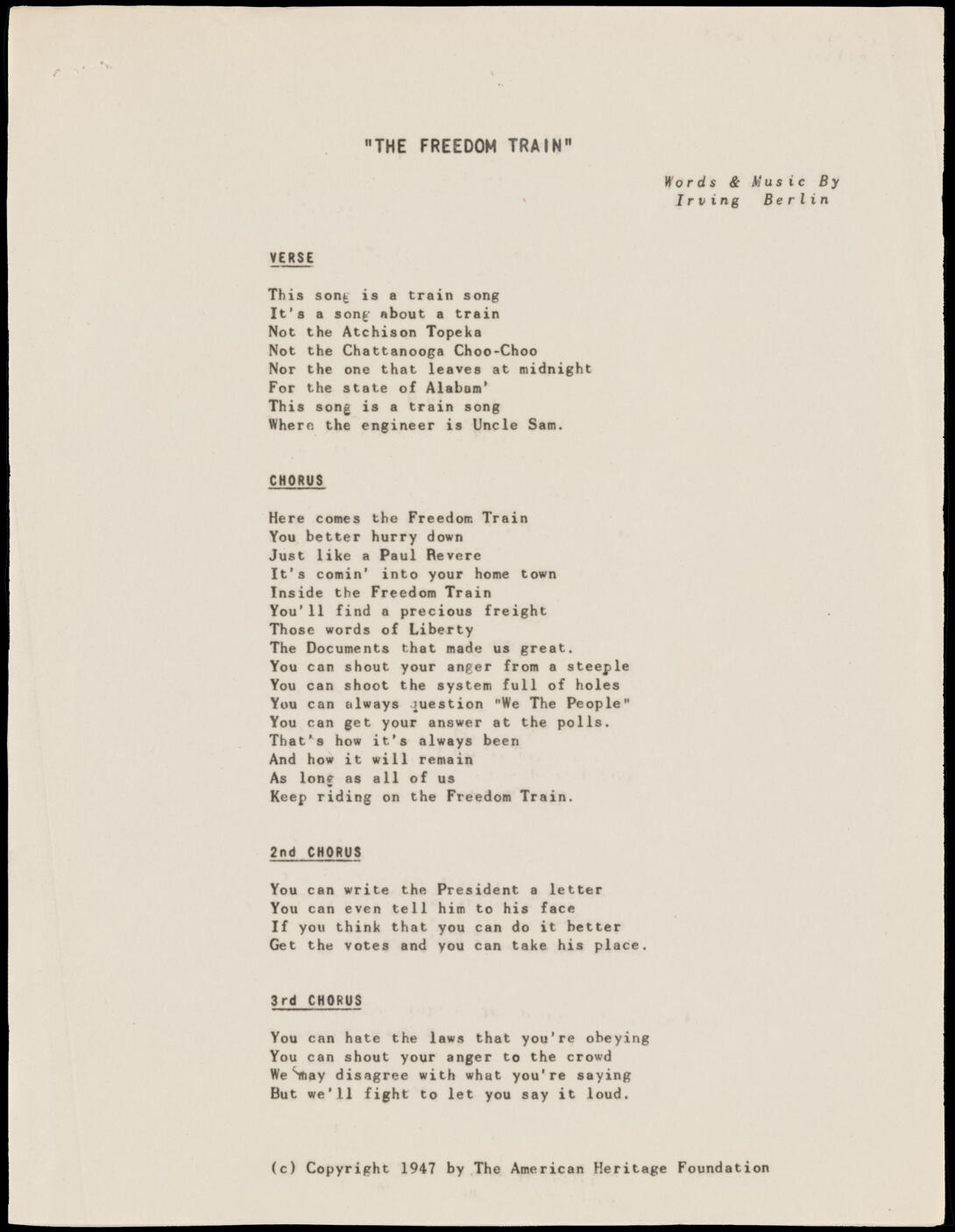
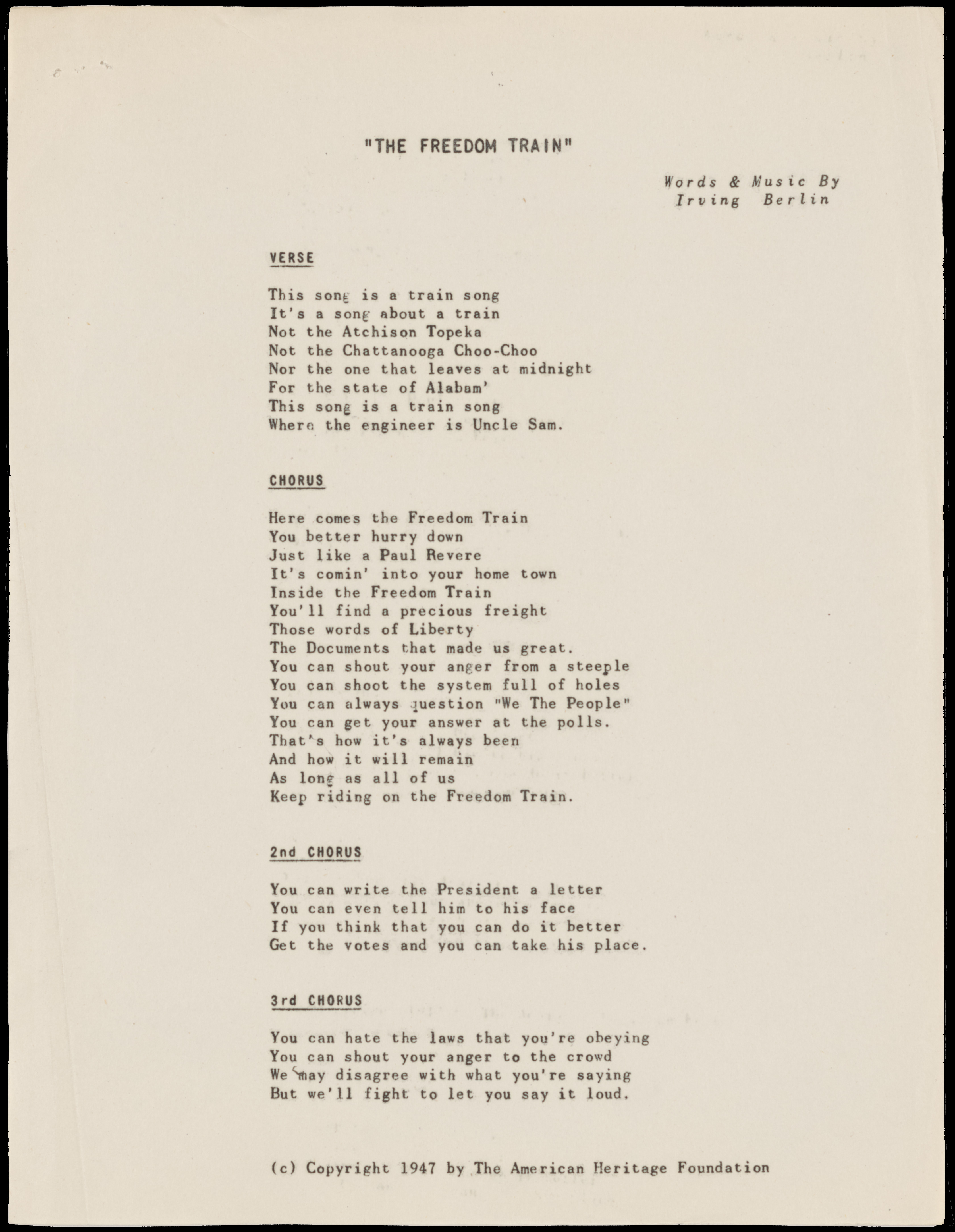
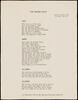
    Songwriter Irving Berlin wrote the Freedom Train’s official anthem. The Russian-born Jewish composer is most famous for writing “God Bless America” during World War I. “The Freedom Train” song played on radios across the country after it was recorded by Bing Crosby and the Andrews Sisters.

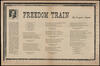
    "The Freedom Train" Lyrics by Irving Berlin, 1947. Records of the National Archives and Records Administration

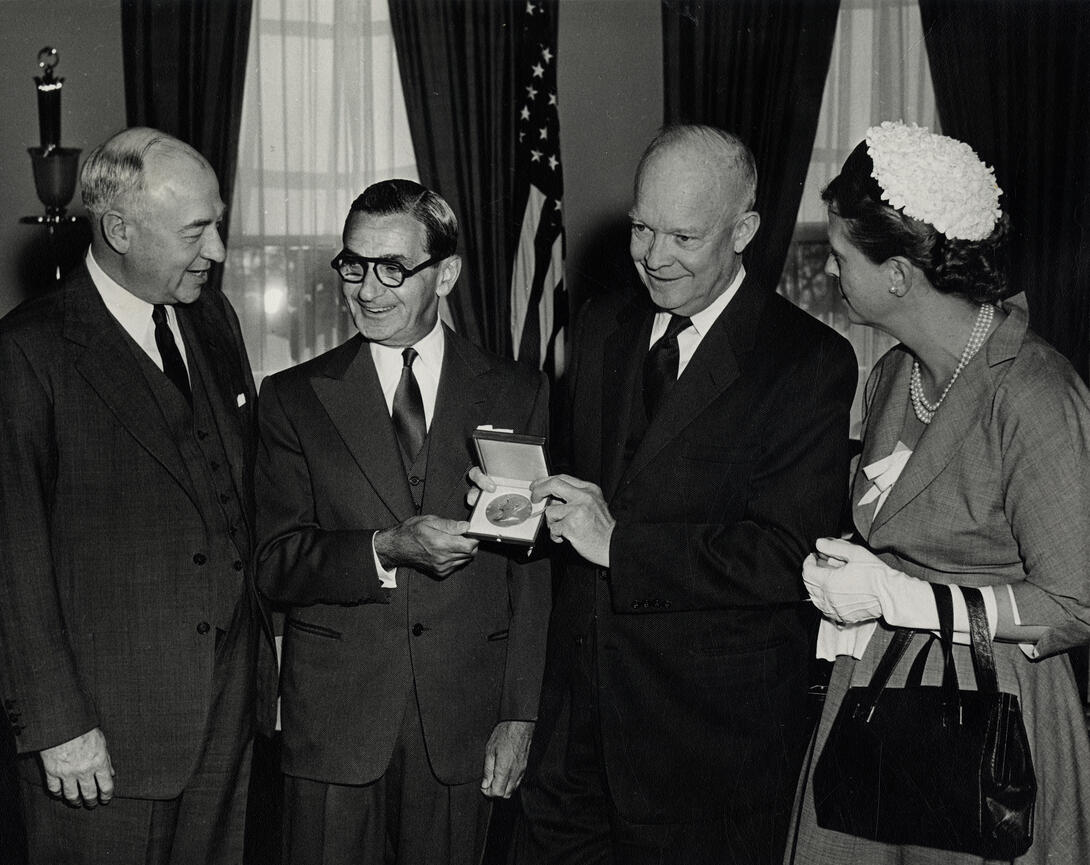
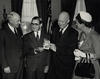
  • Irving Berlin Receives Medal from President Dwight D. Eisenhower, 1955. Records of the National Park Service

  • “Our Freedom Train”

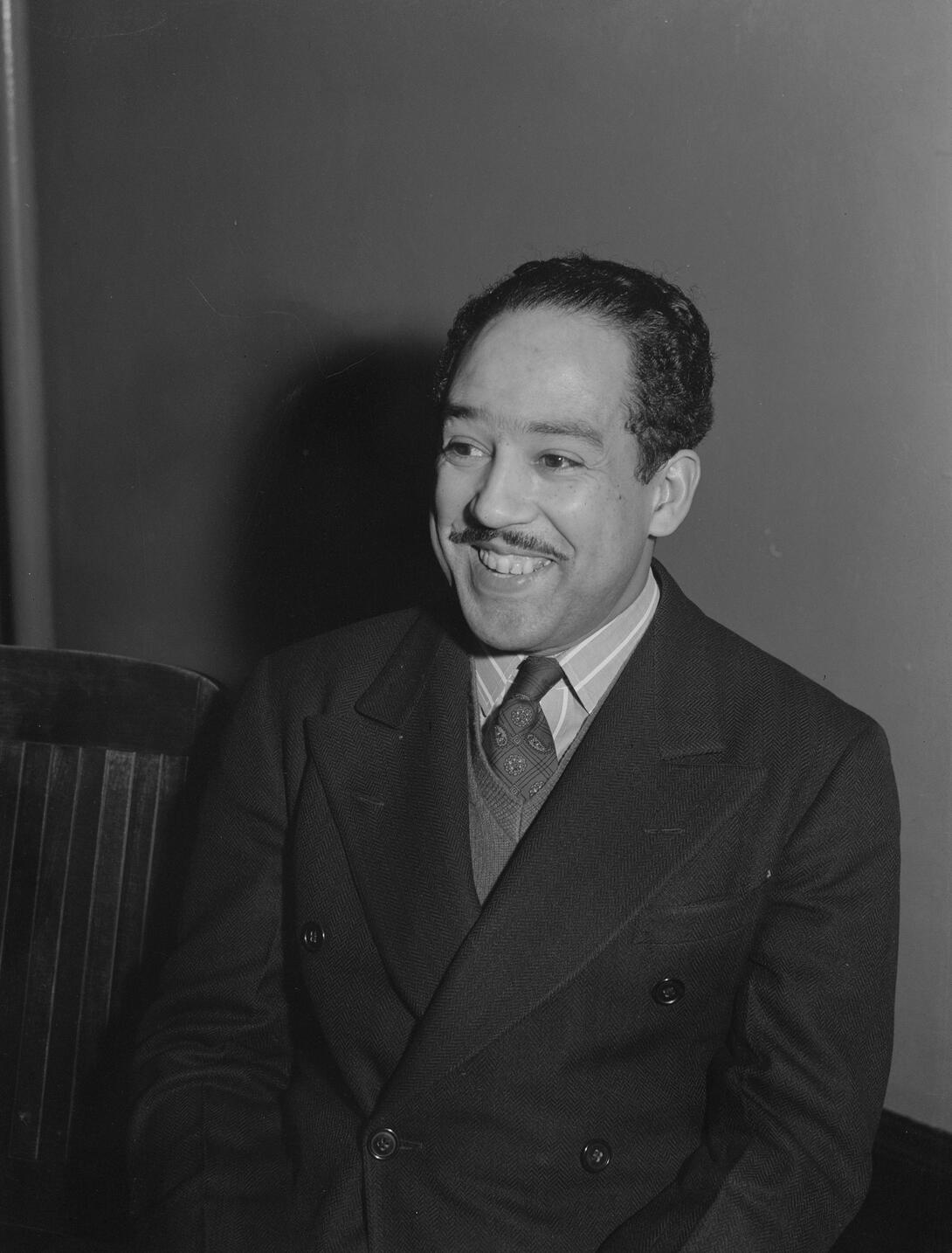
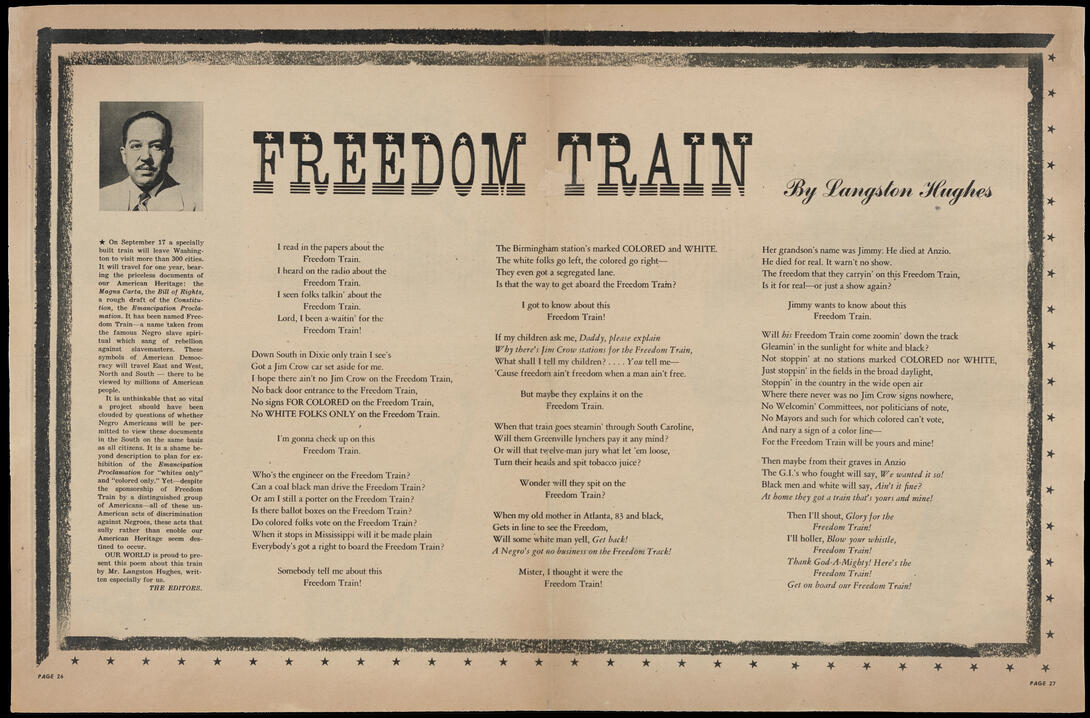
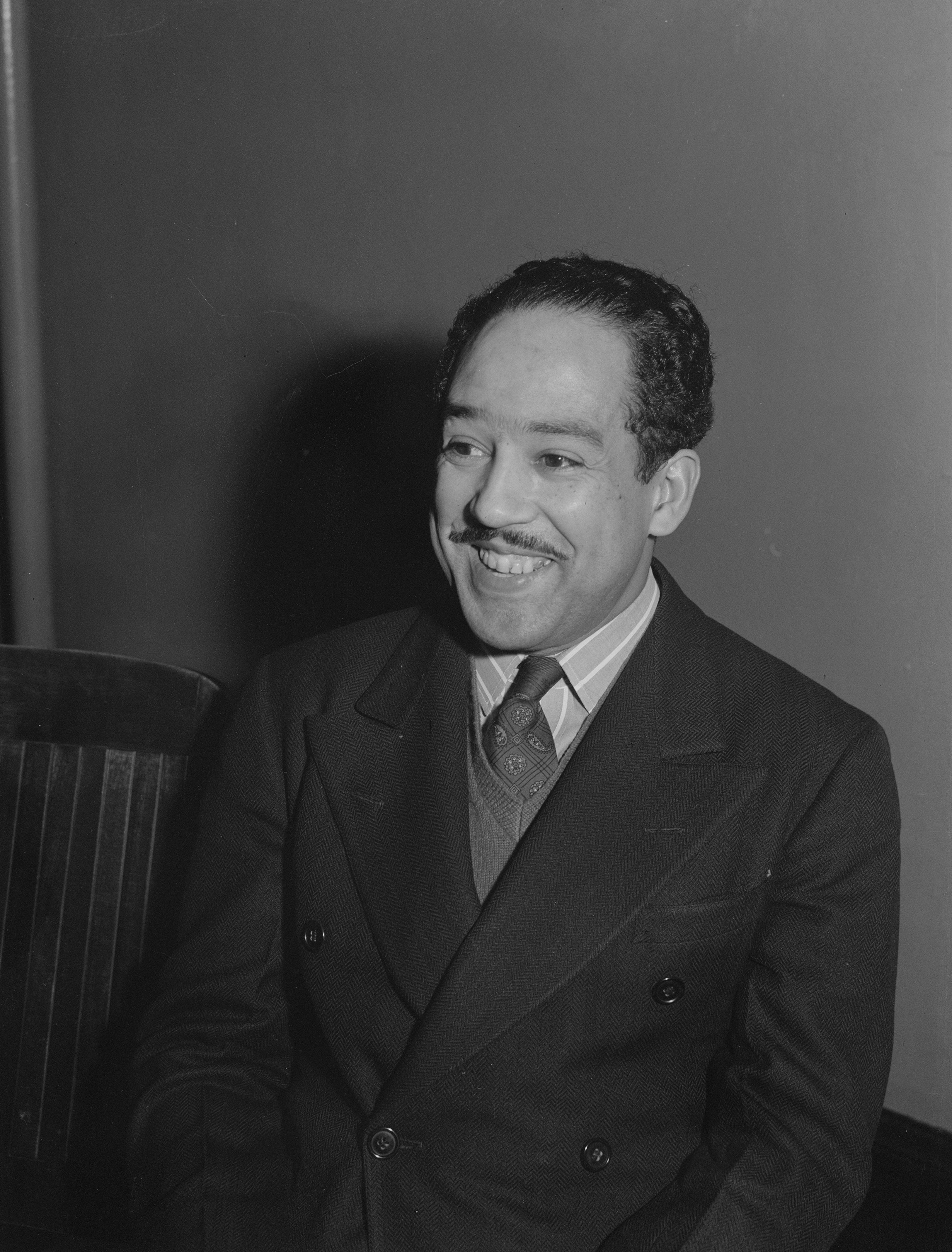
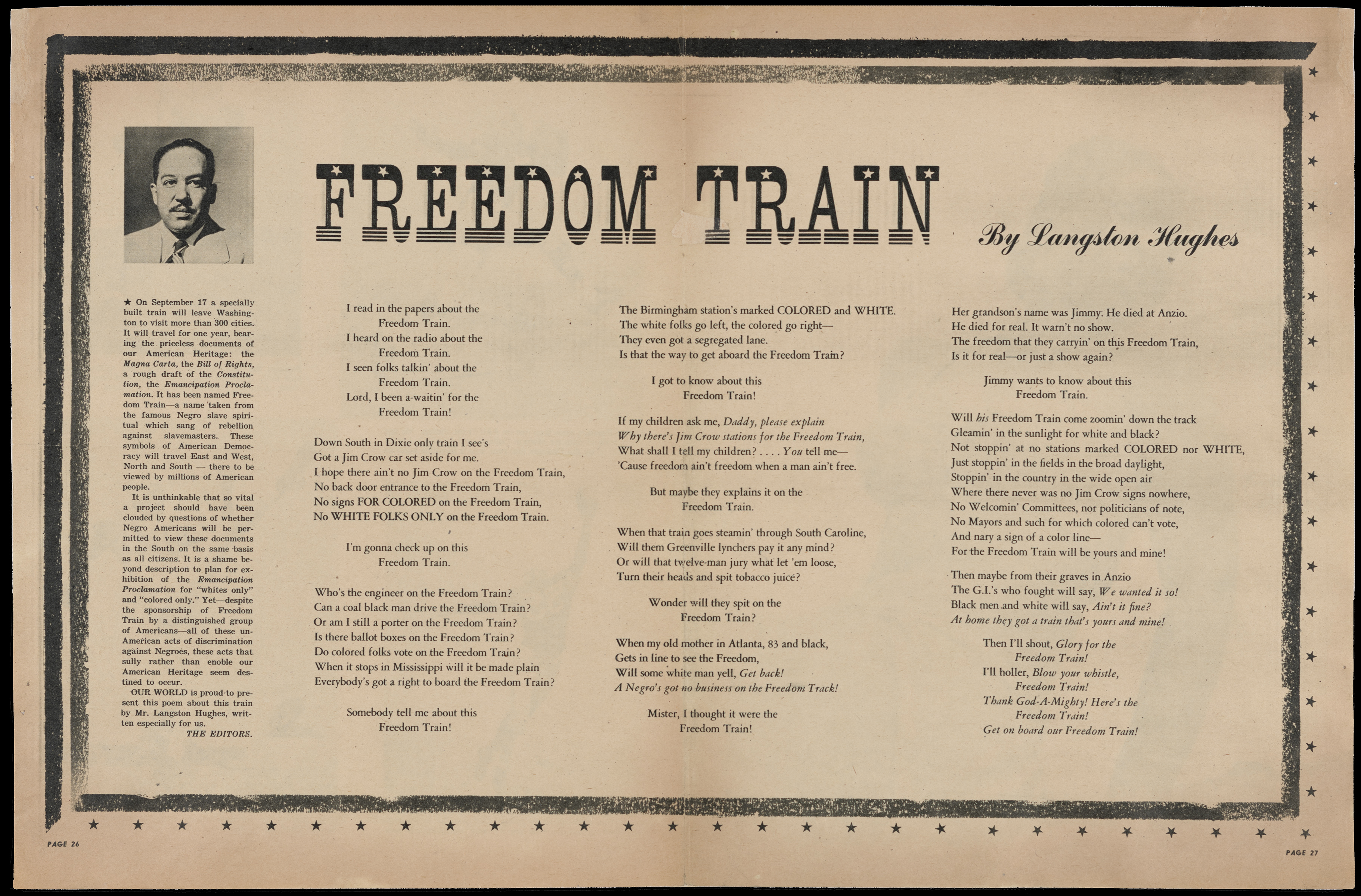
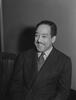
    Langston Hughes, the famed poet of the Harlem Renaissance, wrote “Our Freedom Train” in response to the traveling exhibition. Hughes was writing in the 1940s, when racial segregation was codified in law, including on public transportation. His poem reflects his feelings on the contrast between the Freedom Train’s message and the social conditions of the time. 

    Photograph of Langston Hughes by Jack Delano, 1942. Courtesy of Library of Congress

  • Freedom Train Poem by Langston Hughes, 1947. Records of the American Heritage Foundation

  • United in Integration

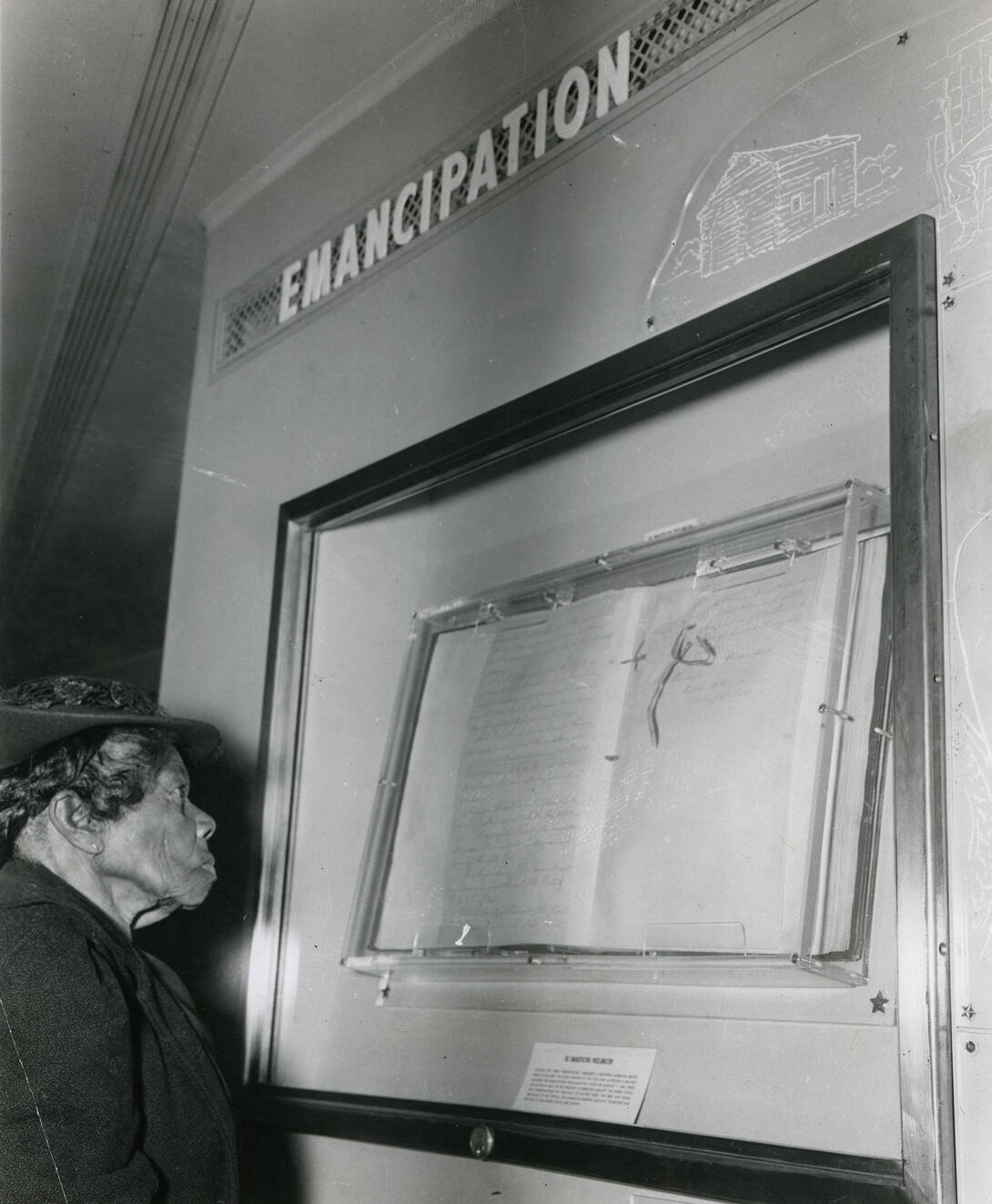
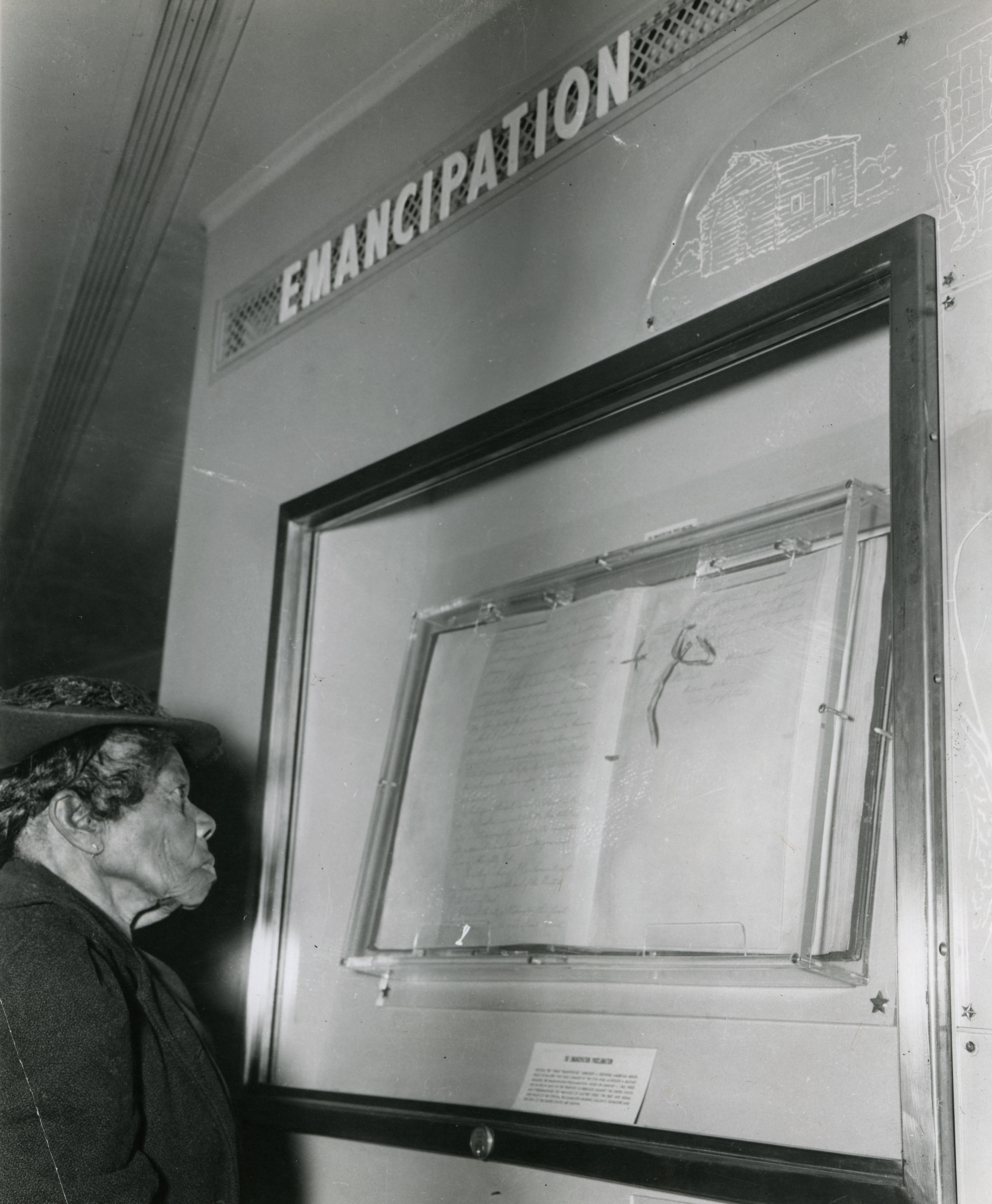
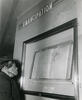
    With the Emancipation Proclamation on board, the Freedom Train stood by its principles to display history to all Americans.

    Sally Fickland Viewing the Emancipation Proclamation on the Freedom Train, 1947-1949. Records of the American Heritage Foundation

  • Rolling Past

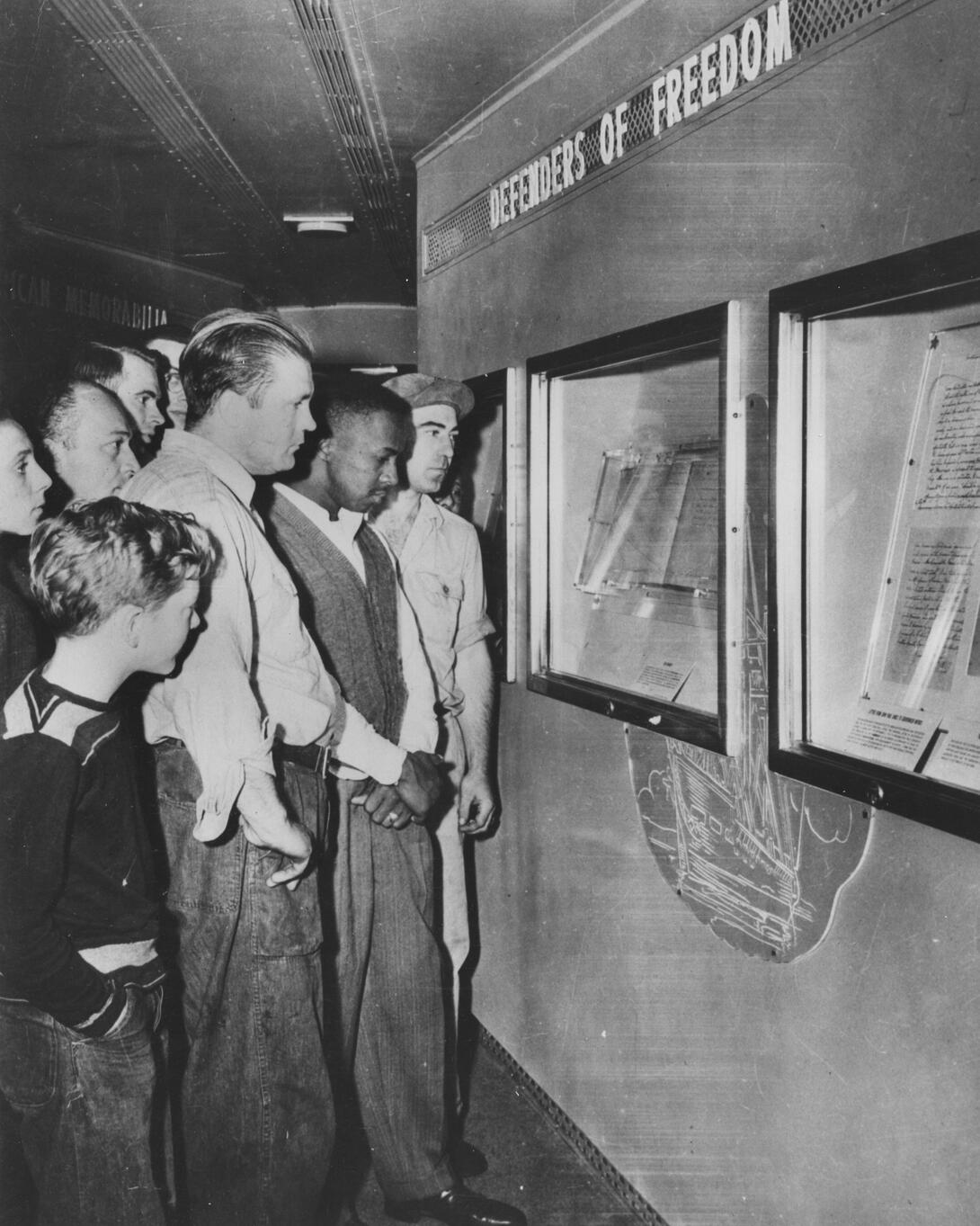
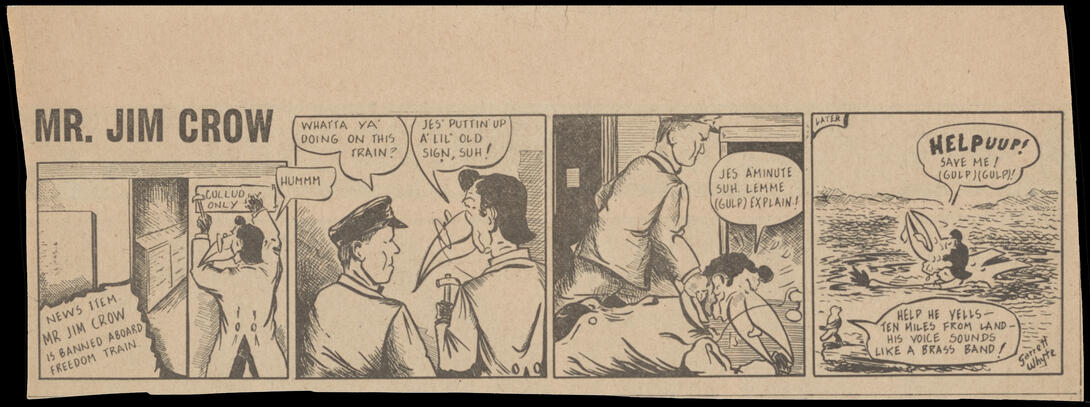
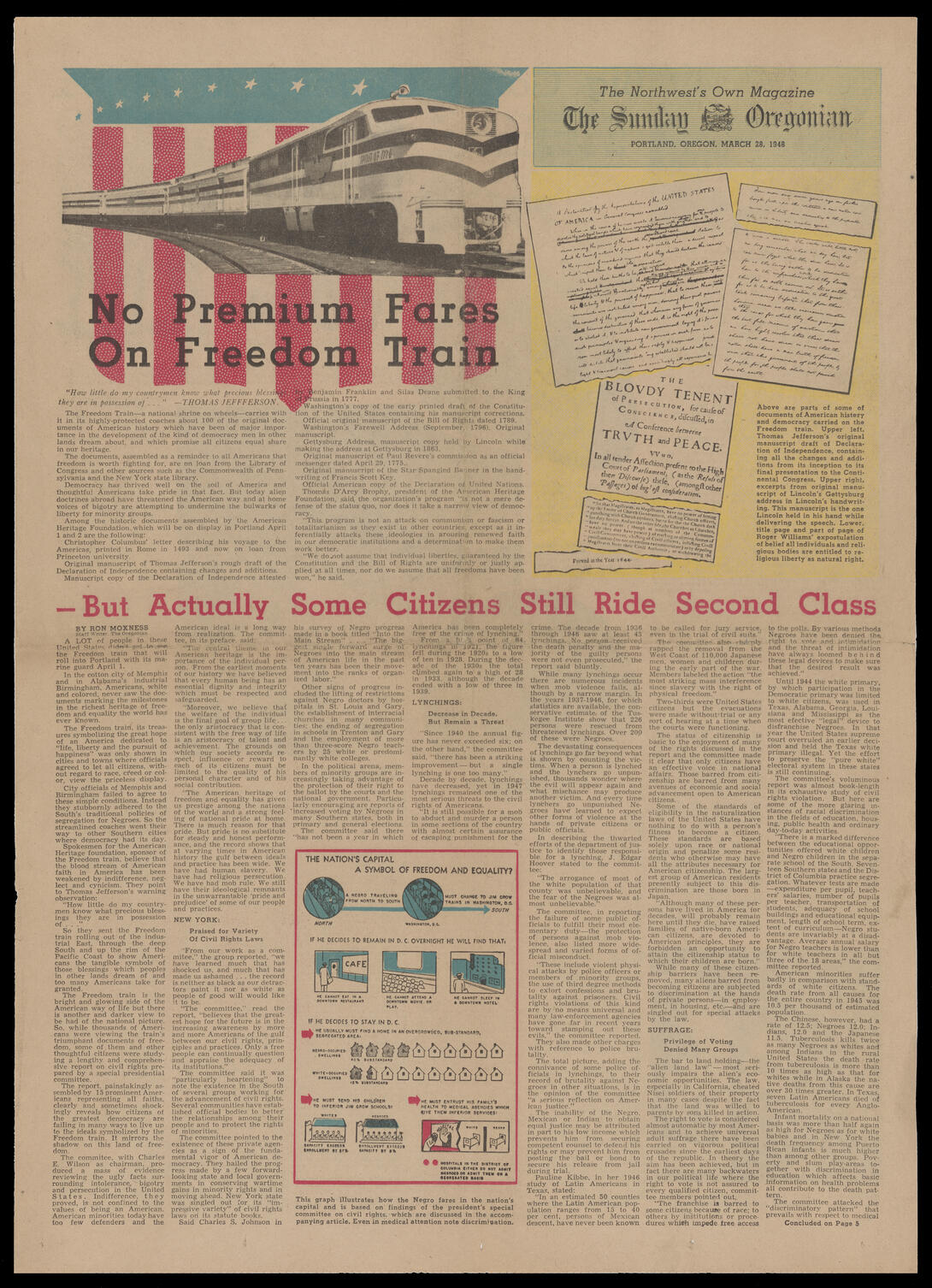
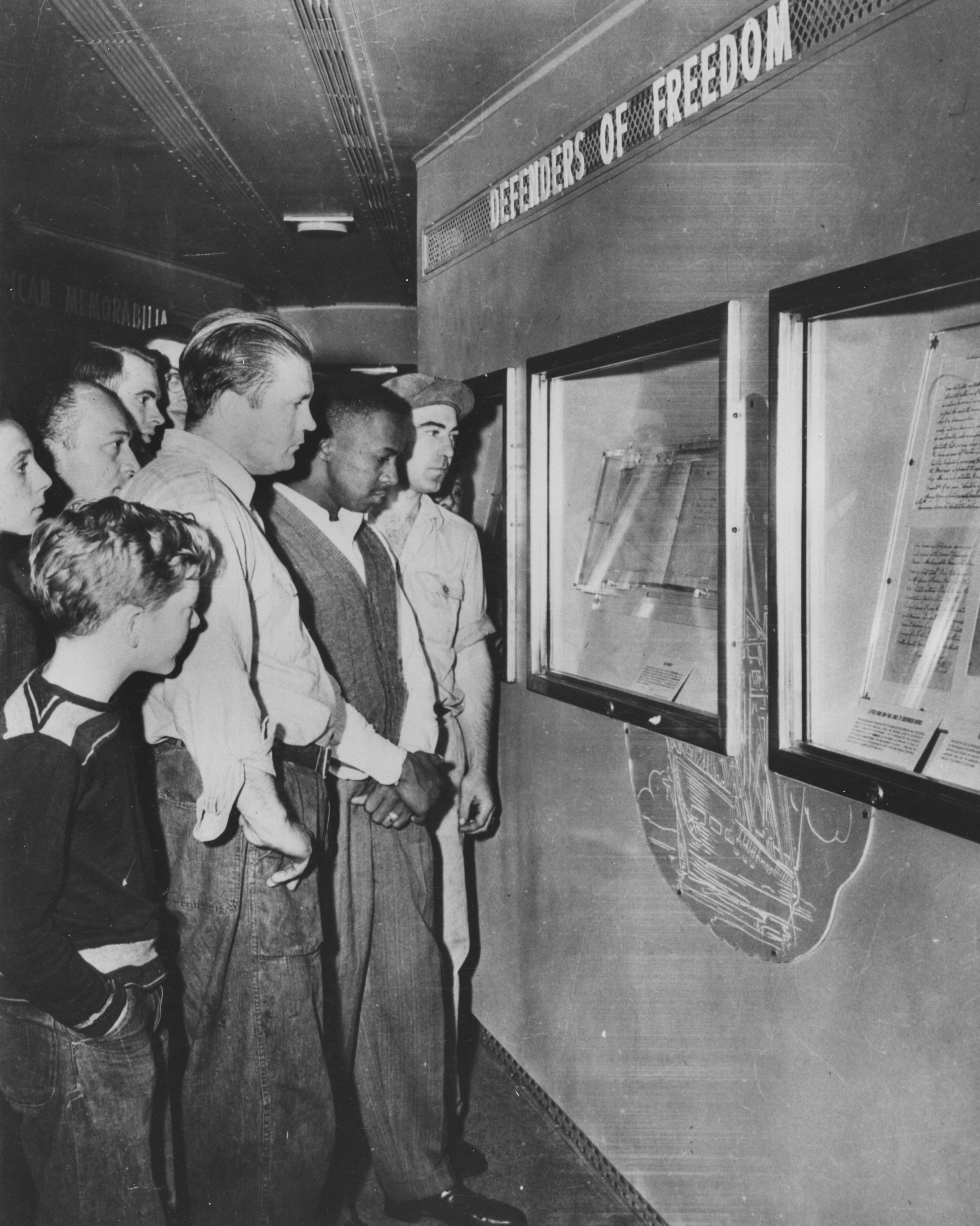
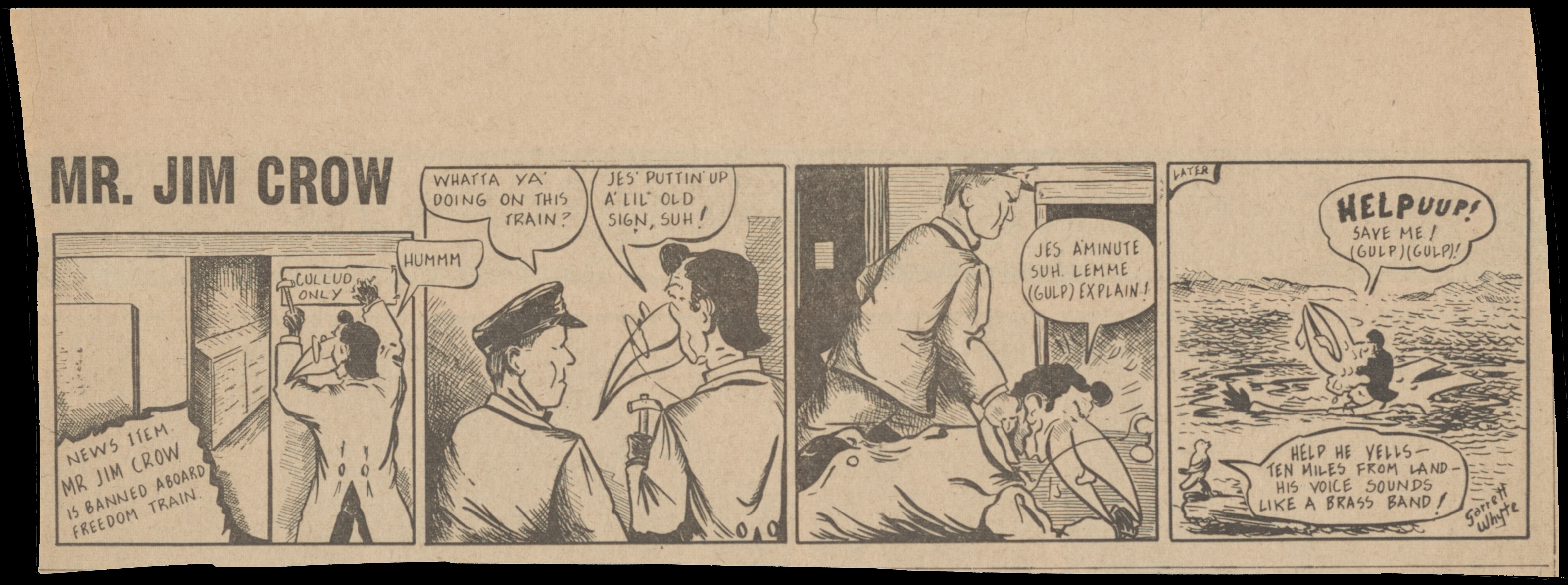
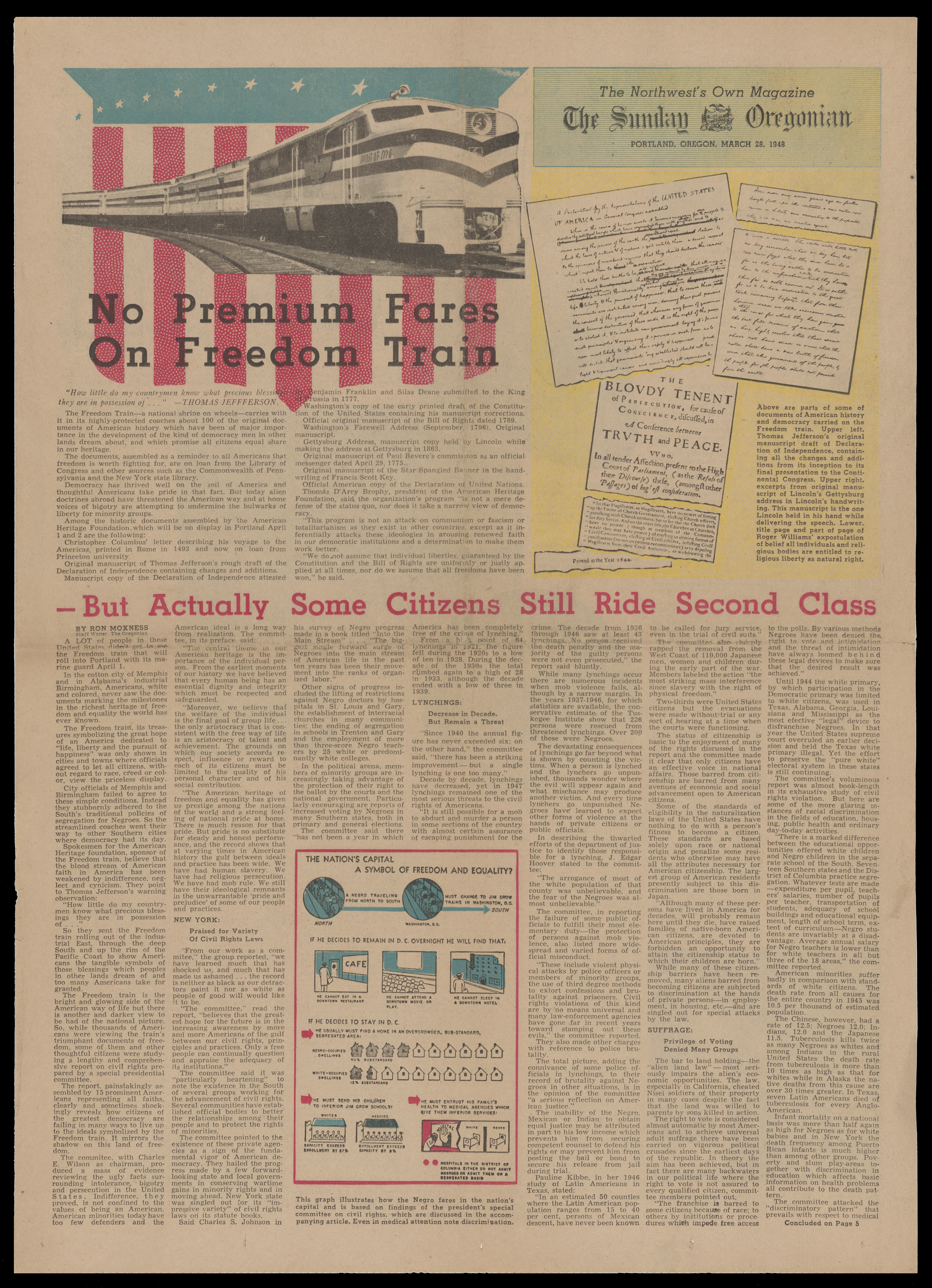
    During its tour, the Freedom Train traveled through states where Jim Crow segregation laws were in effect. The Freedom Train skipped Memphis, Tennessee, because the mayor refused to integrate visitors to the exhibition. Birmingham, Alabama, became the second city to be canceled when officials would not enforce the train’s integration policy. 

    Visitors on the Freedom Train, 1948. Records of the National Archives and Records Administration

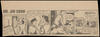
  • Mr. Jim Crow Comic Strip, 1947. Records of the National Archives and Records Administration

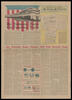
  • The Sunday Oregonian, March 28, 1948. Records of the National Archives and Records Administration

  • Voices Heard

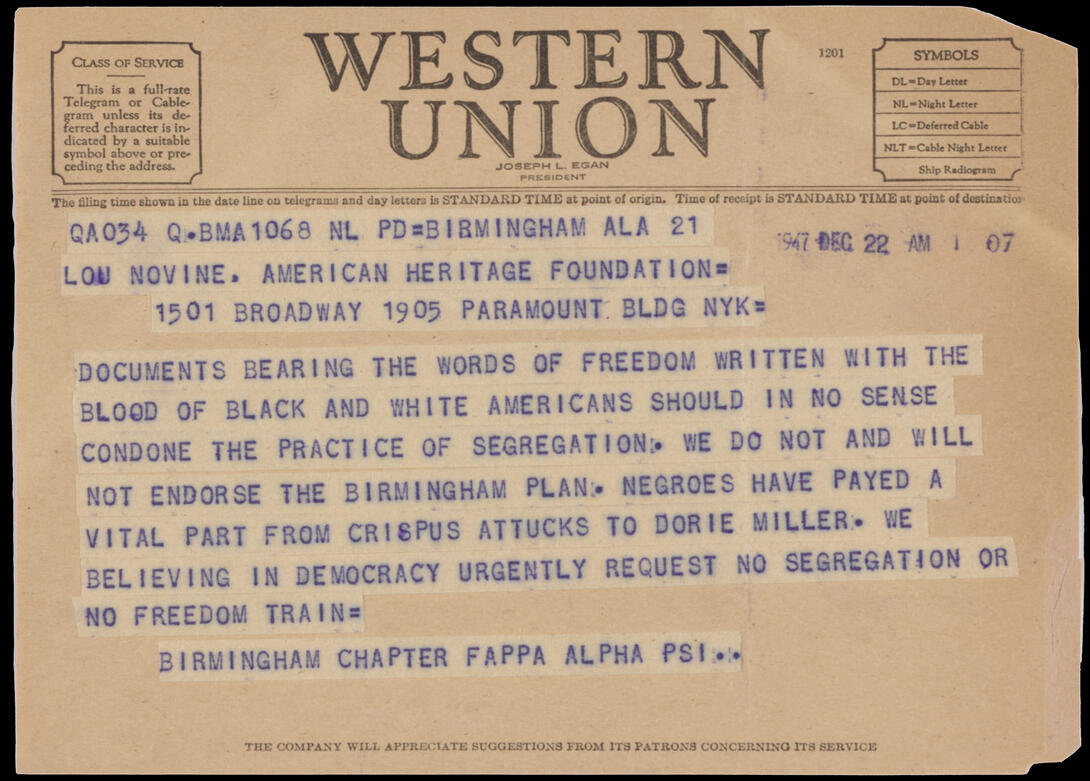
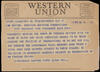
    Citizens voiced their opposition to segregation on the Freedom Train in newspaper articles, petitions, and telegrams.

    Telegram from Birmingham Chapter of Kappa Alpha Psi, 1947. Records of the American Heritage Foundation

  • “Freedom is Everybody’s Job”

    The organizers announced their decision to bypass Birmingham, Alabama, with this press release. They reaffirmed their commitment to integration by saying: “All citizens must have equal opportunity to view historic documents of our American Heritage. To do otherwise would violate the spirit of these documents and the Freedom Train.”


    Press Release from Richard Condon, American Heritage Foundation, 1947. Records of the American Heritage Foundation
  • Black and white photograph of a train engine
  • Newspaper cartoon showing a ballot box, American flag, and Uncle Sam.
    Newpaper article and illustration of railroad tracks
    Black and white photograph of visitors looking at an exhibit on the Freedom Train with a Marine standing guard.
    Newspaper article advertising the Freedom Train
    Four different color postcards with patriotic images and text
    Cream document with black text song lyrics
    Black and white photograph of three men and a woman at a medal ceremony
    Black and white photograph of smiling man
    Newspaper article with black text and photograph
    Black and white photograph of woman viewing the Emancipation Proclamation
    Black and white photograph of a group of people viewing a document on the Freedom Train
    Newspaper comic strip
    Color newspaper article with Freedom Train illustration at top
    Telegram with black text
    White document on Freedom Train letterhead with black text
DownloadShow Transcript