• Episode 1: Truman Sides With France

    Truman aids France in its war to recolonize Vietnam—the beginning of a 25-year involvement 
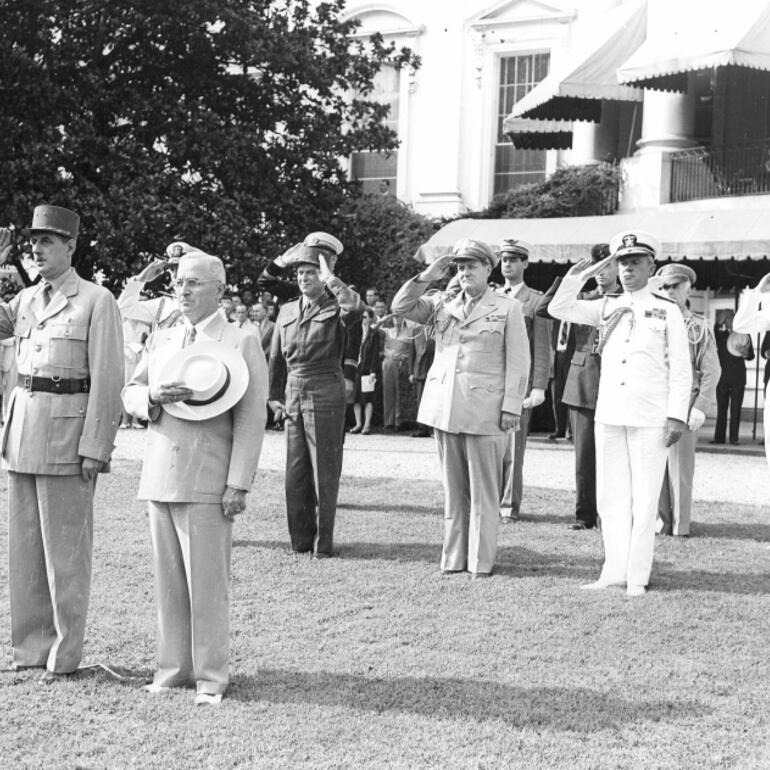
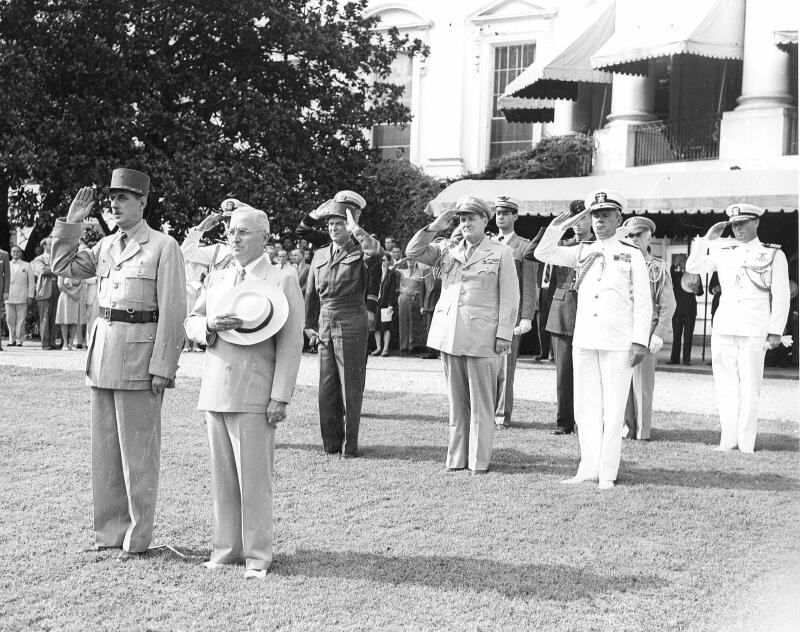
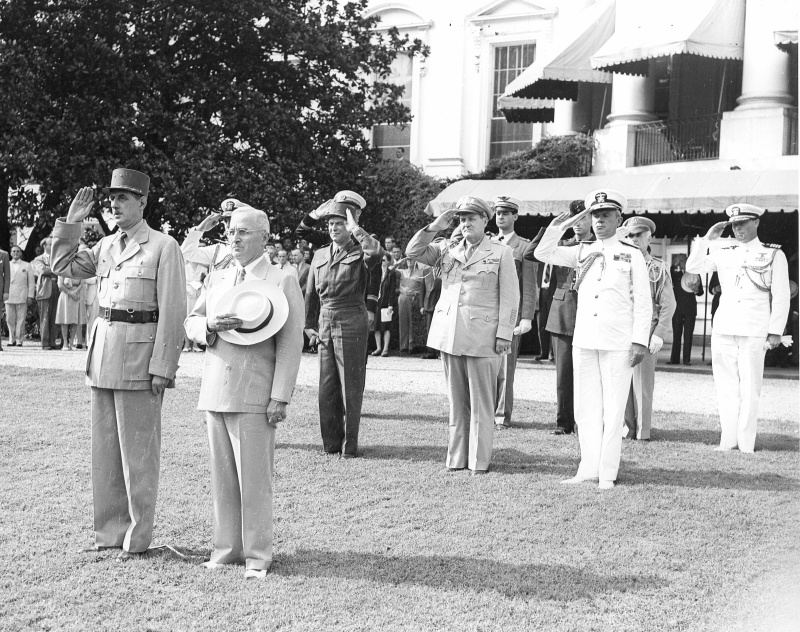
    Black and white photograph of military men standing at attention.
  • We must sacrifice to our last drop of blood to save our country.   -Ho Chi Minh, President of the Democratic Republic of Vietnam, 1946

    At the end of World War II, Ho Chi Minh—the Vietnamese Communist leader—seized an opportunity to escape decades of French rule. Japanese troops had taken control of Vietnam in 1945. The day Japan surrendered to the Allies, Ho Chi Minh declared independence in front of a crowd of exhilarated Vietnamese. In a deliberate appeal for American support, he opened his speech with the words: “All men are created equal. They are endowed by their Creator with certain inalienable rights, among them are Life, Liberty, and the pursuit of Happiness.”

    But when France went to war to recolonize Vietnam in 1945, the U.S. government needed its ally’s cooperation to contain the spread of communism in Europe. From 1946 to 1950, it adopted a neutral policy toward the conflict. In 1950 President Harry S. Truman authorized direct financial and military assistance to the French.  

  • Key Dates

    April 12, 1945: President Roosevelt dies

    September 2, 1945: Japan surrenders and Ho Chi Minh proclaims independence and the formation of the Democratic Republic of Vietnam

    December 19, 1946: Start of First Indochina War in North Vietnam

    July 2, 1949: Creation of the Associated State of Vietnam (future Republic of Vietnam) led by former emperor Bao Dai  

    January, 1950: Communist China and the Soviet Union recognize the Democratic Republic of Vietnam (North Vietnam)

    February 7, 1950: United States recognizes the Associated State of Vietnam

    June 25, 1950: Korean War begins

    July 26, 1950: Truman authorizes $15 million in military aid to France

    President Truman and French President Charles de Gaulle during welcoming ceremonies on the White House lawn, August 22, 1945. Harry S. Truman Pres...Read more

    President Truman and French President Charles de Gaulle during welcoming ceremonies on the White House lawn, August 22, 1945. Harry S. Truman Presidential Library and Museum

    Read less
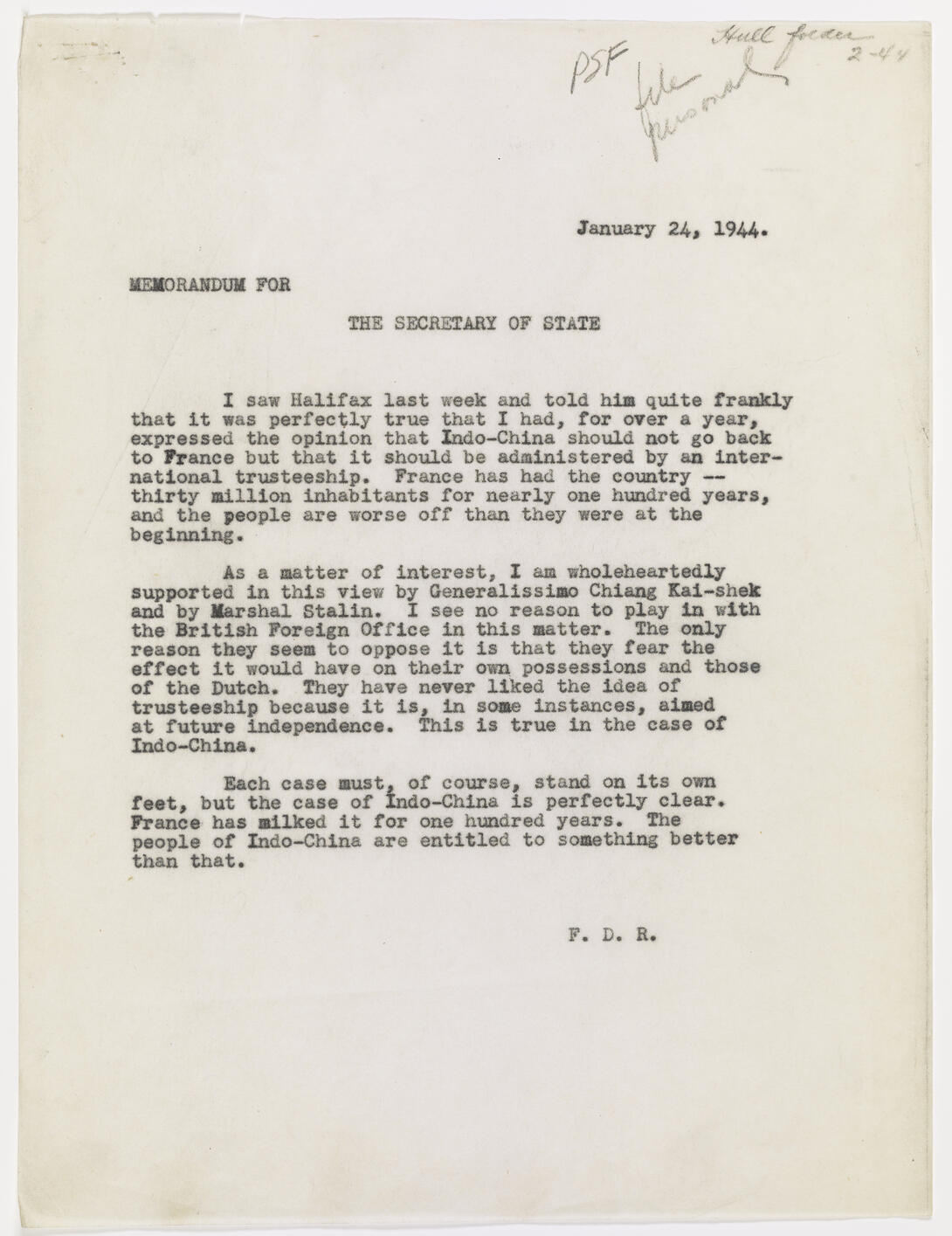
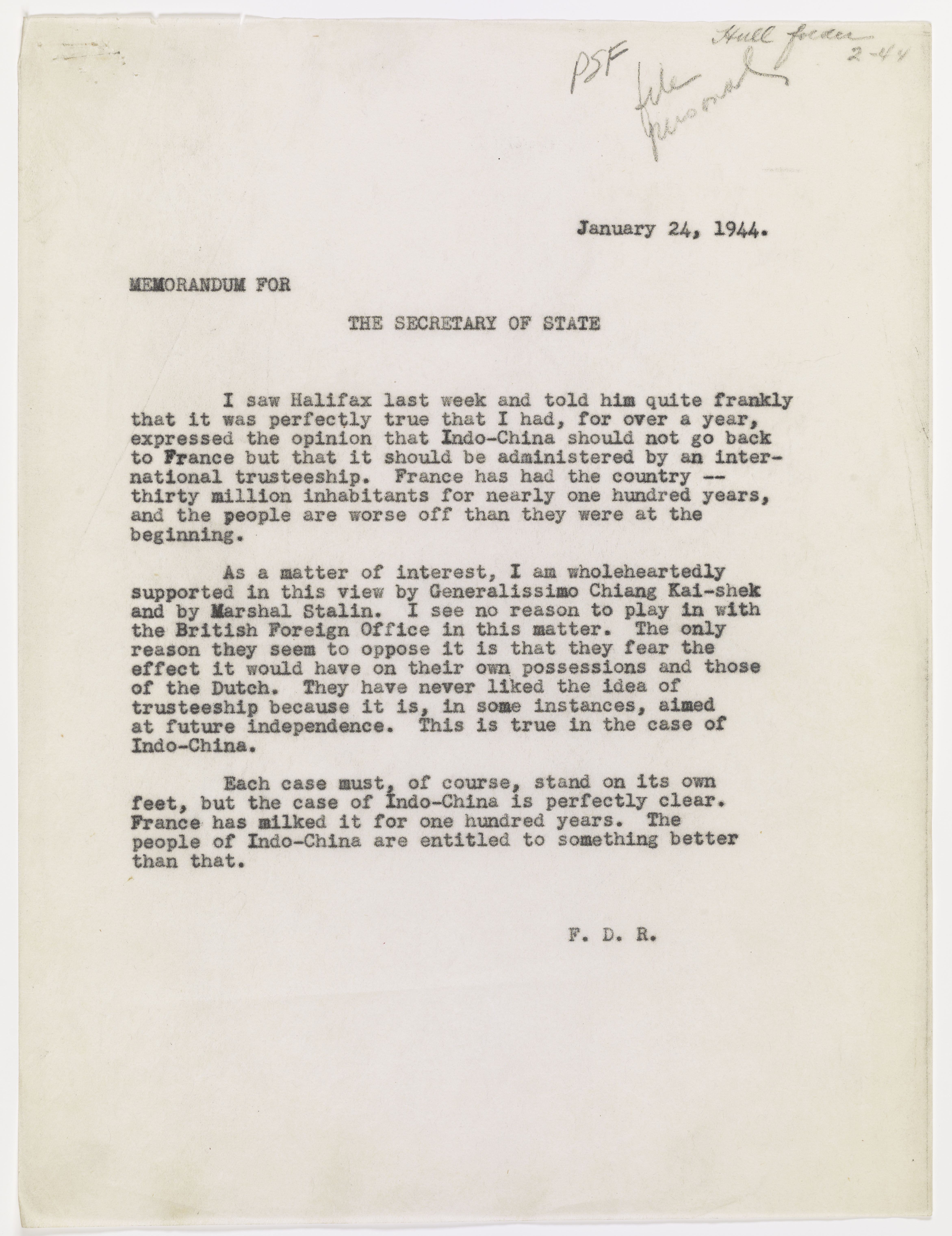
  • President Franklin D. Roosevelt expressed his opposition to continued French rule of Vietnam in this memo.

    Memorandum from President Roosevelt to Secretary of State Cordell Hull, January 24, 1944. National Archives, Franklin D. Roosevelt Presidential Li...Read more

    Memorandum from President Roosevelt to Secretary of State Cordell Hull, January 24, 1944. National Archives, Franklin D. Roosevelt Presidential Library and Museum

    Read less
  • Looking Back

    Ho Chi Minh’s long quest for American support

    President Truman was not the first American official Ho Chi Minh attempted to befriend, nor was the United States the first nation he approached. He first tried to enlist U.S. support in 1919 at the Paris Peace Conference. He sent an appeal to Soviet Premier Josef Stalin in 1945-46 very similar to the one he sent to Truman. He had long known his small country would need allies to win independence from the French.

    Ho Chi Minh made his only successful connection with American officials after he helped a downed U.S. pilot reach safety during World War II. The Office of Strategic Services (OSS) enlisted “Old Man Ho” to broadcast radio reports on weather and Japanese troop movements to U.S. intelligence operatives stationed in China. Later, his Viet Minh guerrillas joined forces with an OSS team. Ho’s bright eyes and calm geniality made a powerful impression on the officers. But in the years to come, many Americans would associate his wispy beard and peasant attire with something sinister.

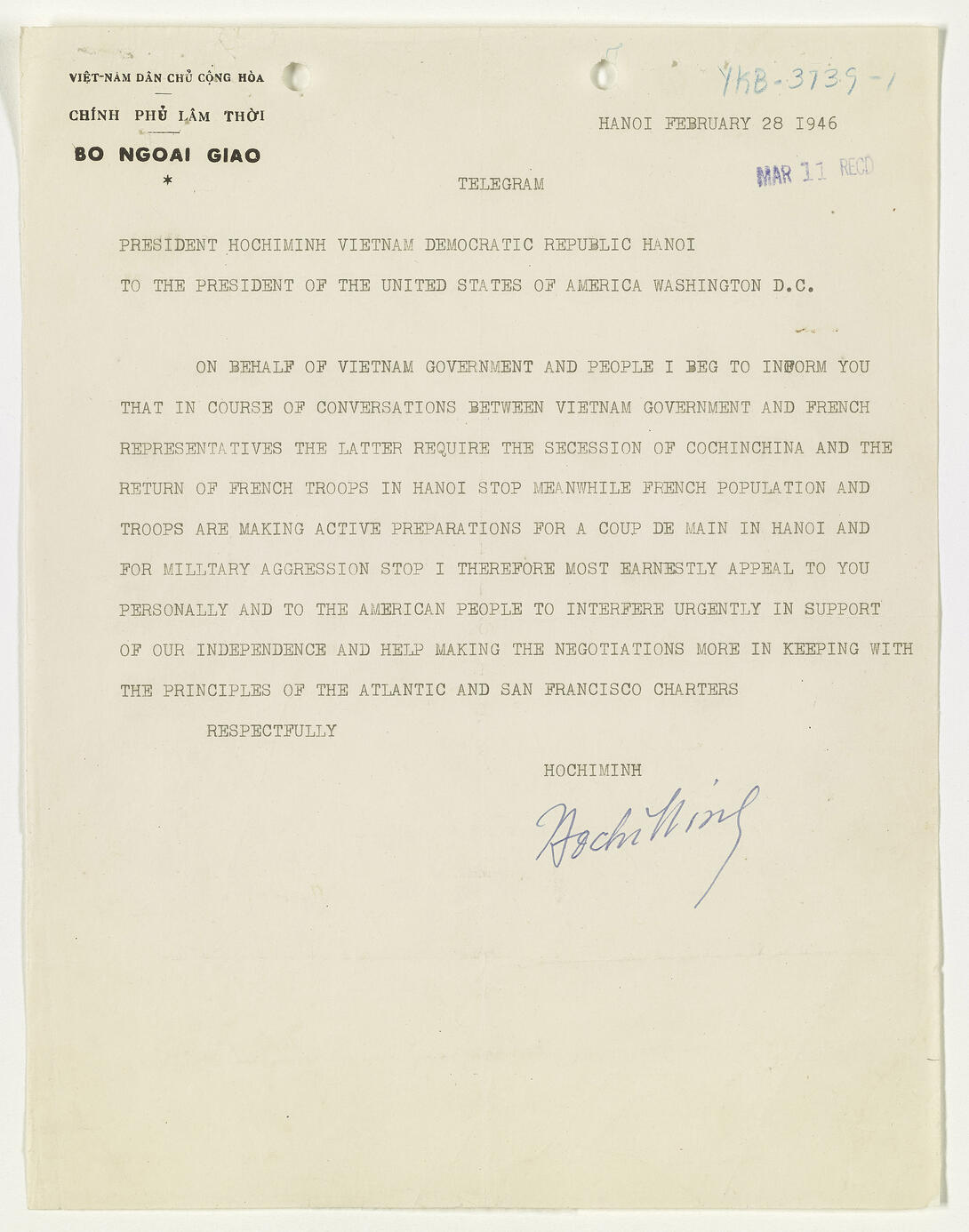
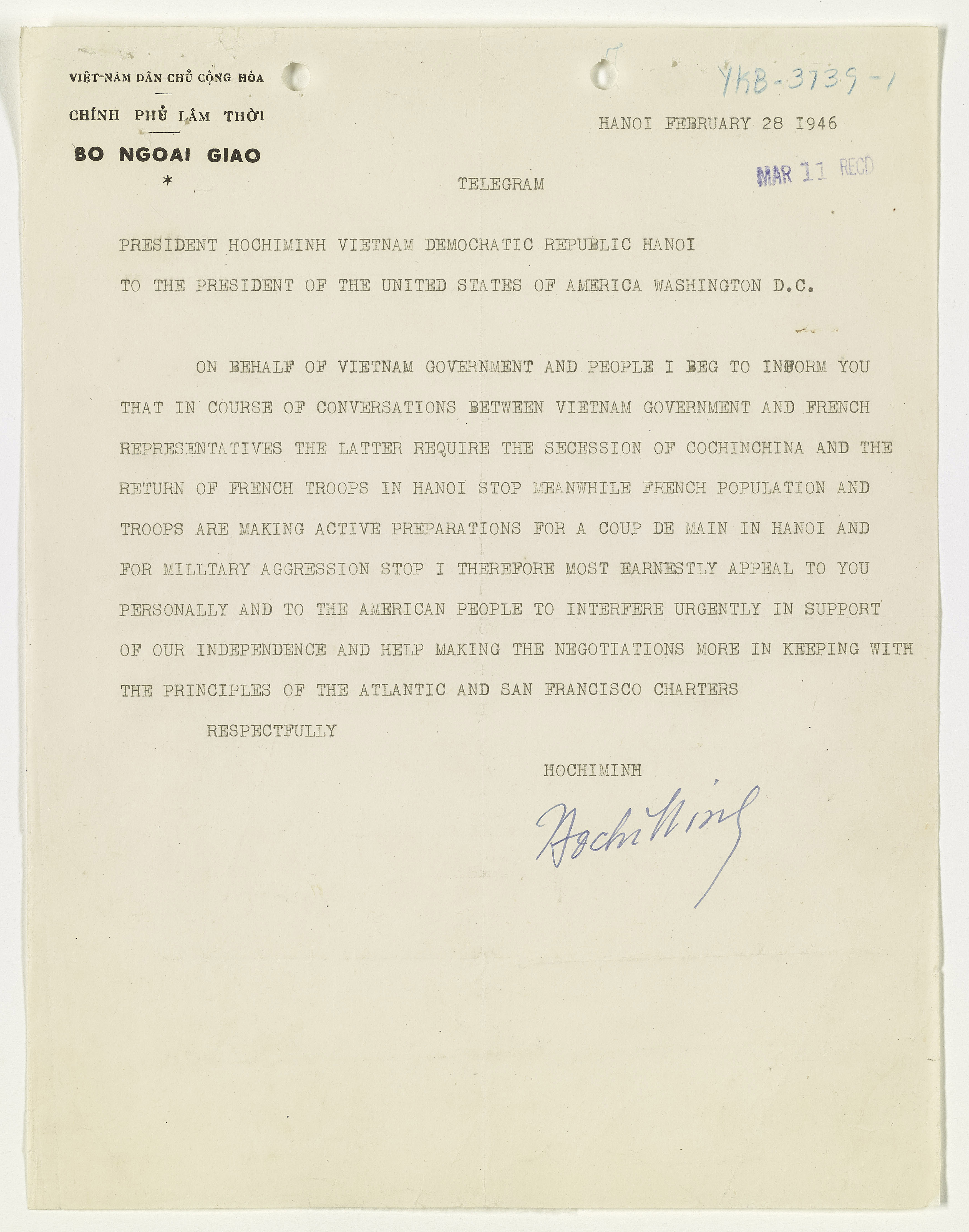
  • Ho Chi Minh sent several letters like this one to President Harry S. Truman asking for the Viet Minh to be involved in any Allied discussion regarding Vietnam’s postwar status. Truman did not reply.

    Ho Chi Minh’s telegram to President Truman, February 28, 1946. Records of the Office of Strategic Services
  • Black and white photograph of military men standing at attention.
  • Black and white photograph of military men standing at attention.
    Cream document with typed text and handwritten annotations in the top right corner.
  • Cream document with black typewritten text, signature, and handwritten annotations at top right.
DownloadShow Transcript