• Episode 12: Fall of Saigon

    The Communists conquer Saigon
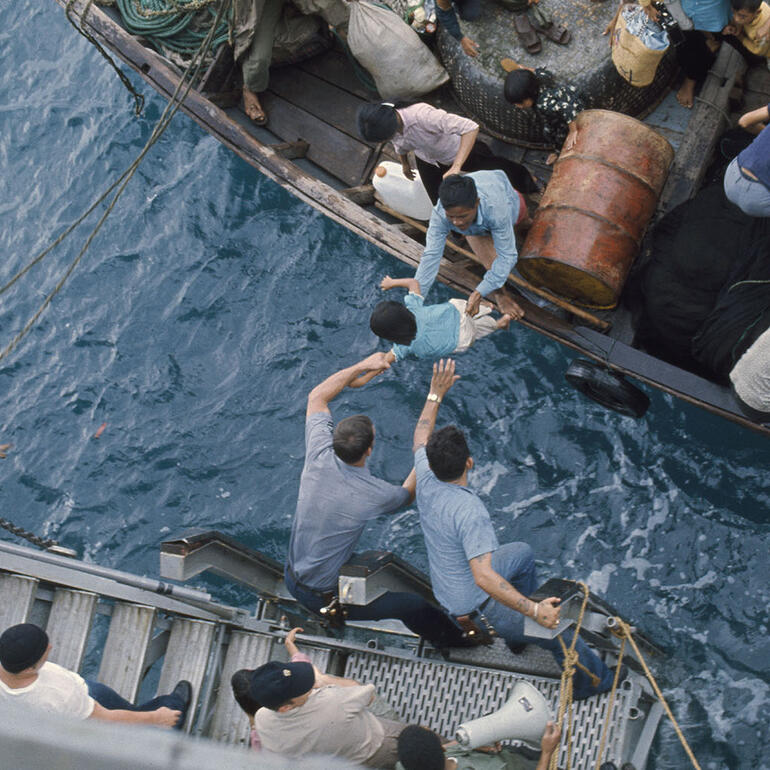
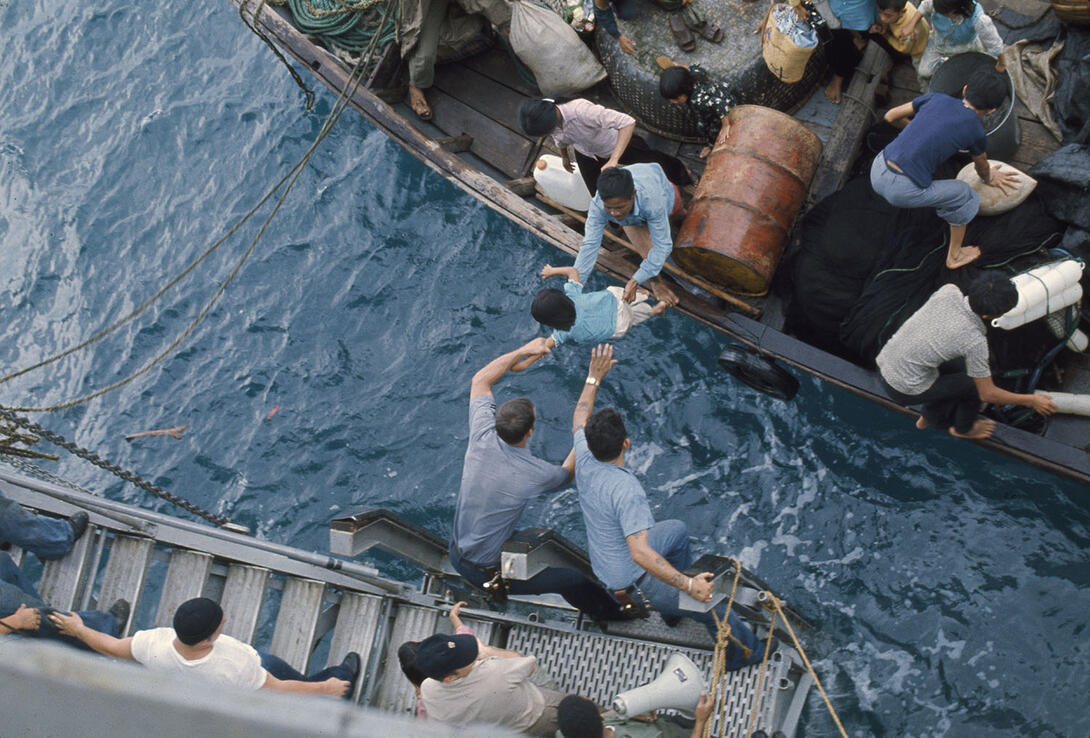
    Color photograph of crewmen helping refugees on a craft in the water
  • You ran away and left us to do the job that you could not do.  -Nguyen Van Thieu, President of the Republic of Vietnam, 1975

    After the Paris Peace Agreement, the Communists continued to infiltrate South Vietnam. The 1973 Case-Church Amendment prohibited U.S. military activity in Vietnam, Laos, and Cambodia without congressional approval. The United States continued to supply its ally with some military equipment and arms.

    North Vietnamese Army forces attacked major cities in the highlands in March 1975. The South Vietnamese Army crumbled. President Ford requested additional aid from Congress. His persistence had a symbolic purpose. It bolstered U.S. credibility and allowed the administration to blame Congress for Saigon’s fall. A frenzied, last-minute evacuation of American civilians and South Vietnamese citizens at risk of retaliation by the communists ended just hours before a North Vietnamese Army tank crashed the Imperial Palace gates. In the years that followed, a total of 1.6 million Vietnamese refugees fled the Communist regime.

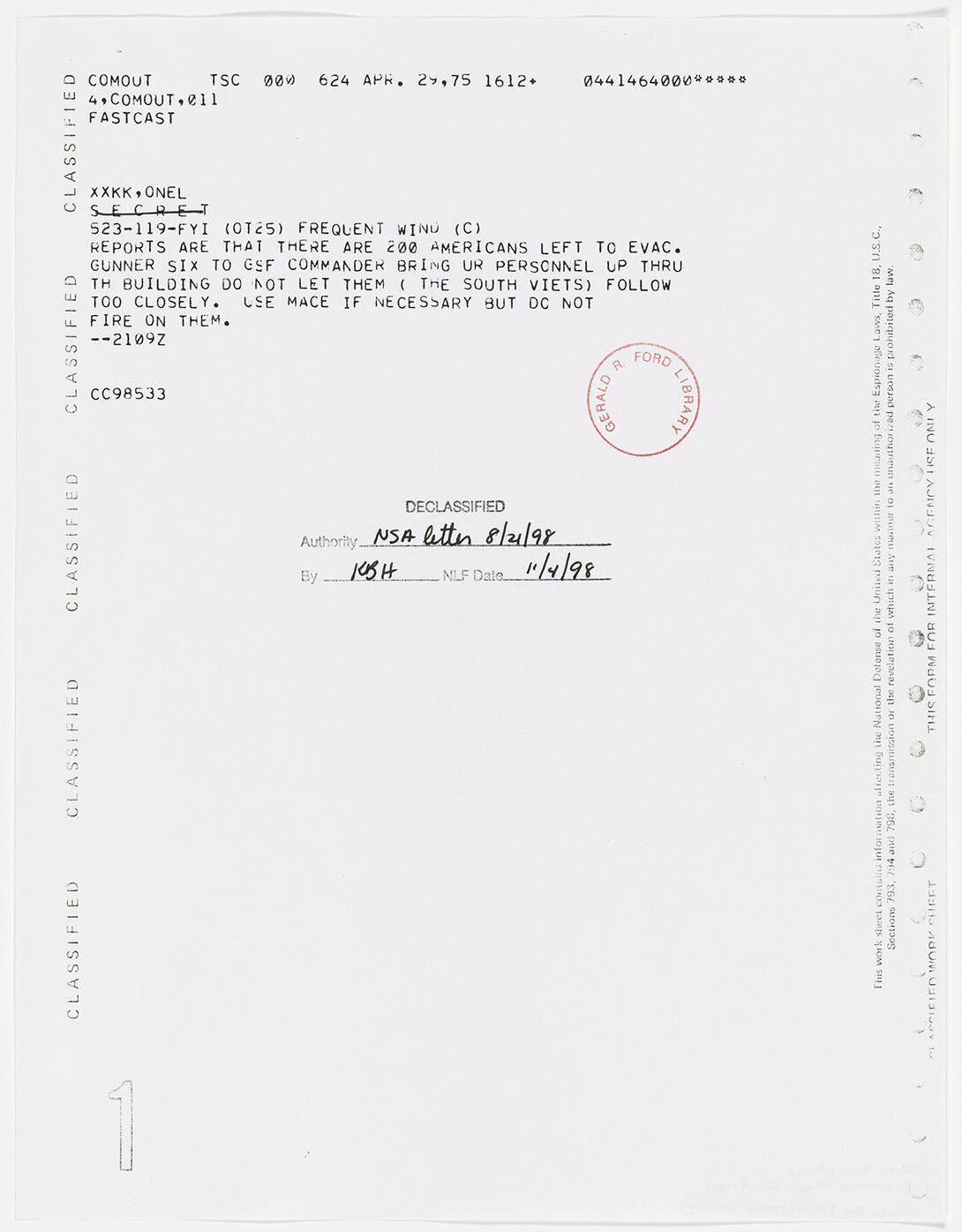
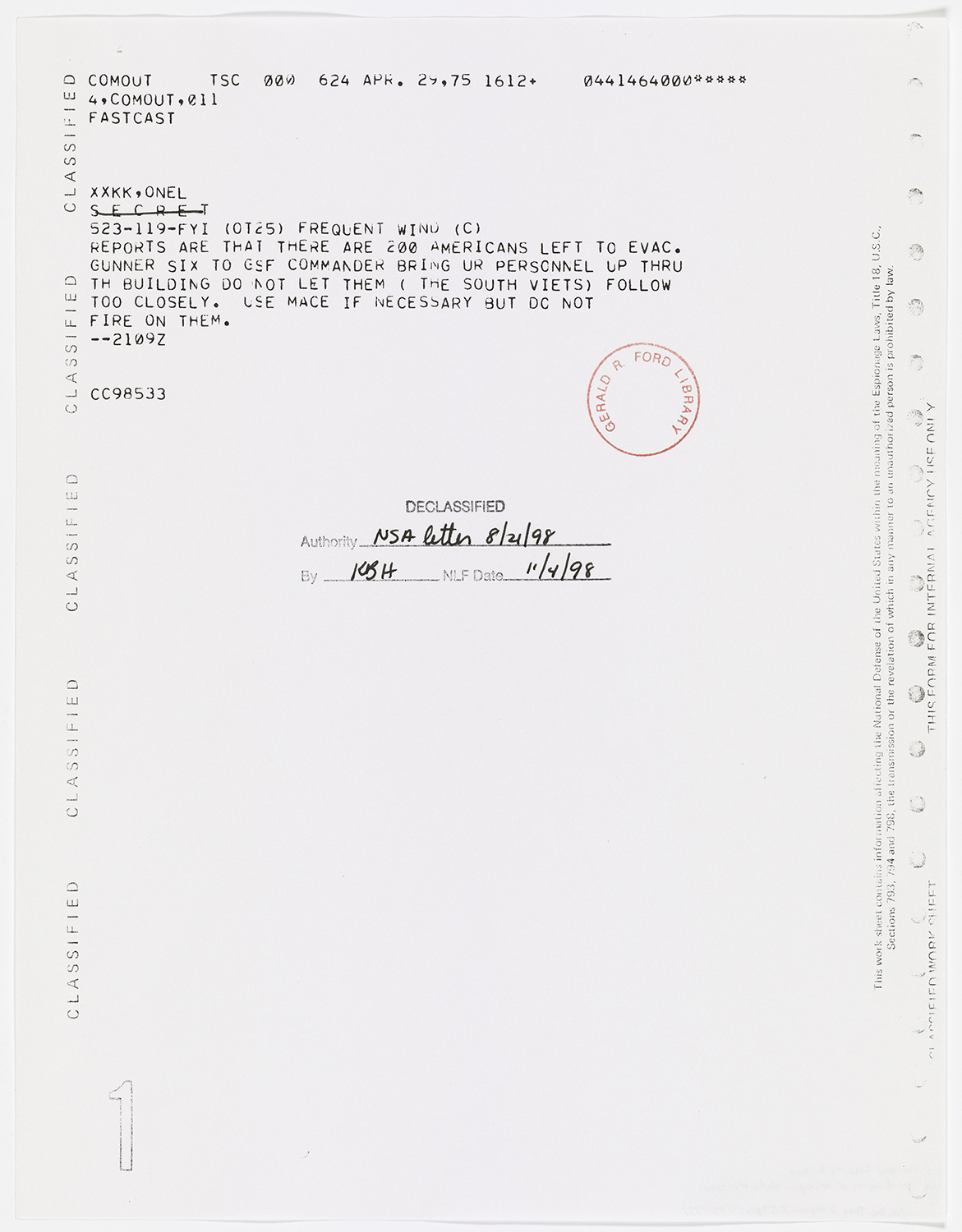
  • This intercept captured a communication from a rescue helicopter as it wove in and out of artillery fire and dodged gas bombs to rescue Vietnamese refugees and American personnel from the U.S. Embassy.

    National Security Agency intercept of helicopter radio communication, April 29, 1975. Gerald R. Ford Presidential Library

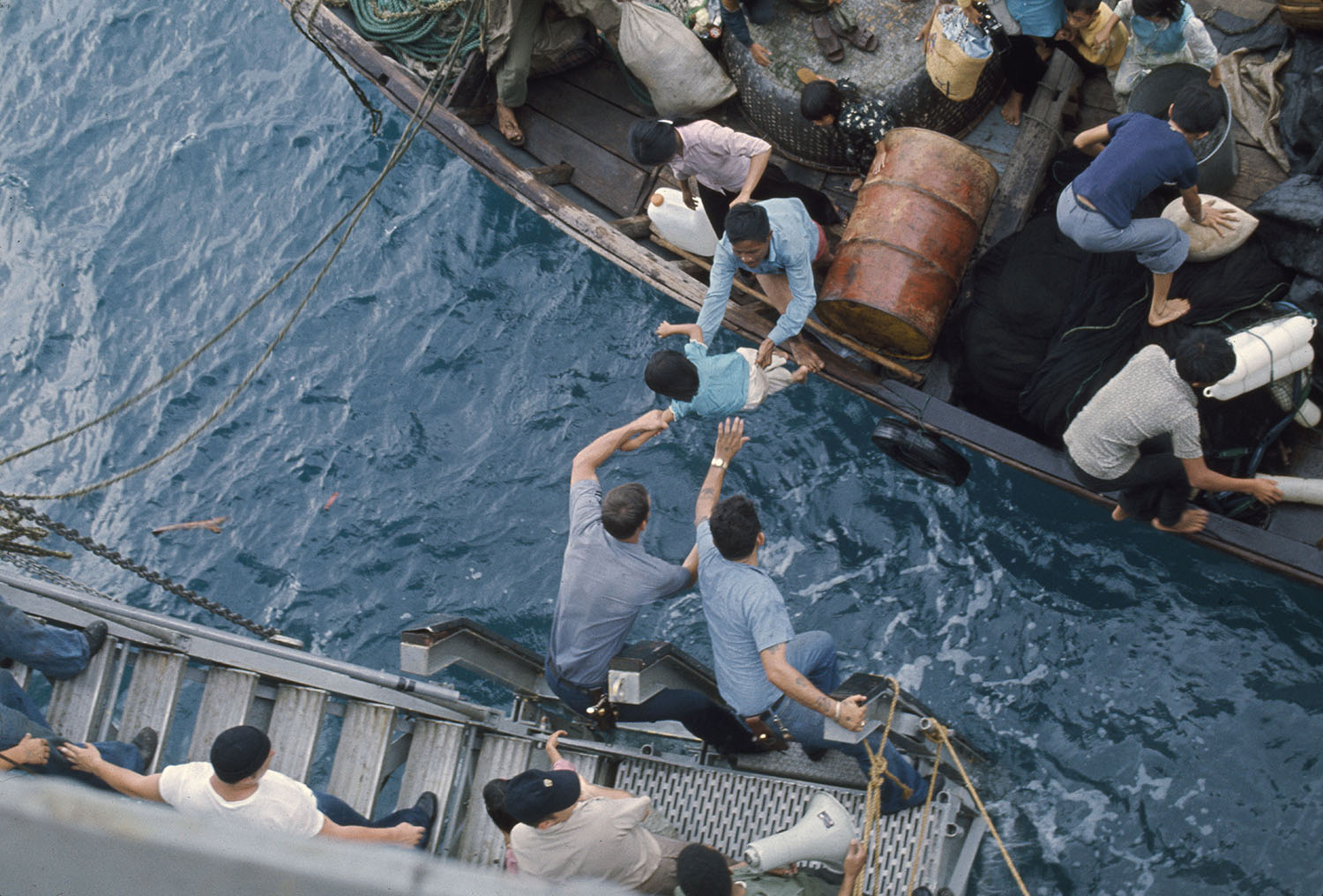
  • Crewmen of the amphibious cargo ship USS Durham take Vietnamese refugees from a small craft in the South China Sea, 1975. General Records of the D...Read more

    Crewmen of the amphibious cargo ship USS Durham take Vietnamese refugees from a small craft in the South China Sea, 1975. General Records of the Department of the Navy

    Read less
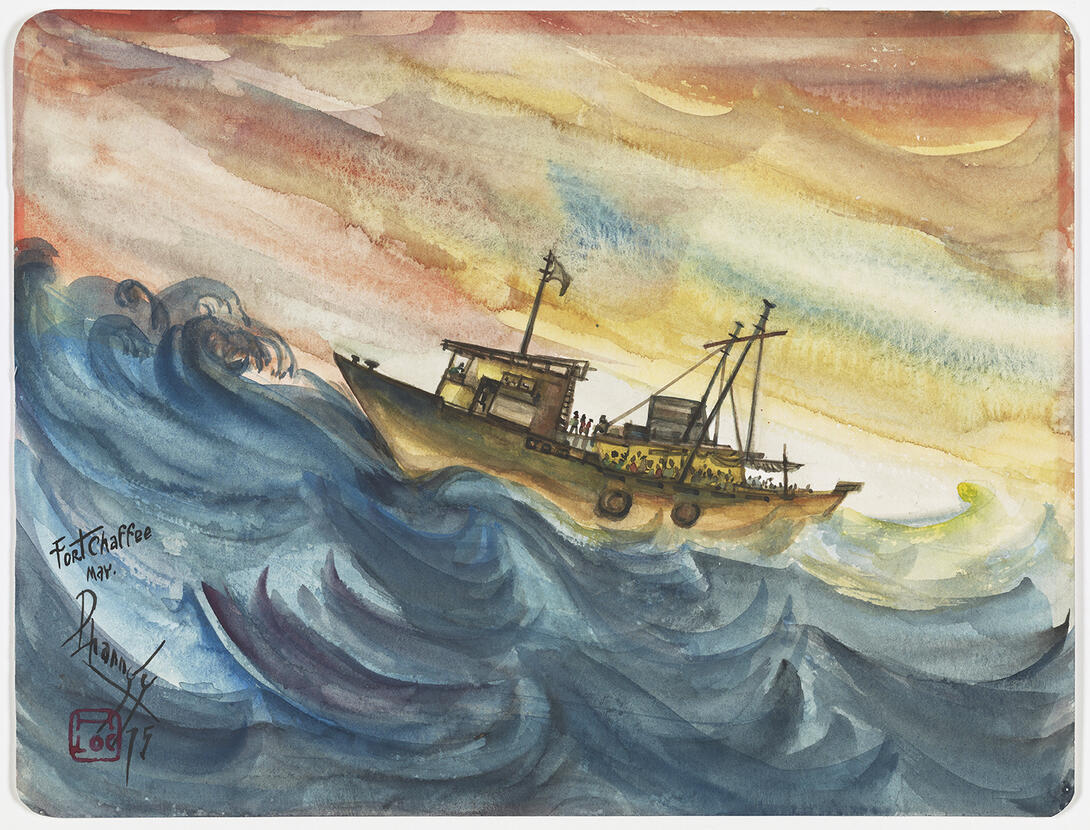
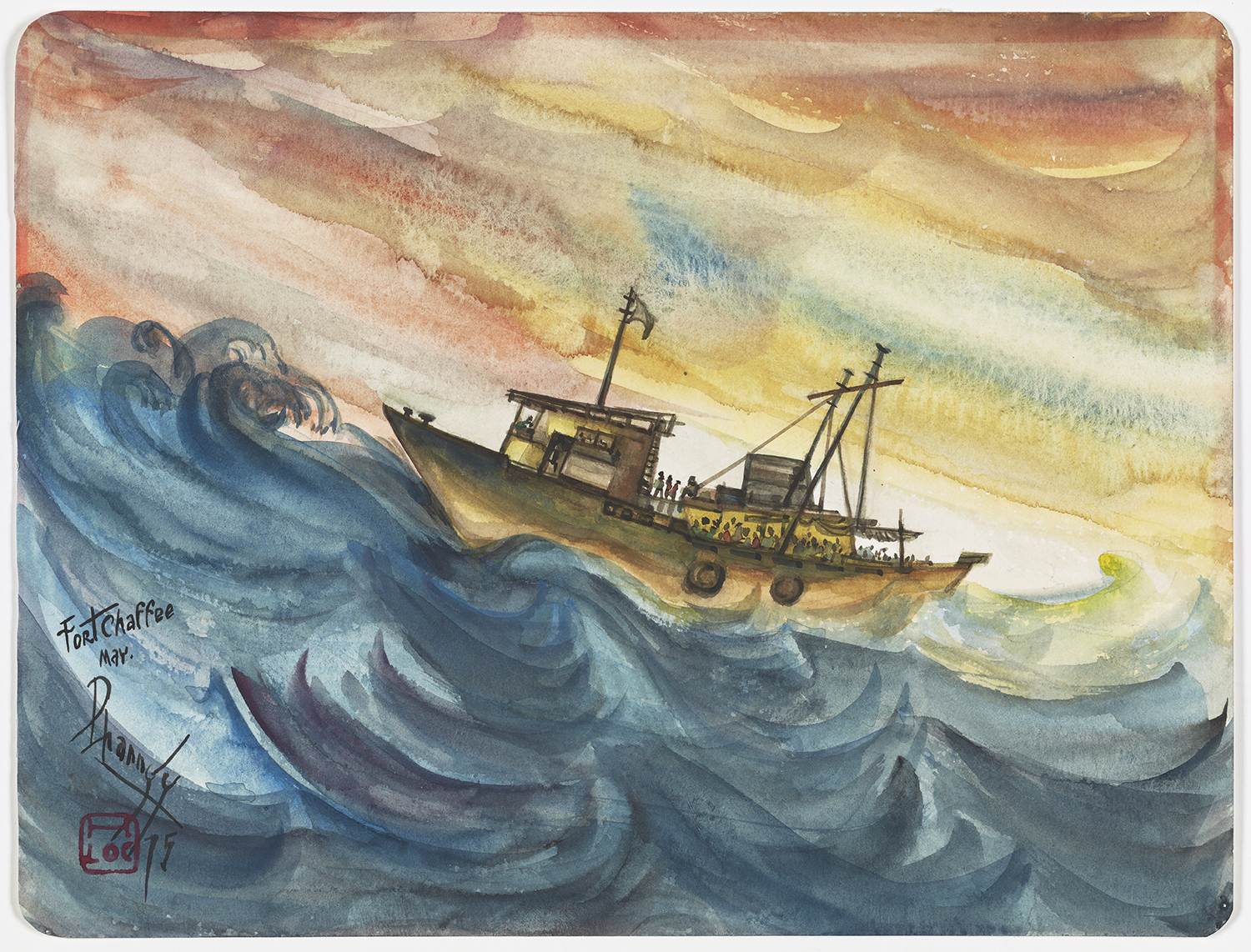
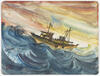
  • President Ford signed the Indochina Migration and Refugee Assistance Act on May 23, 1975, facilitating the settlement of 130,000 Vietnamese, Cambodian, and Laotian refugees in the United States. One of them, Loc Huu Nguyen, dedicated this painting of his experience to President and Mrs. Ford.

    Watercolor painting, Fleeing for Liberty, 1975. Gerald R. Ford Presidential Museum
  • Key Dates

    • January 6, 1975: North Vietnamese Army takes Phuoc Long city
    • January 29, 1975: Weather Underground bombs State Department building
    • March 10, 1975: Two-day North Vietnamese Army offensive in Central Highlands begins
    • March 26, 1975: Fall of Hue City
    • April 4, 1975: First Operation Babylift flight
    • April 21, 1975: President Thieu resigns
    • April 29, 1975: Final phase of Saigon Evacuation begins
    • April 30, 1975: North Vietnamese tanks crash gates of Imperial Palace
    • May 12, 1975: Khmer Rouge forces seize the U.S. merchant vessel SS Mayaguez
  • Color photograph of crewmen helping refugees on a craft in the water
  • Communication document with black typewritten text and red stamp
    Color photograph of crewmen rescuing child from a refugee boat in sea
    Watercolor painting of boat on sea
DownloadShow Transcript