Episode 4: Johnson Sets the Stage
Congress rushes to give President Johnson war powers
-
We still seek no wider war. - President Lyndon B. Johnson, 1964
With the post-coup Saigon regime in chaos, North Vietnam sharply escalated the war in hopes of bringing Communists to power before Americans fully intervened. Despite doubts about its significance and winnability, Johnson was “not going to lose Vietnam.”
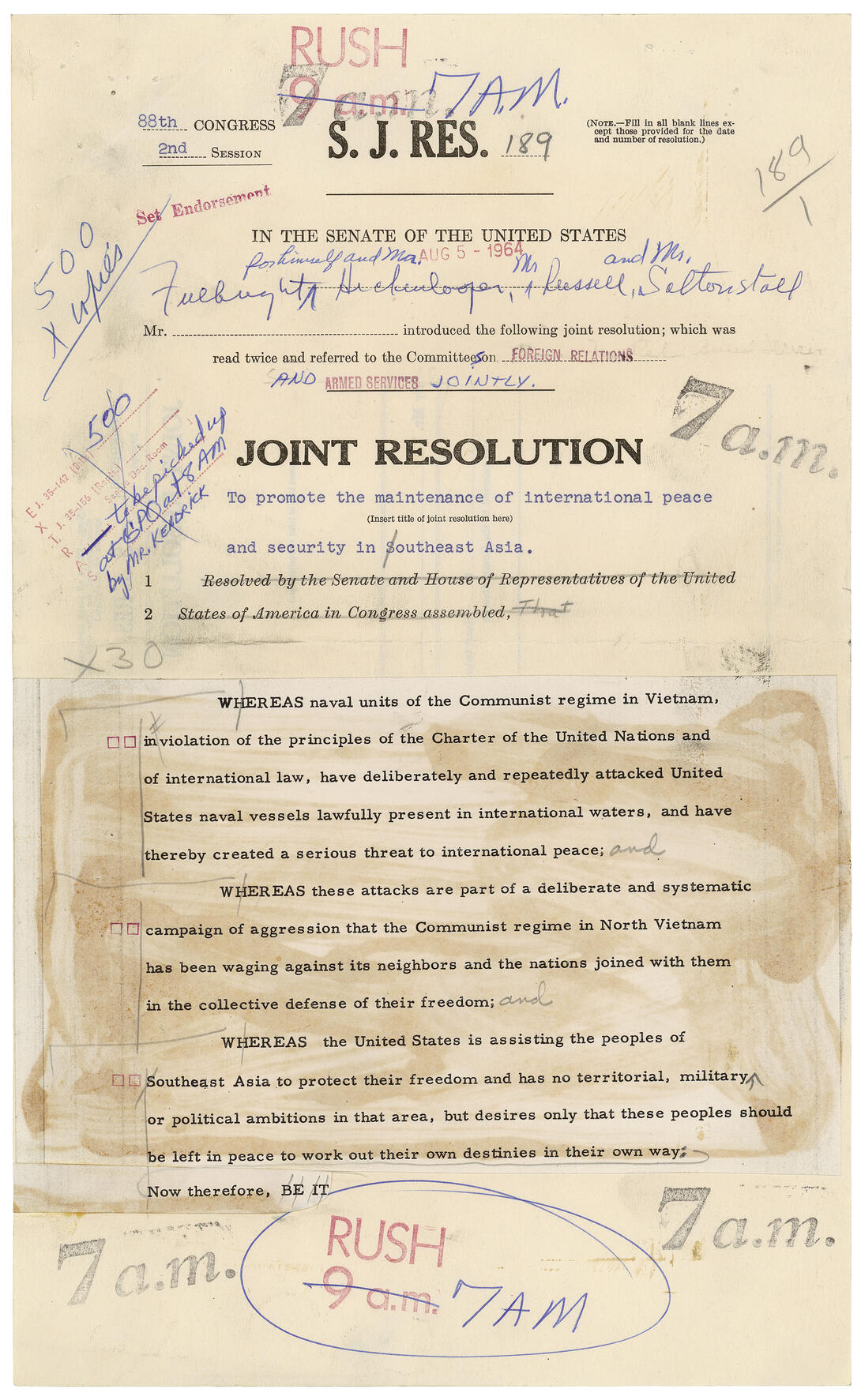
The 36th President portrayed confrontations between U.S. and North Vietnamese ships off the coast of North Vietnam as unprovoked aggression. When contrary information surfaced, many believed Congress had been conned. It was too late. With little debate, legislators passed the Tonkin Gulf Resolution, giving Johnson unprecedented power to “take all necessary measures to repel any armed attack against the forces of the United States and to prevent further aggression.”
-
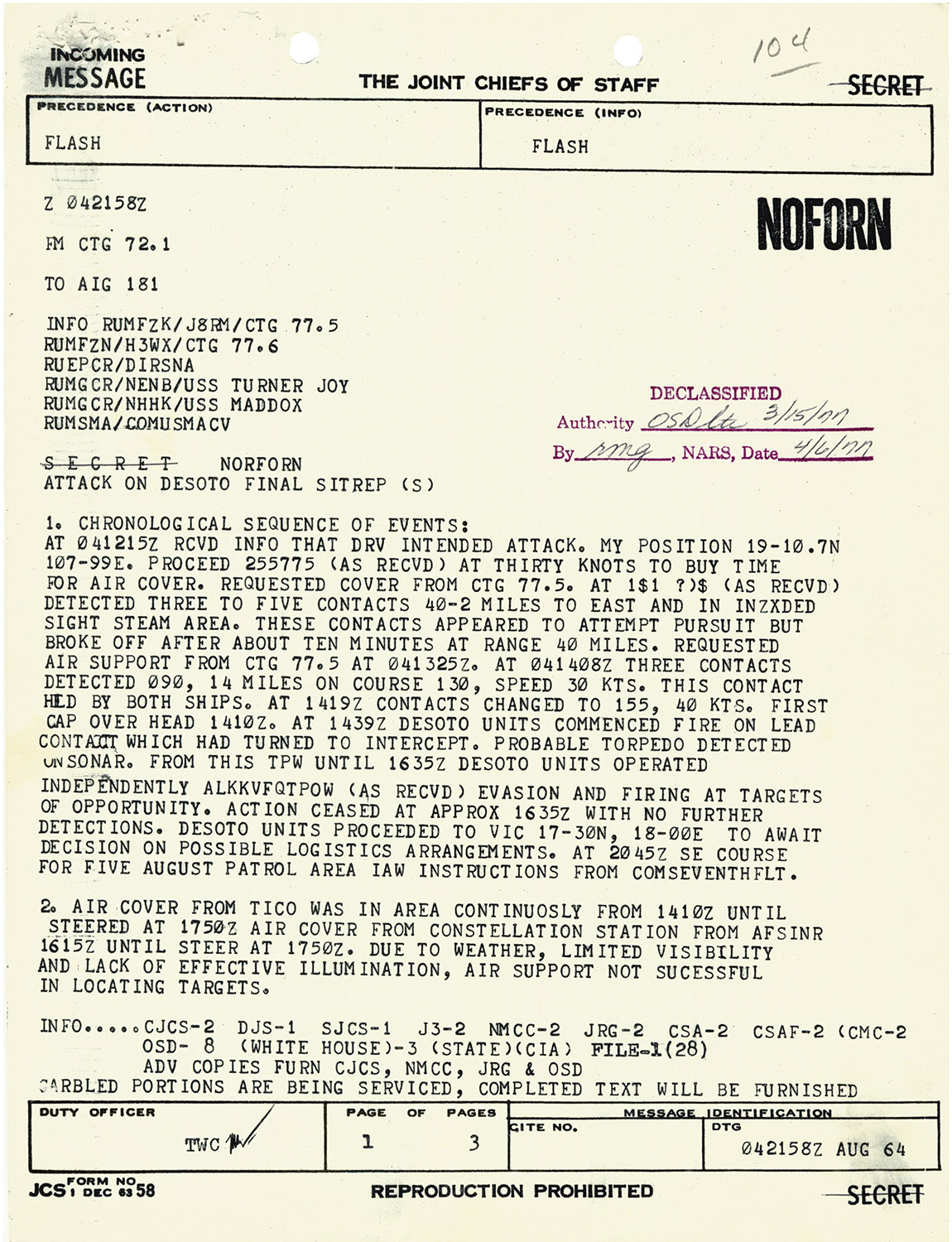
After initially reporting that he was “under continuous torpedo attack,” the captain of the USS Maddox cabled, “freak weather effects on radar and overeager sonarmen may have accounted for many reports.”
-
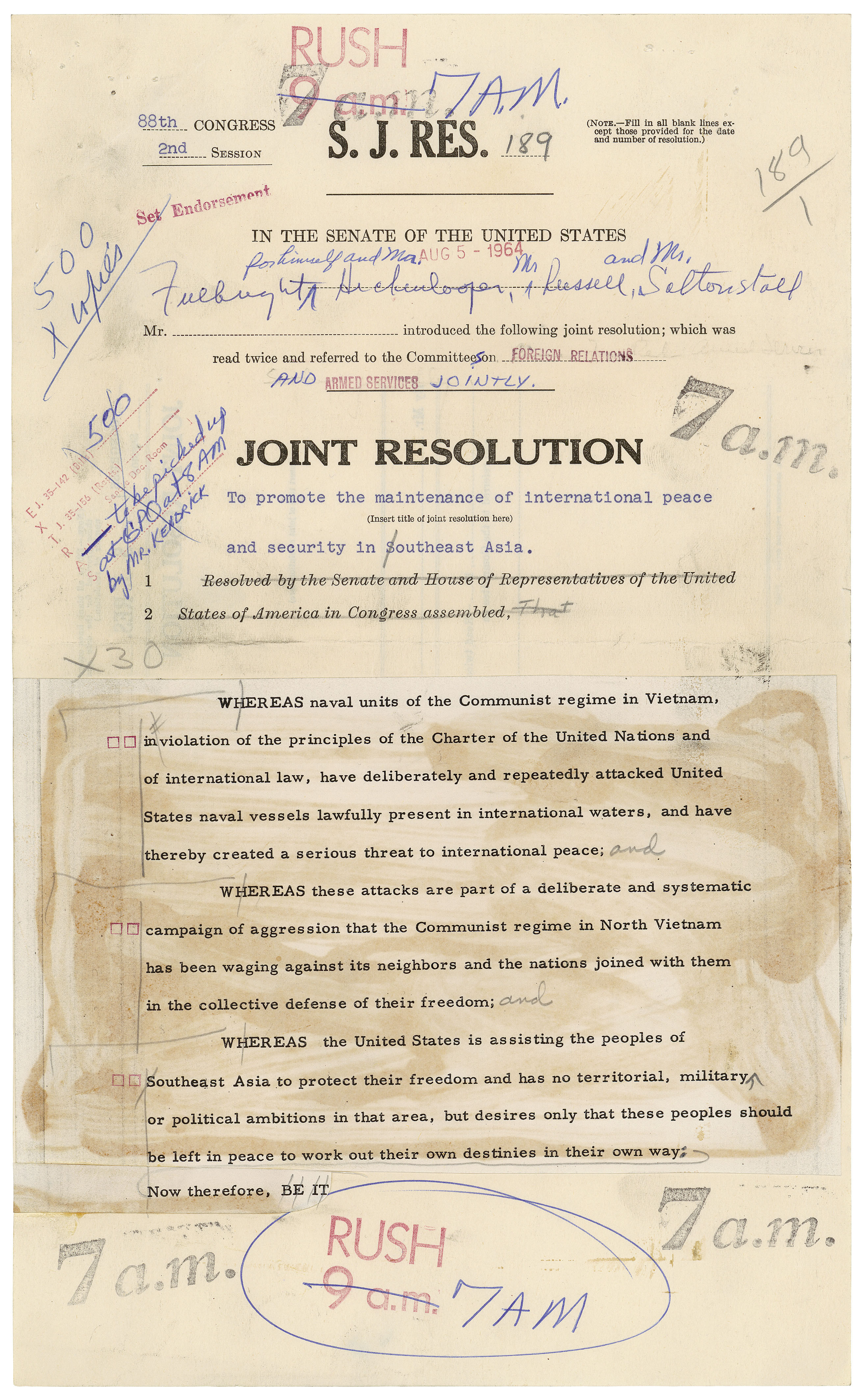
Tonkin Gulf Resolution as introduced in the Senate, August 5, 1964. Records of the U.S. Senate
-
Key Dates
April 25, 1964: Johnson appoints General William Westmoreland to command MACV
May 22, 1964: Johnson delivers his “Great Society” speech
July 2, 1964: Johnson signs the Civil Rights Act
August 2, 1964: First Tonkin Gulf Incident
August 4, 1964: Alleged second Tonkin Gulf incident
August 7, 1964: Congress passes Gulf of Tonkin Resolution
October 16, 1964: People’s Republic of China successfully tests atomic bomb
November 3, 1964: Johnson defeats Goldwater in Presidential election
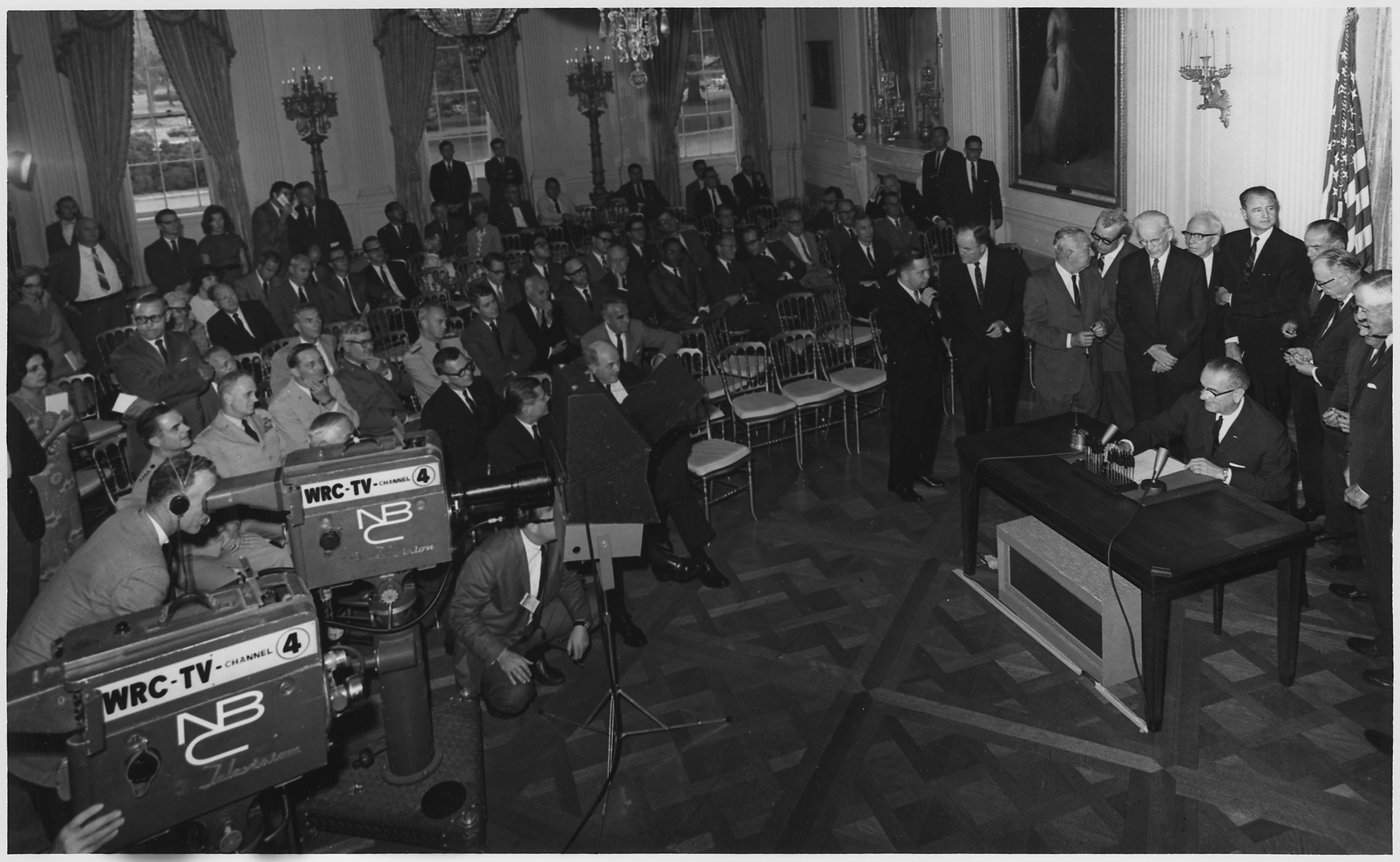
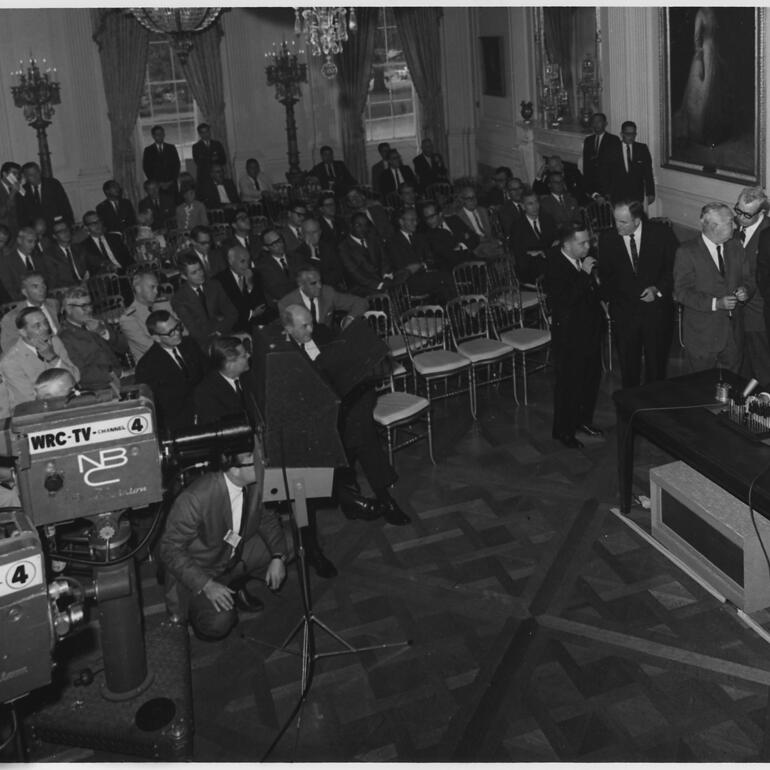
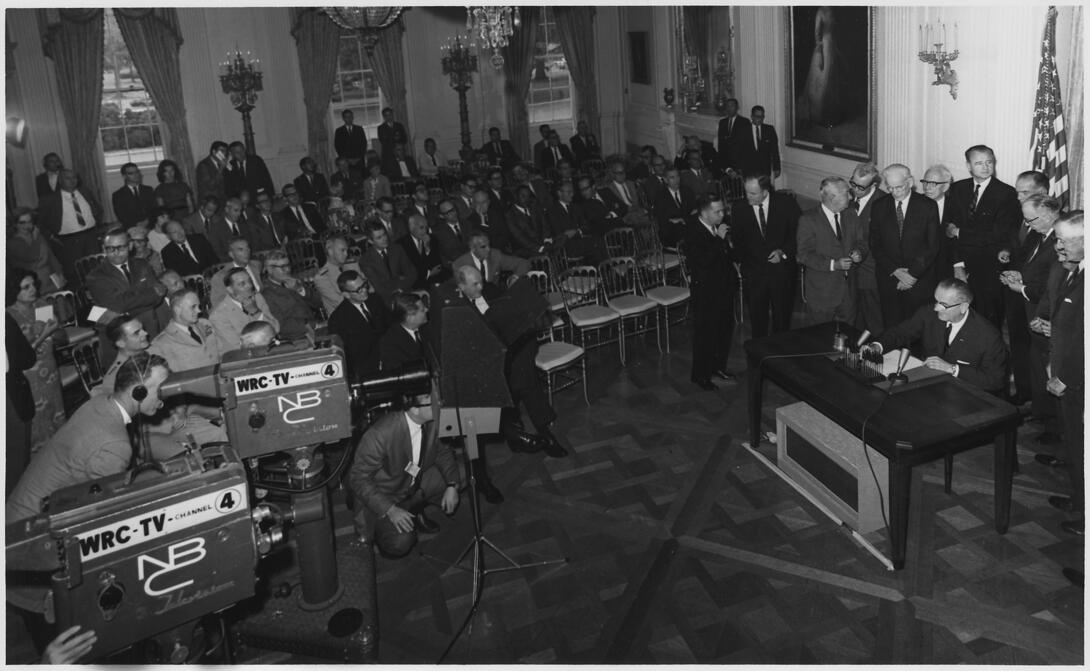
President Johnson signs the Gulf of Tonkin Resolution in the White House East Room as congressional leaders look on, August 10, 1964. Lyndon...Read more
President Johnson signs the Gulf of Tonkin Resolution in the White House East Room as congressional leaders look on, August 10, 1964. Lyndon B. Johnson Presidential Library and Museum
Read less