Opening the Vault: Celebrating Centennials
Ahead of the 250th anniversary of the signing of the Declaration of Independence, discover how Americans celebrated our nation's centennials.
-
Ahead of the 250th anniversary of the signing of the Declaration of Independence, the United States of America celebrated the centennial and bicentennial anniversaries across our nation. In this exhibit as part of "Opening the Vault," visitors can see examples from these celebrations in 1876 and 1976.
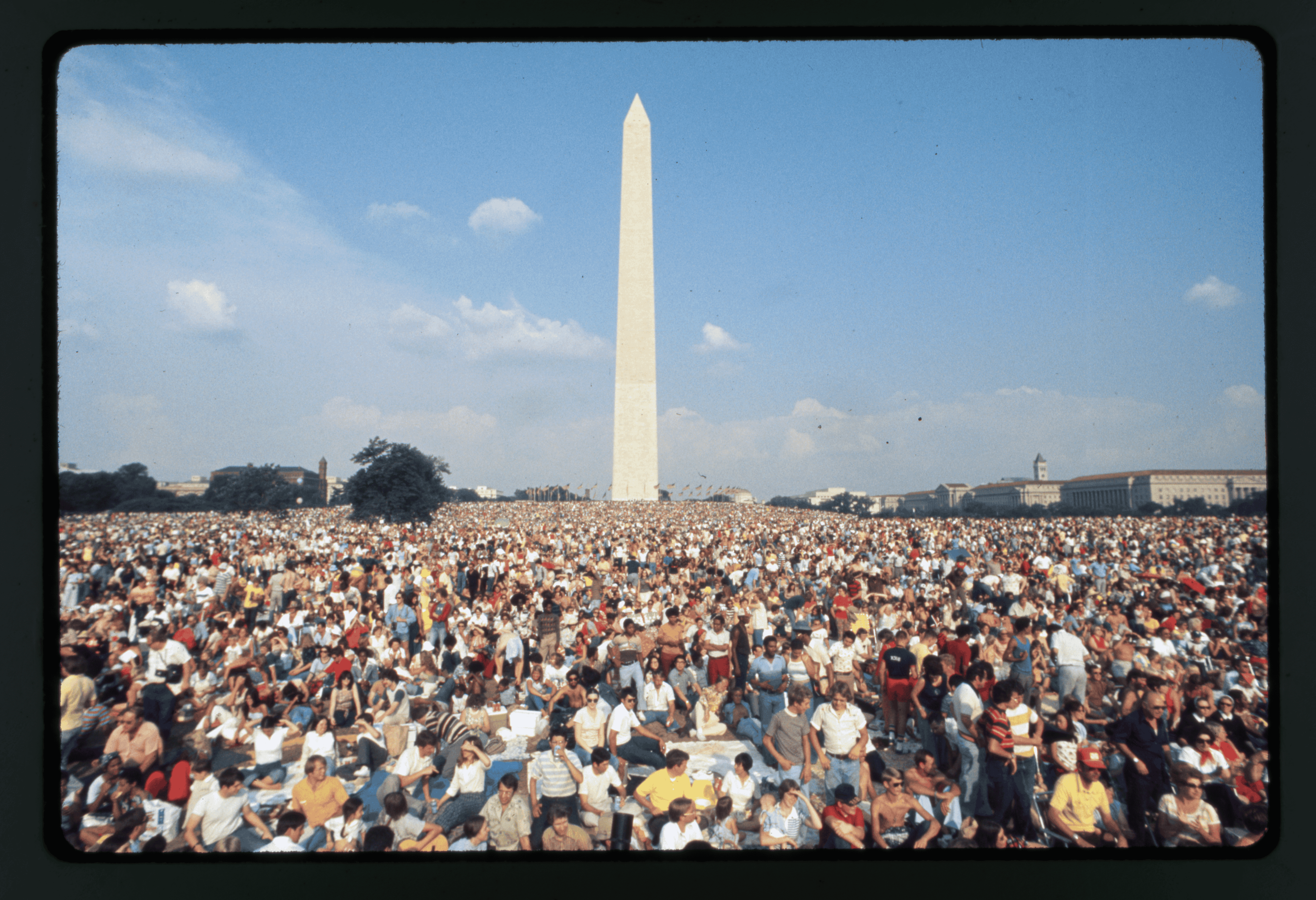
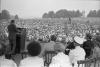
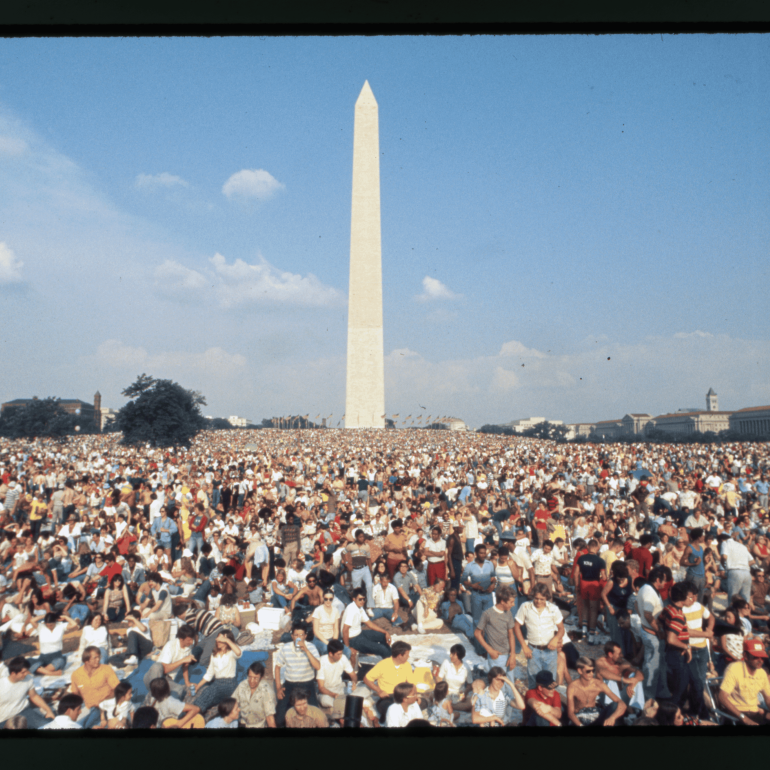
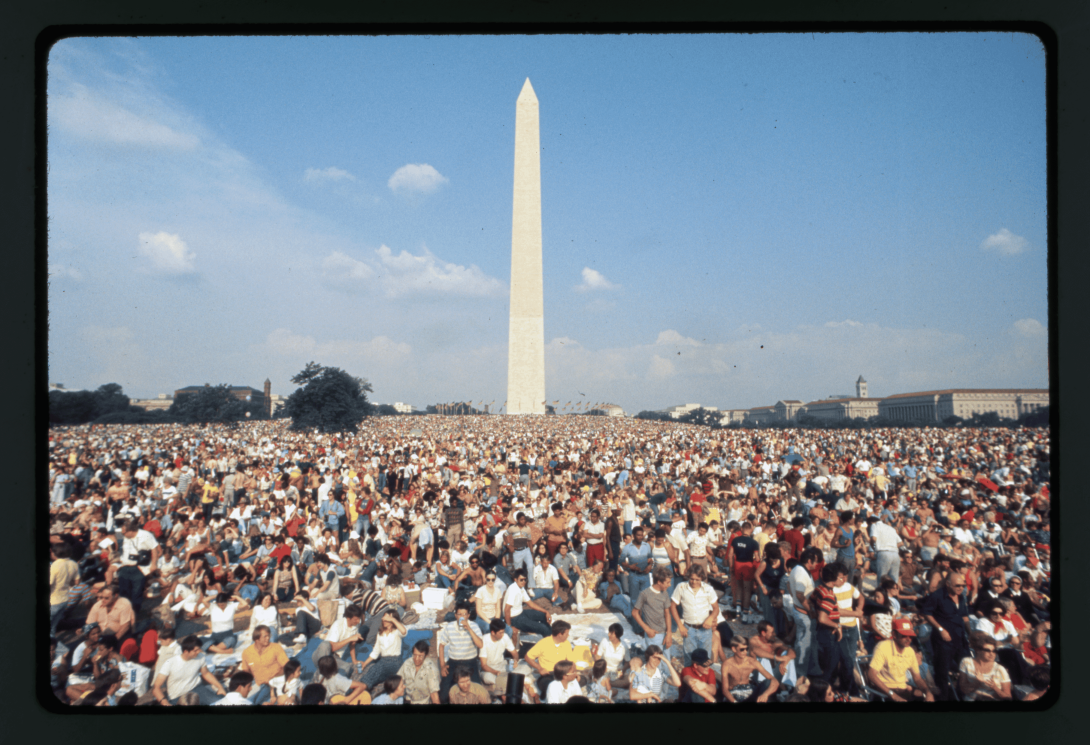
Photograph of the Crowd on the Grounds of the Washington Monument Prior to the July 4th Fireworks in 1976. Records of the U.S. Information Agency...Read more
Photograph of the Crowd on the Grounds of the Washington Monument Prior to the July 4th Fireworks in 1976. Records of the U.S. Information Agency
Read less -
1876 Grandeur
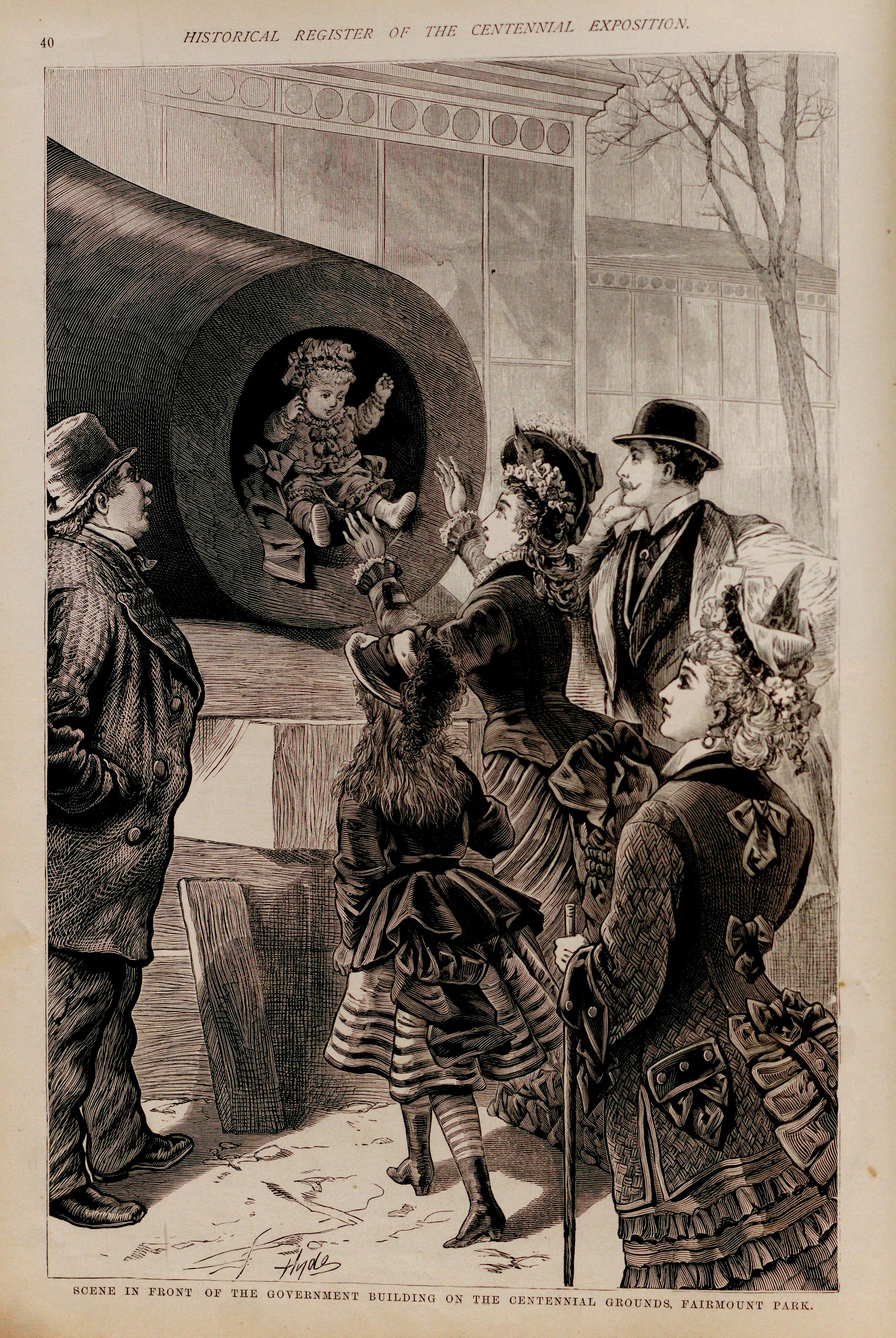
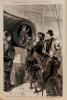
The 1876 Centennial Exposition, held in Philadelphia, was a world’s fair celebrating the 100th anniversary of the signing of the Declaration of Independence. It took place 10 years after the Civil War, when the U.S. was emerging as an industrial powerhouse. Nearly 10 million people visited the 285-acre fairgrounds to see the international arts, cultures, and technologies on display.
The Centennial Exposition had important cultural and technological impacts. The Statue of Liberty’s torch was displayed, and Alexander Graham Bell demonstrated his new telephone. The fair also featured a Women’s Pavilion, which highlighted the scientific and artistic achievements of women in the era of the growing suffrage movement.
-
A Massive Scale
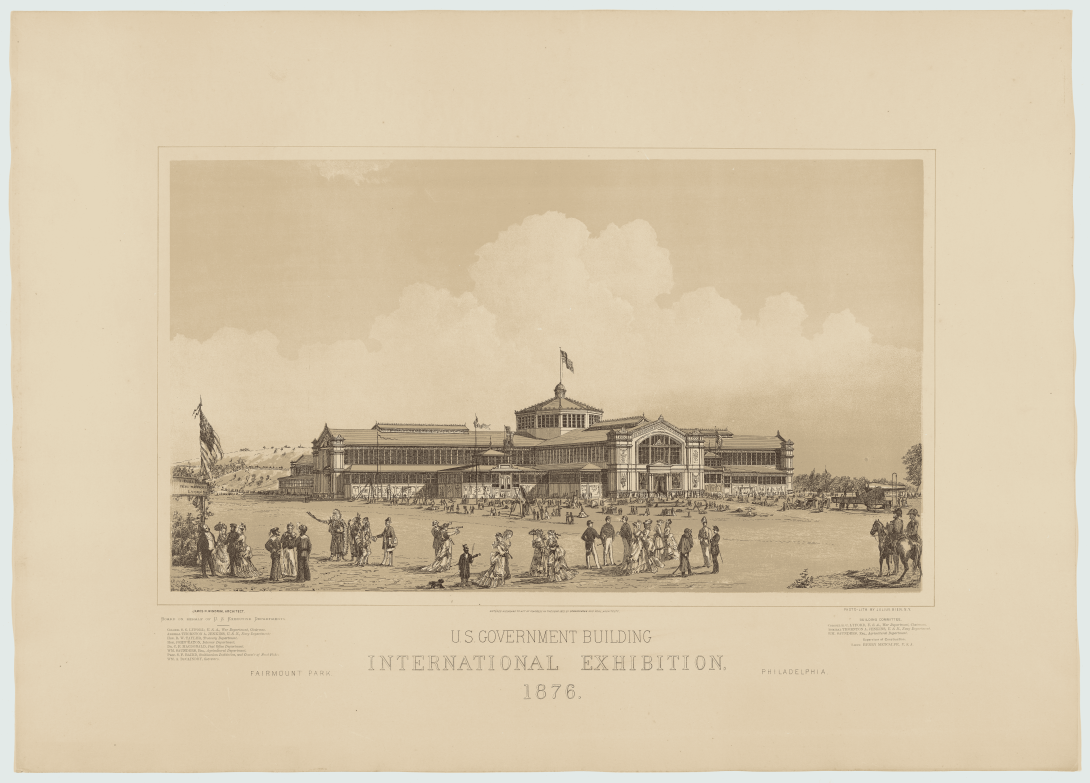

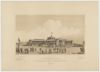
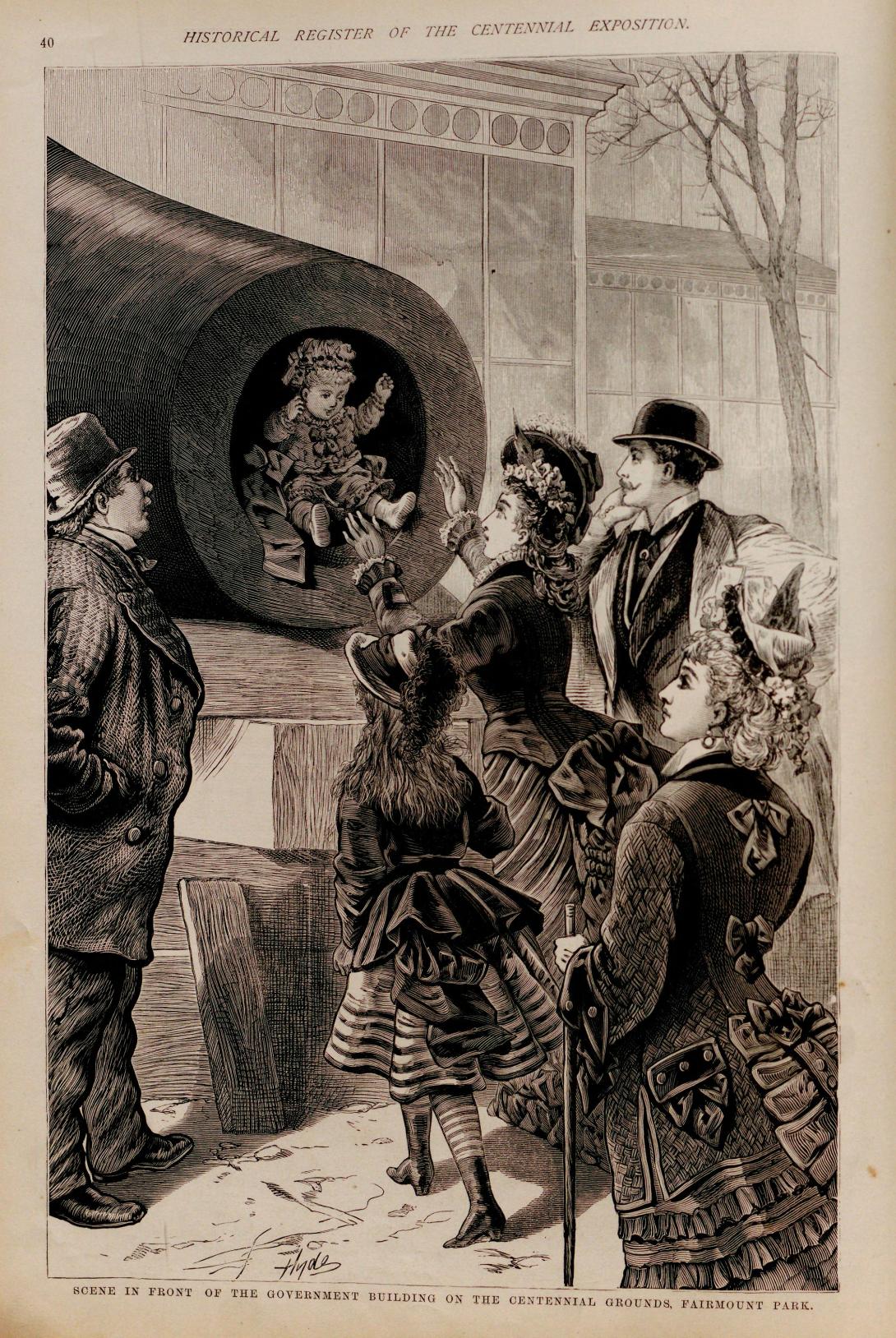
Crews constructed more than 200 buildings for the centennial fair. Above is the design for the U.S. Government Building, which highlights institutions such as the Navy and the Post Office. Julius Bien, the lithographer who made this print, included details, like a cannon and a ship propeller, to bring this rendering to life.
-
Art from Around the World
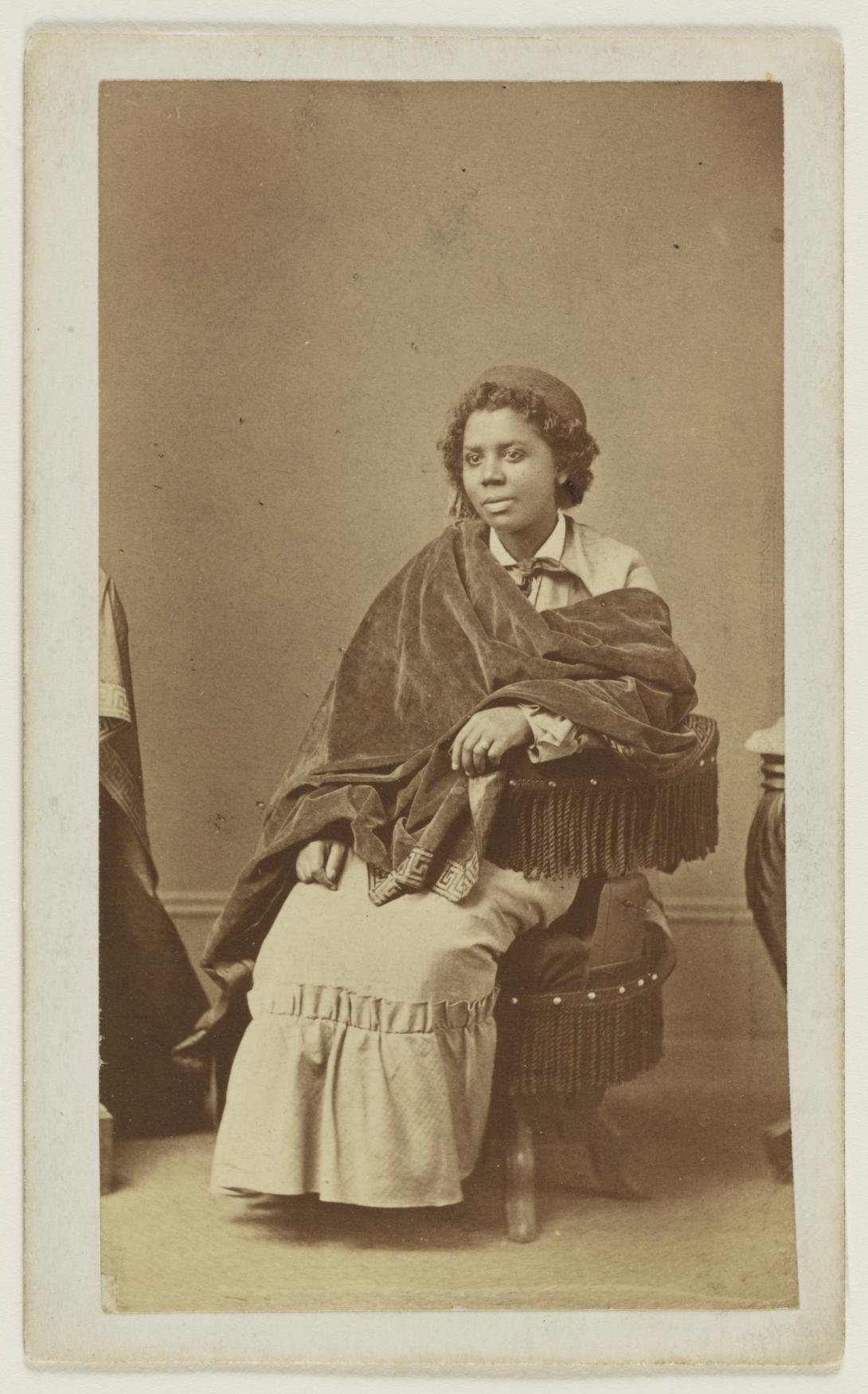
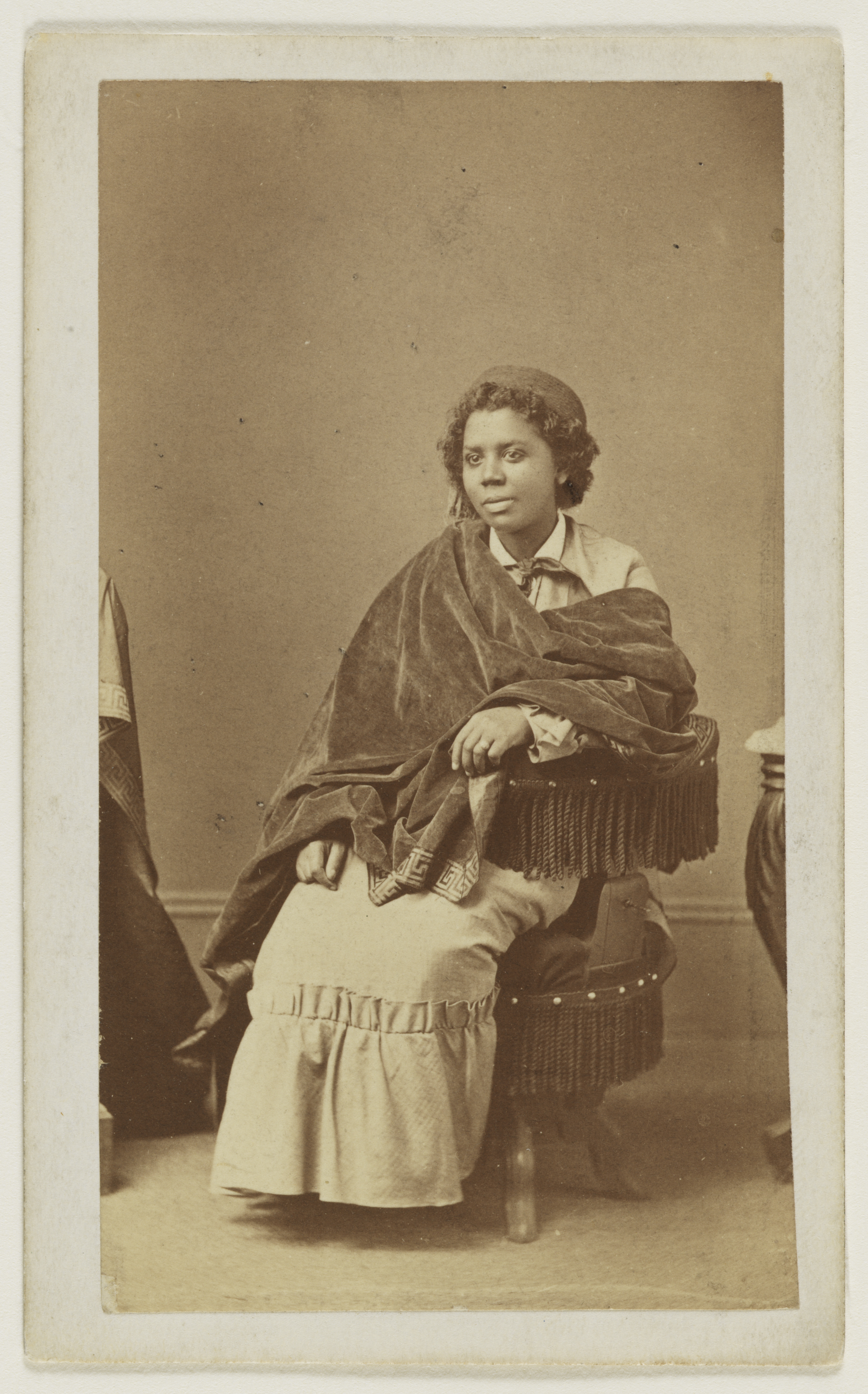
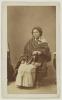
Arts and cultures from 37 countries were on display at the fair. A popular bronze sculpture was Italian artist Francesco Pezzicar’s “The Abolition of Slavery,” which depicted a man holding the Emancipation Proclamation and breaking free of chains. American artists also received significant attention, including Edmonia Lewis and her marble sculpture of Cleopatra.
-
Centennial Suffragists
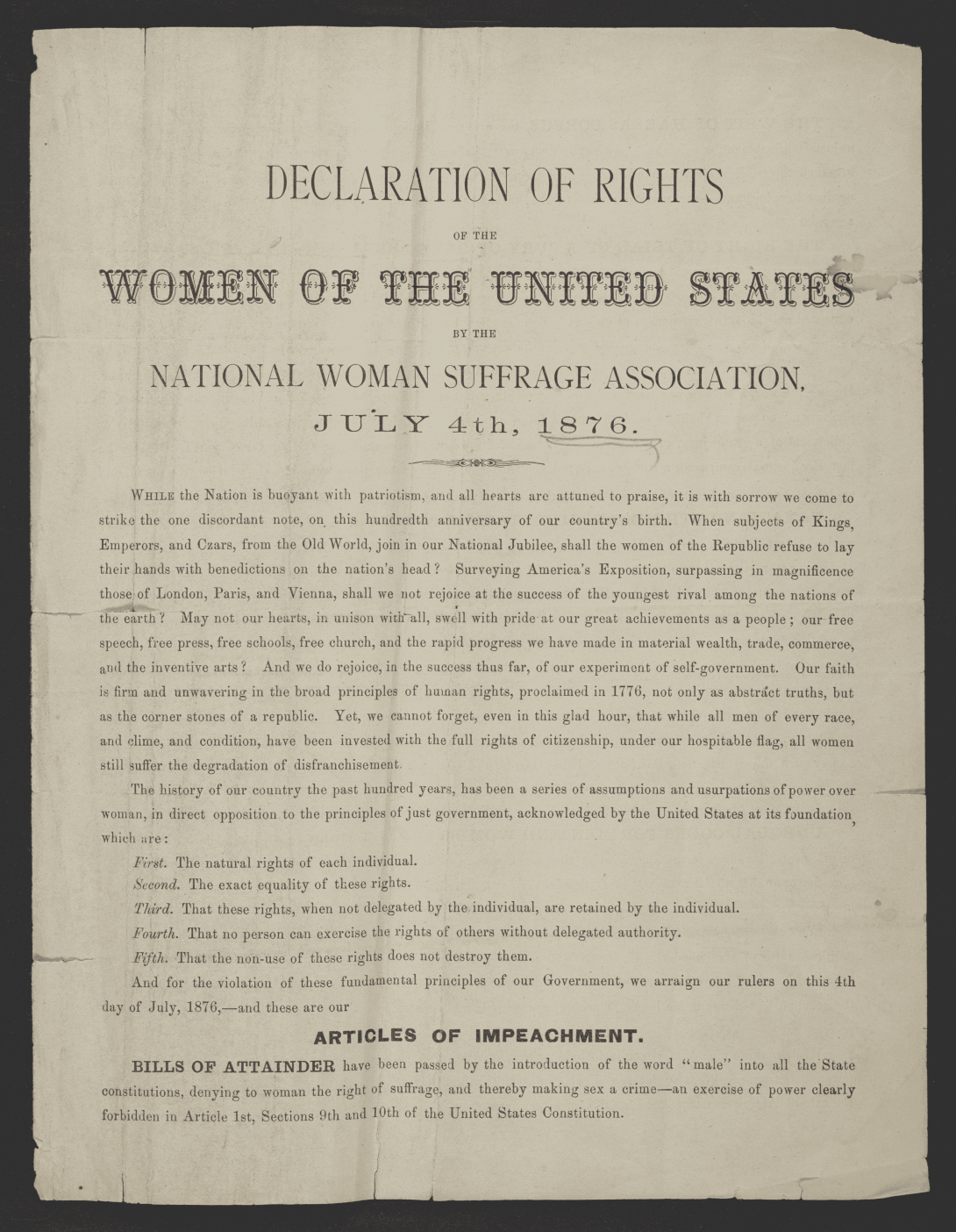
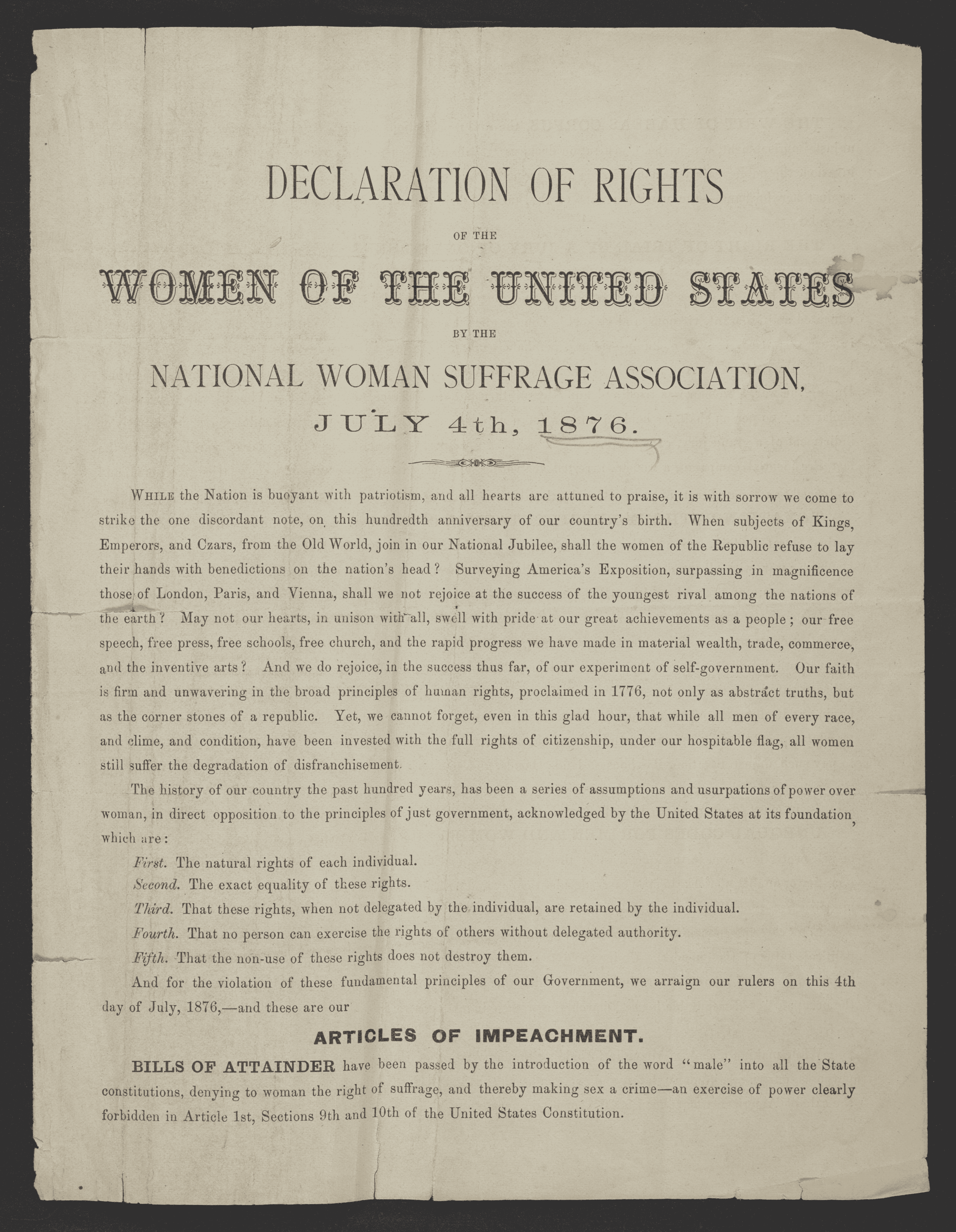
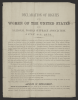
On July 4th, suffragists including Susan B. Anthony disrupted an official ceremony to present a “Declaration of Rights” for women to Acting Vice President Thomas Ferry. The suffragists’ work would not be realized until 1920 when the 19th Amendment was passed, granting women the right to vote.
-
1976 Grassroots
The 1976 Bicentennial marked the 200th anniversary of American independence. Beyond the pageantry of ceremonial celebrations, the bicentennial was defined by a major grassroots movement of local communities hosting more than 66,000 projects and events nationwide.
This milestone coincided with a peak in American civic engagement. Influenced by the momentum of the Civil Rights movement, the 1960s and 70s saw a surge in advocacy across the country. This cultural shift ensured that the bicentennial was not just a look back at history, but a reflection of the era's push for community-driven change.
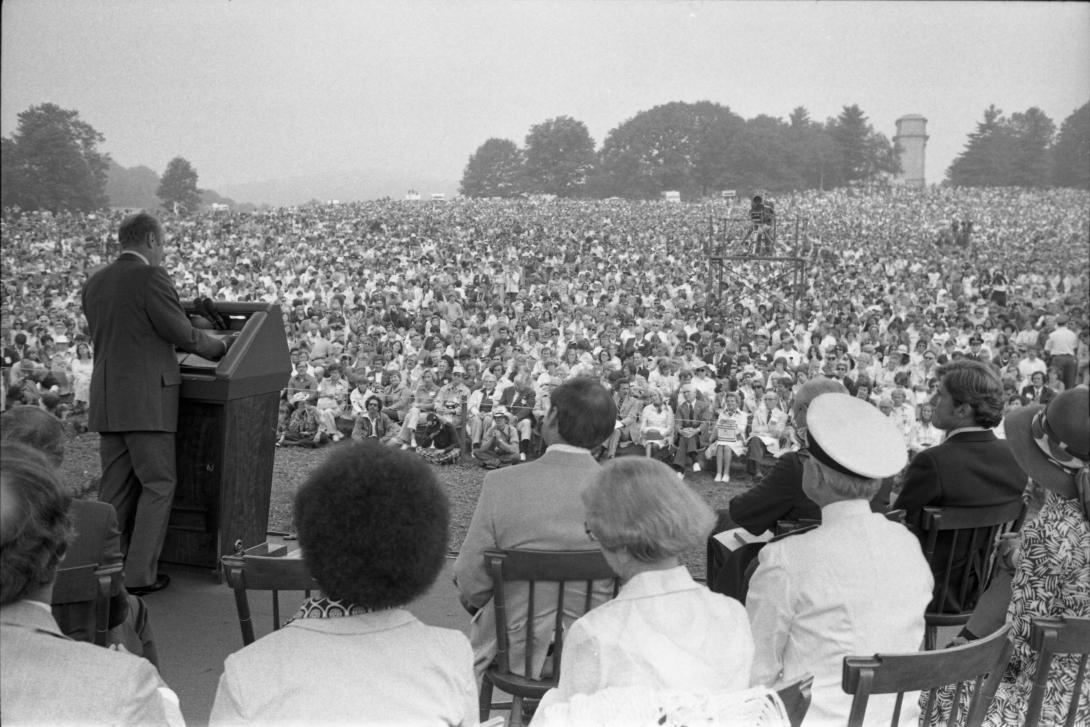
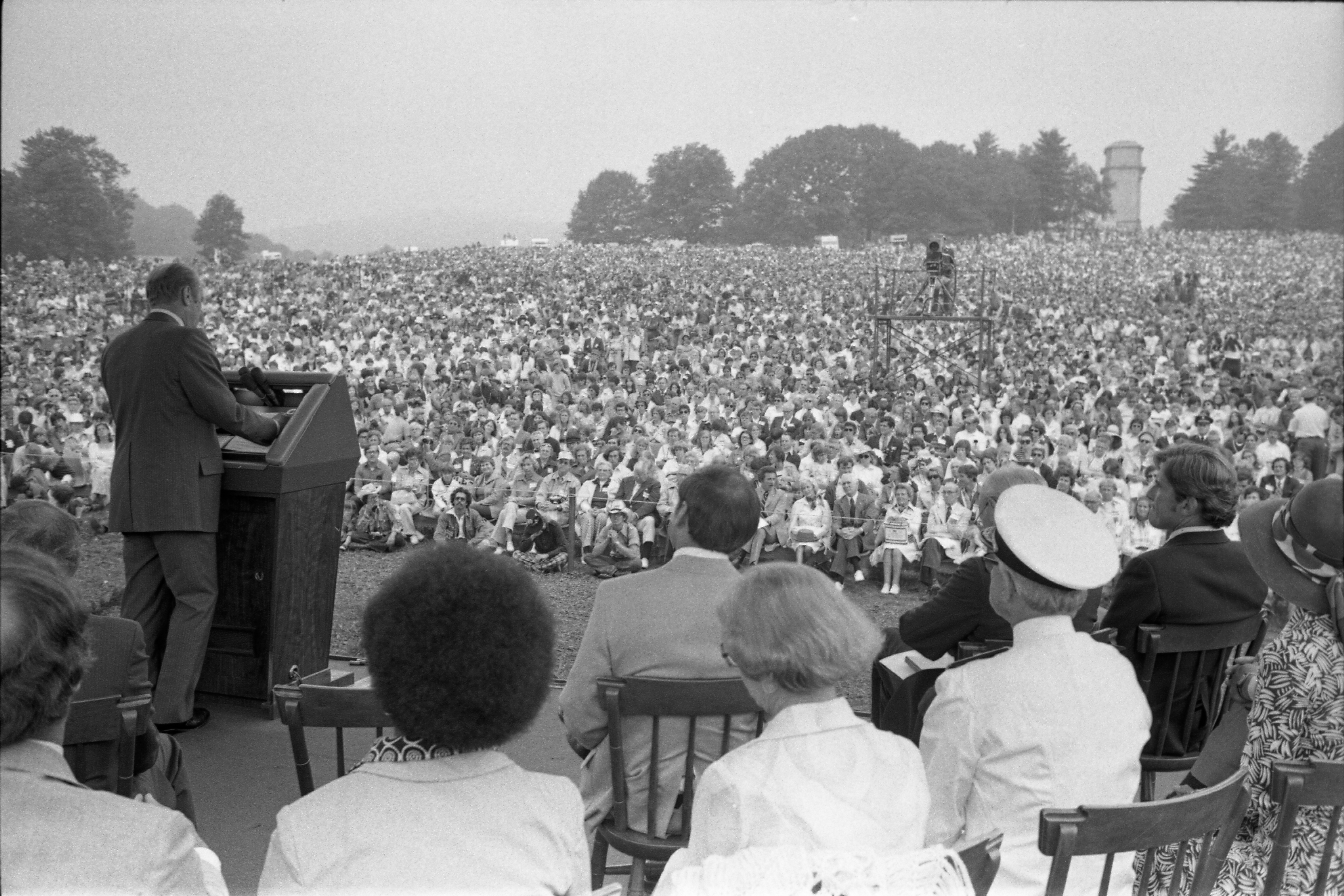
President Gerald Ford Delivering Remarks at Valley Forge State Park, 1976. Gerald R. Ford Presidential Library
-
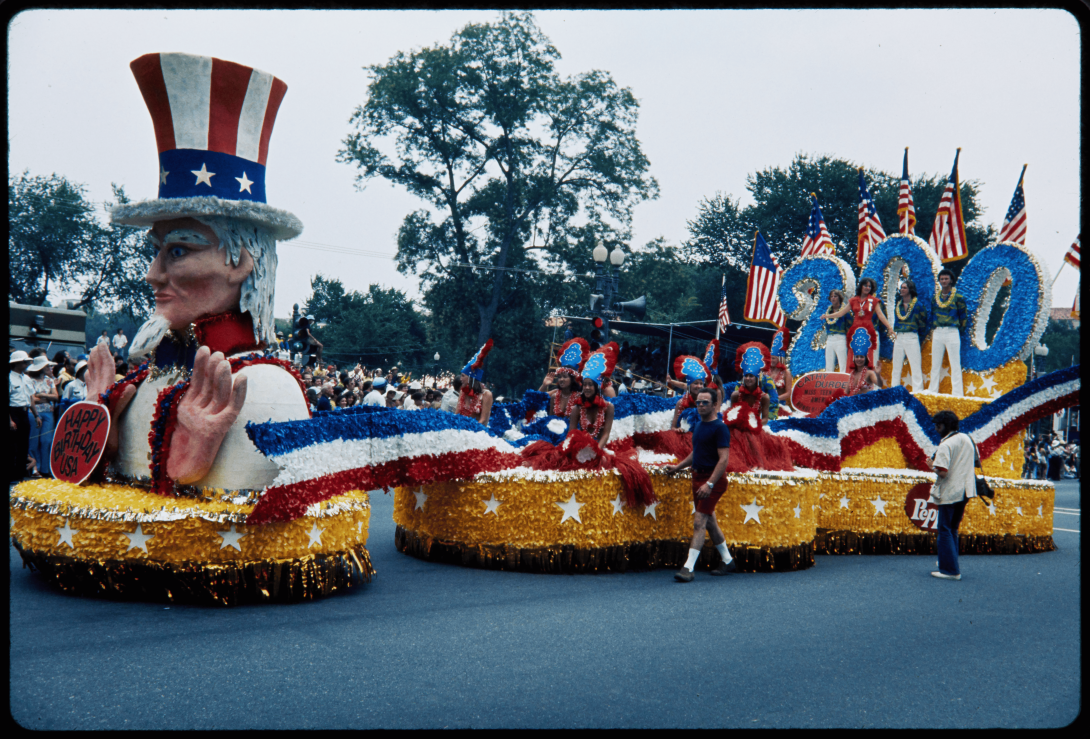
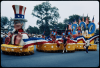
To mark the country's 200th anniversary, many Americans organized locally to reflect their communities’ spirit. Among the thousands of events were tree plantings in New Jersey, beach cleanups in Puerto Rico, a piñata festival in New Mexico, and historic reenactments across the country, including the Battles of Lexington and Concord in Massachusetts.
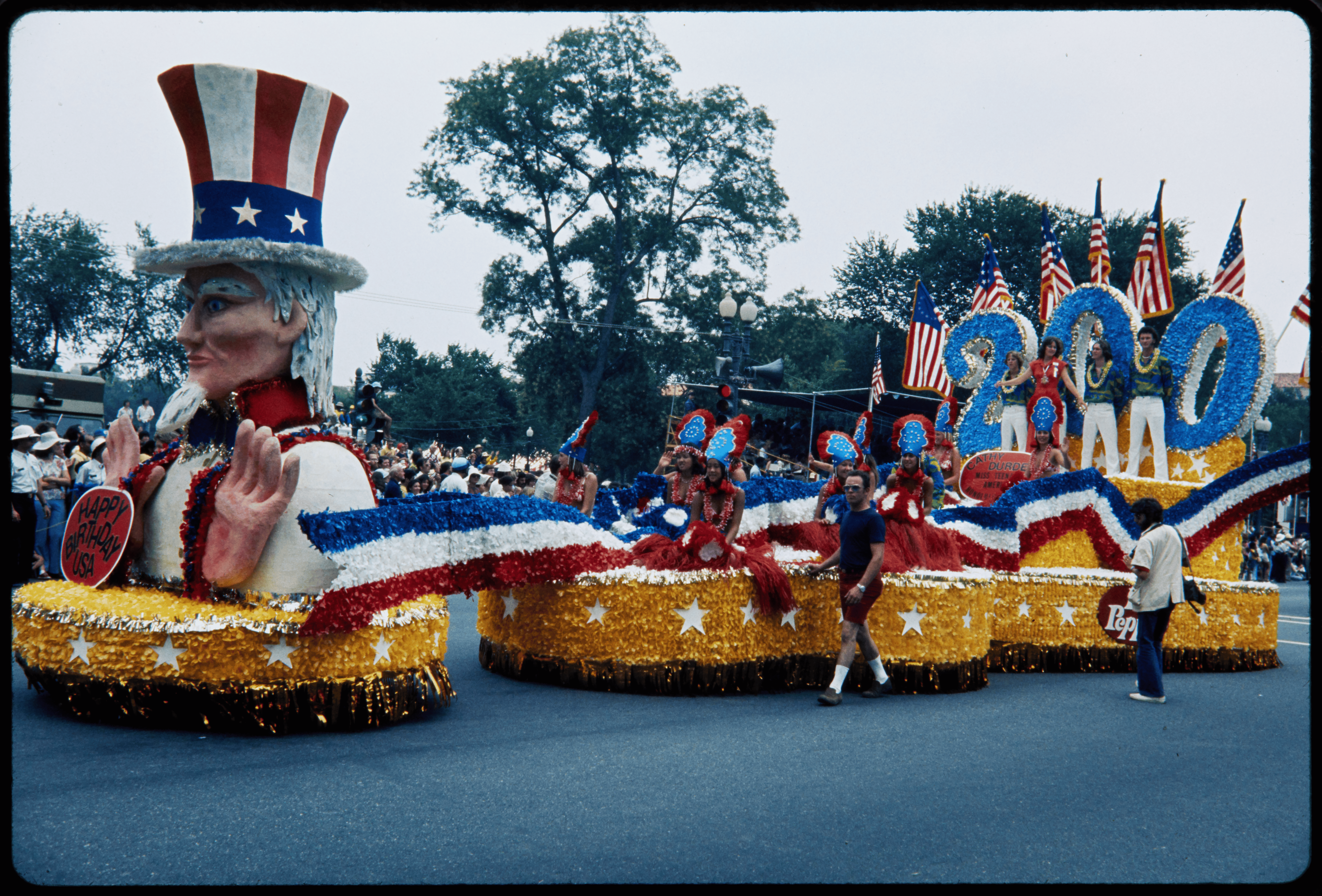
Uncle Sam Float in the American Bicentennial Grand Parade, 1976. National Archives, Records of the U.S. Information Agency
-
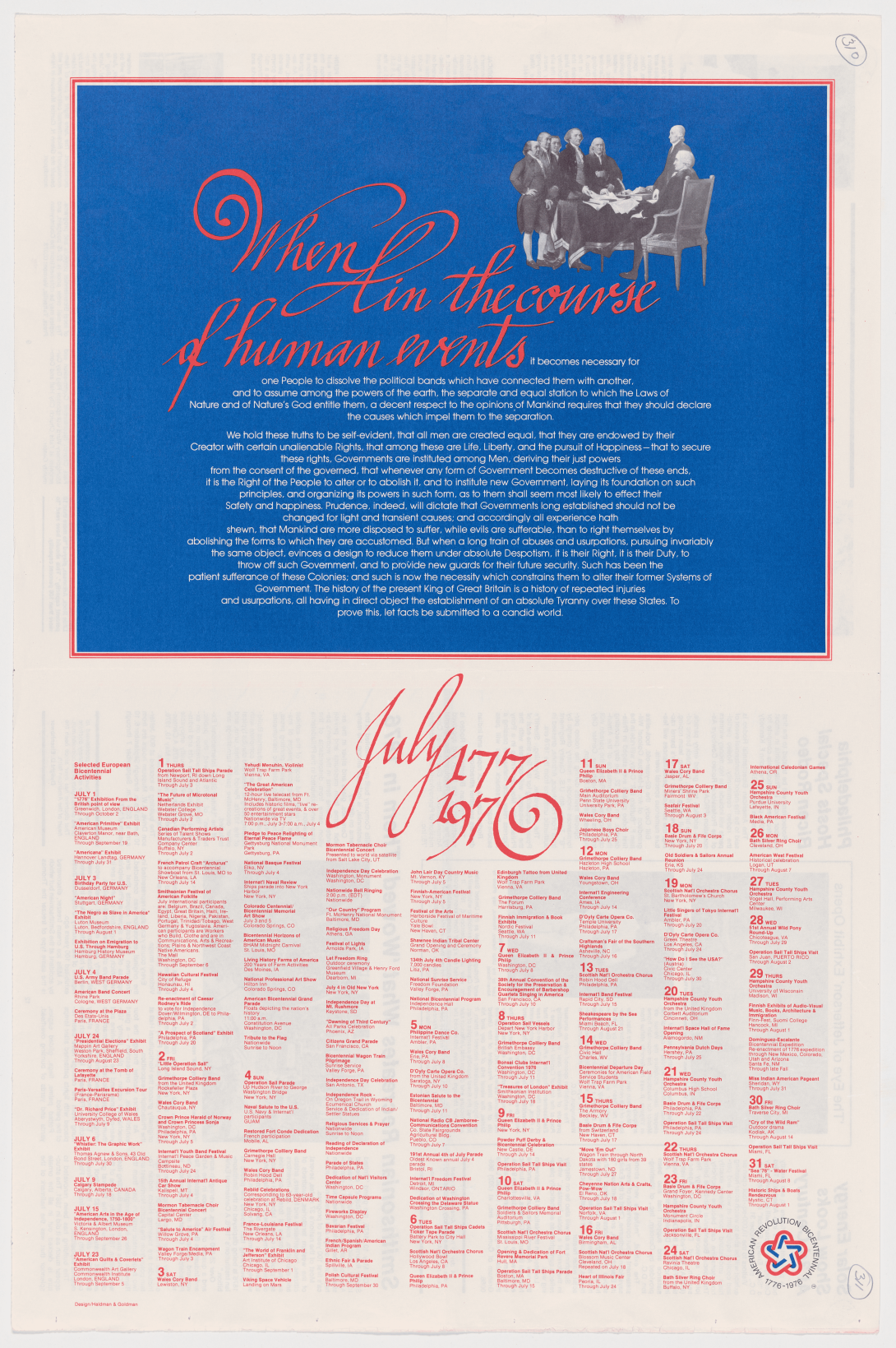
A Full Schedule
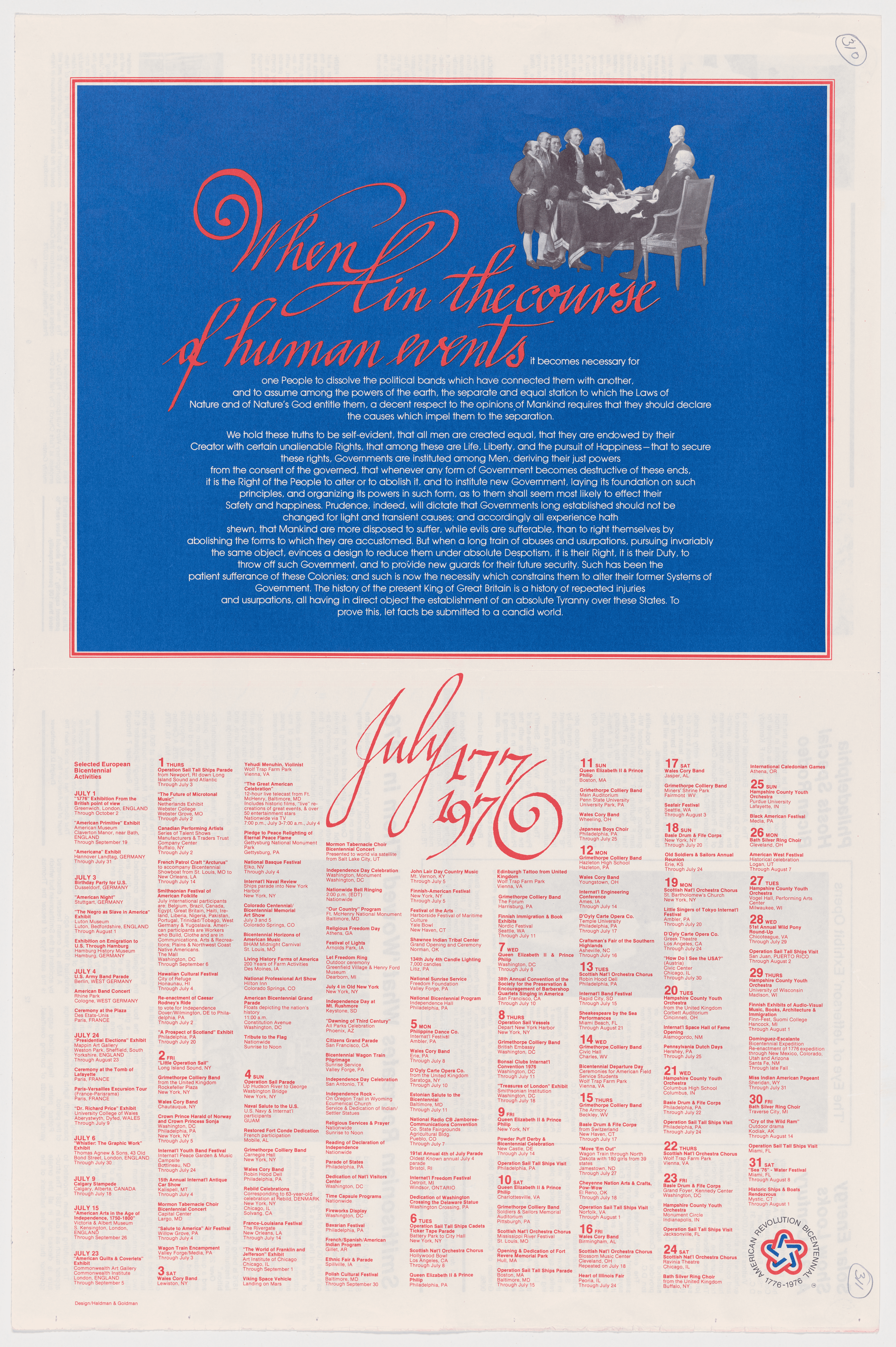
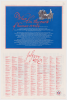
During the bicentennial planning, the federal government supported and coordinated the thousands of events. This calendar shows a sample of what was happening in July 1976. NASA’s history-making Viking spacecraft was scheduled to land on Mars on July 4. To ensure a safer landing, it was delayed until July 20.
July Calendar of Events, 1976. National Archives, Records of the American Revolution Bicentennial Administration
-
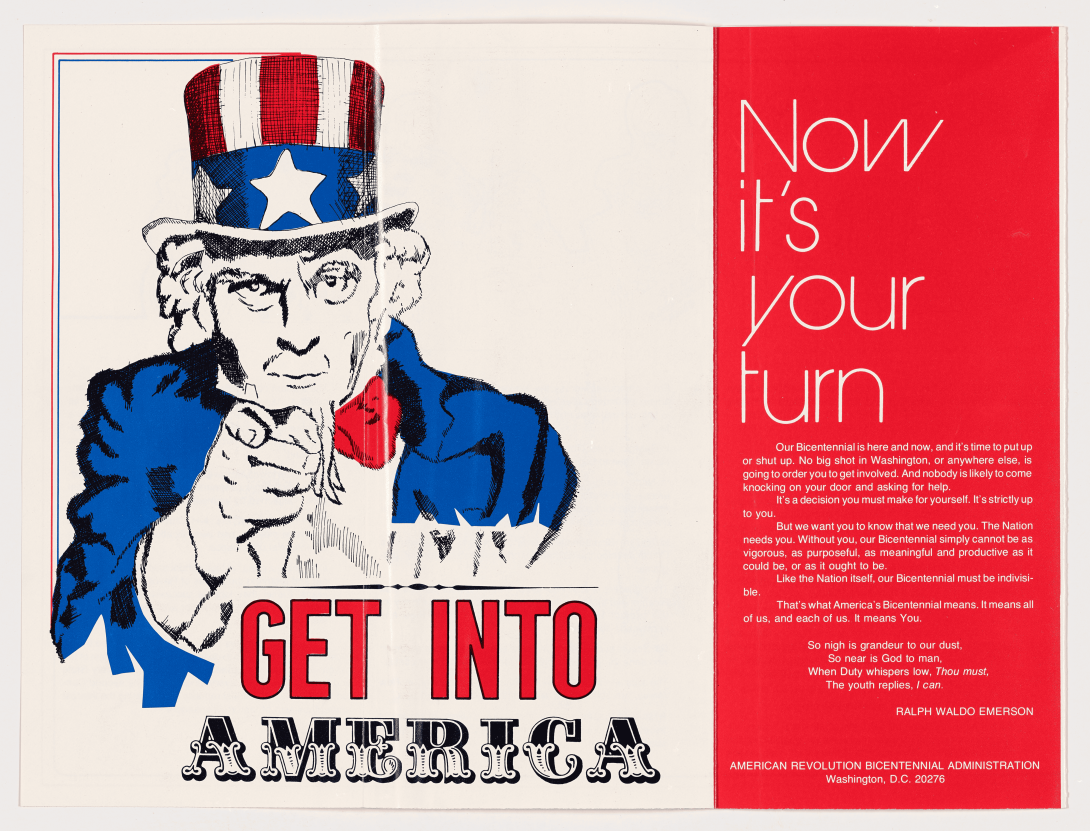
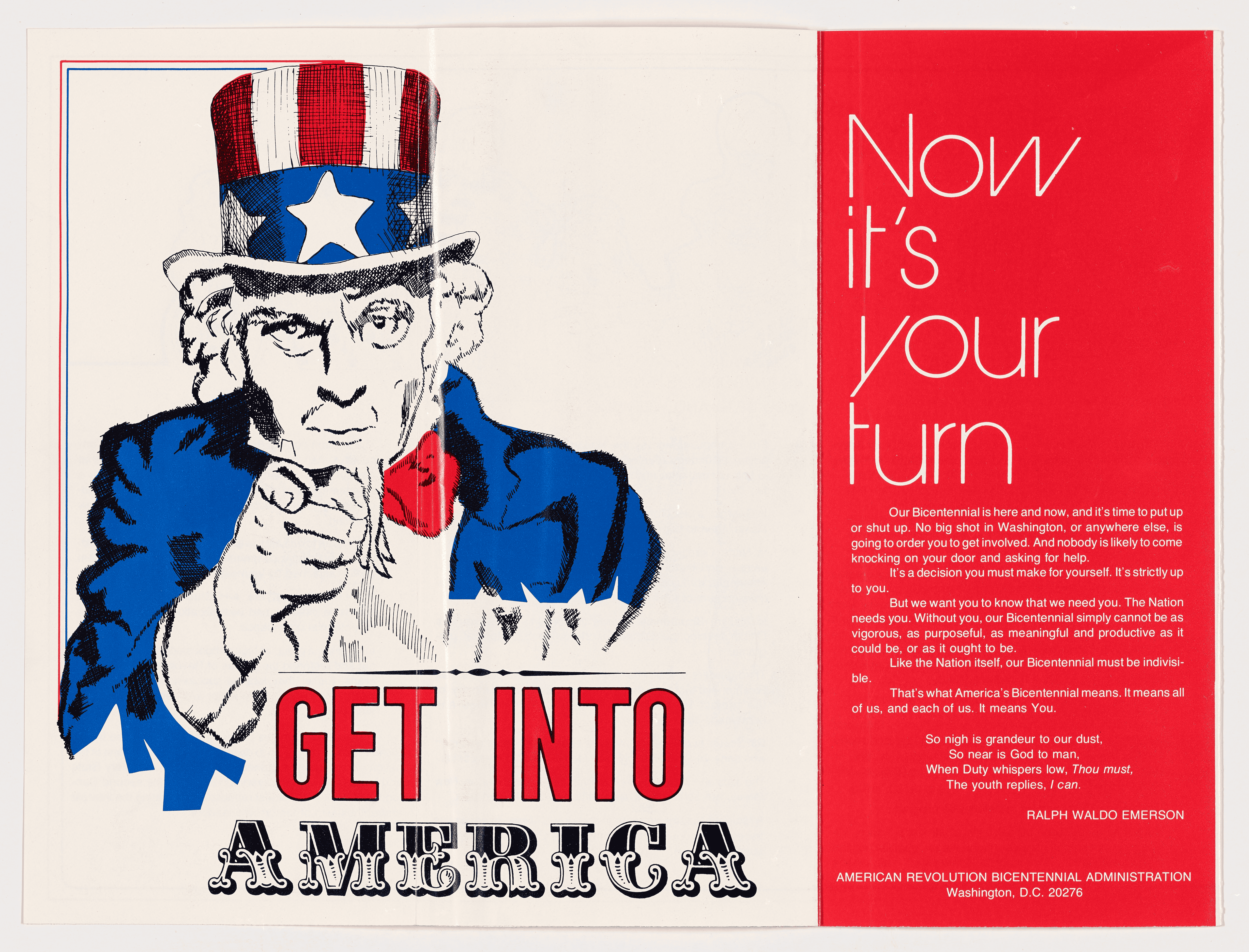
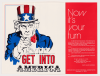
“Get into America”
Young Americans led many bicentennial programs. Student theater groups toured, interns interviewed community elders, high schoolers cleaned Revolutionary War graves, and Girl Scouts wrote family histories. This brochure was handed out to motivate young people to join the variety of bicentennial projects in motion.
Youth Brochure, 1976. National Archives, Records of the American Revolution Bicentennial Administration
-
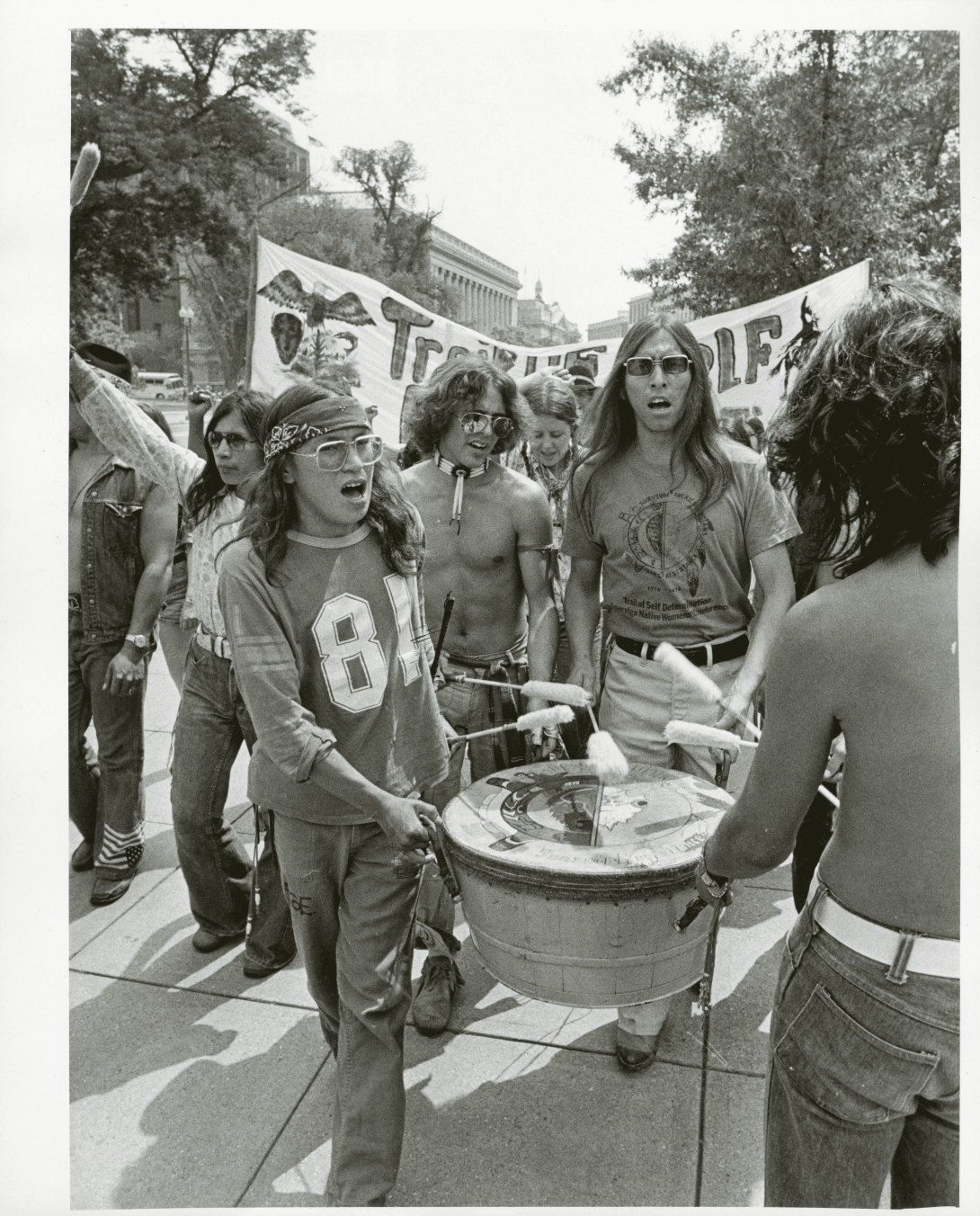
July 4, 1976
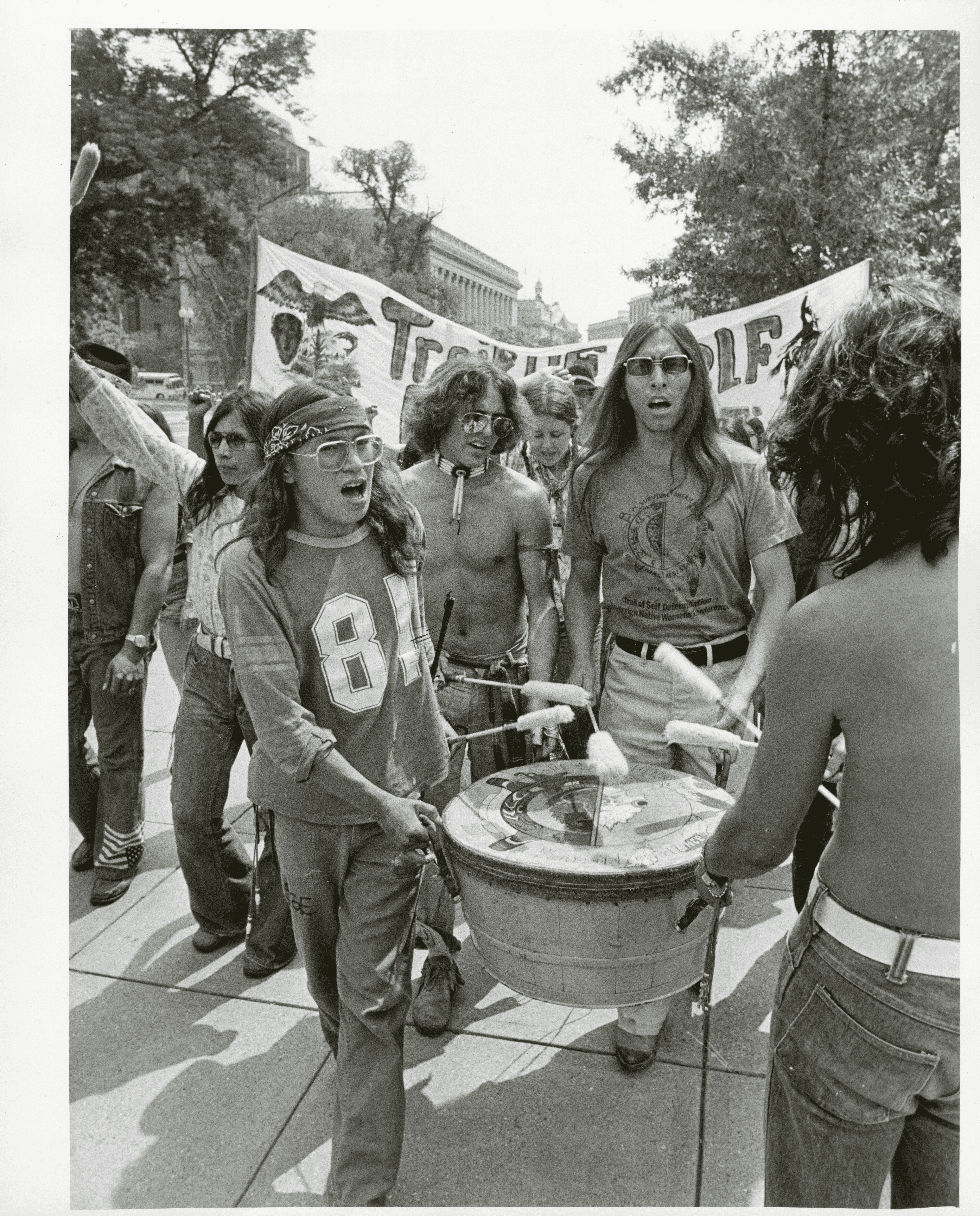
On July 4, 1976, a variety of marches, gatherings, and demonstrations took place. President Gerald Ford spoke at Valley Forge in Pennsylvania, where pioneer wagons had completed a 17,000-mile pilgrimage. The Trail of Self-Determination was another cross-country journey that departed from Yakima Nation in Washington State and arrived at the White House on July 4 to voice Native rights.